

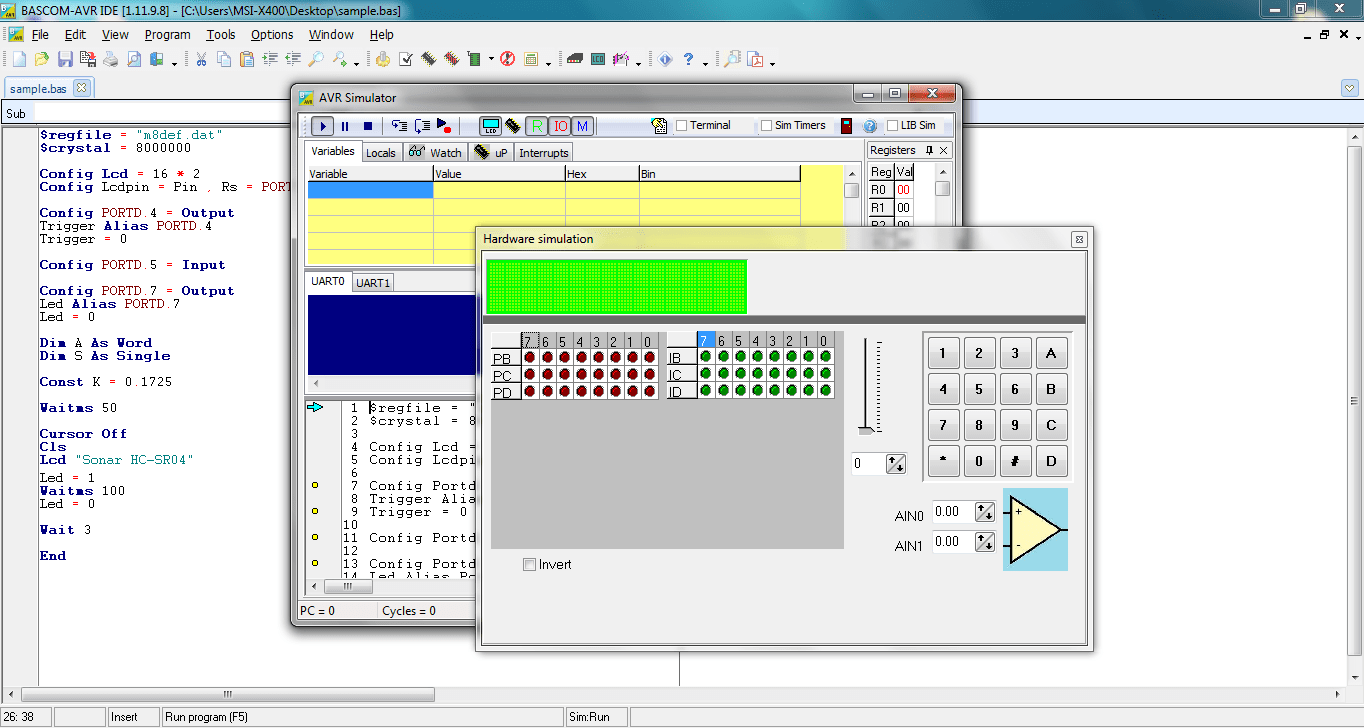
Download BASCOM-AVR and BASCOM-8051 – Comprehensive Compiler for AVR and 8051 Microcontrollers
BASCOM-AVR and BASCOM-8051 are integrated development environments developed by MCS Electronics, specializing in microcontroller programming tools. BASCOM-AVR serves as a BASIC compiler specifically designed for AVR microcontrollers, enabling structured programming for a wide array of embedded systems applications. BASCOM-8051 extends these capabilities to the popular 8051 microcontroller family. These tools are crucial for engineers and developers working in the embedded systems field who require efficient software solutions for microcontroller-based projects.
Introduction to BASCOM-AVR and BASCOM-8051
Overview of MCS Electronics
MCS Electronics is a specialized company focused on developing advanced programming tools and software solutions for the embedded systems market. With a history dating back to 1995, MCS Electronics has consistently provided developers with practical and efficient tools. Their expertise lies in creating compilers and integrated development environments that cater to the specific needs of microcontroller programming, including a strong emphasis on the AVR and 8051 architectures.
Key Features and Capabilities
BASCOM-AVR and BASCOM-8051 offer a robust set of features designed to streamline the embedded software development process. The compilers translate BASIC code into efficient machine code, taking advantage of structured programming commands common in the BASIC language. This approach lowers the learning curve for developers already familiar with BASIC syntax, while still providing access to low-level hardware control necessary for embedded applications. The software supports various variable types and includes a rich set of commands tailored for microcontroller operations.
Programming Tools and Functionalities
The core of BASCOM-AVR and BASCOM-8051 lies in their extensive command sets, which directly map to hardware functionalities of the target microcontrollers. These commands facilitate direct control over I/O pins, timers, and communication interfaces. Specific programming commands enable developers to manage tasks such as analog-to-digital conversion, pulse-width modulation (PWM), and serial communication protocols like I2C and SPI. This direct hardware interfacing capability is a key differentiator, allowing for real-time control and efficient resource management in embedded projects.
Integration with AVR and 8051 Microcontrollers
BASCOM-AVR offers comprehensive support for a wide range of AVR microcontrollers, particularly those featuring internal memory. It provides commands allowing seamless interaction with various AVR models, facilitating hardware interfacing tasks. Similarly, BASCOM-8051 is optimized for the 8051 family, ensuring compatibility and efficient code generation for these widely used microcontrollers. The software’s design emphasizes robust hardware compatibility, making it a reliable choice for projects utilizing these specific embedded platforms.
Real-World Applications
The capabilities of BASCOM-AVR and BASCOM-8051 are utilized across numerous real-world applications within the embedded systems domain. These include industrial automation systems requiring precise control of machinery, robotics projects demanding efficient sensor interfacing and motor control, and consumer electronics featuring custom firmware. Projects involving data acquisition from sensors, control of displays, and communication between devices commonly benefit from the structured programming and direct hardware access provided by BASCOM tools.
Comparison with Other Embedded Programming Software
Compared to general-purpose IDEs or compilers focused on higher-level languages, BASCOM-AVR and BASCOM-8051 distinguish themselves through their specialized BASIC environment tailored for microcontrollers. While other tools might offer broader language support or more abstract programming models, BASCOM is recognized for its ease of use for developers proficient in BASIC and its direct, efficient hardware interfacing capabilities. This focus allows for faster development cycles and optimized performance for specific embedded tasks, particularly when working with hobbyist or industrial projects that leverage AVR and 8051 architectures.
Resources for Learning and Development
MCS Electronics provides various resources to support users of BASCOM-AVR and BASCOM-8051. Comprehensive documentation detailing commands, features, and hardware interactions is available. While specific books may vary, the BASIC programming language itself is well-documented, and the compiler’s structured approach aids in learning. Community forums and online tutorials often serve as valuable platforms for users to share knowledge, troubleshoot issues, and find practical examples of embedded projects developed using BASCOM software.
Frequently Asked Questions
What is BASCOM-AVR used for?
BASCOM-AVR is a BASIC compiler primarily used for programming AVR microcontrollers. It provides an environment for structured programming, making it suitable for developing applications in various embedded systems. It enables engineers and hobbyists to write code that directly controls hardware components in their embedded designs.
What programming languages are supported by BASCOM?
BASCOM-AVR primarily uses the BASIC programming language, allowing users to employ structured commands for developing embedded applications. It also shares compatibility with other dialects of BASIC, adding flexibility. The syntax is designed to be intuitive for those familiar with BASIC, while offering the power needed for complex microcontroller tasks.
How compatible is BASCOM-AVR with different AVR microcontrollers?
BASCOM-AVR is compatible with all AVR microprocessors with internal memory, supporting various models and providing suitable commands for hardware interfacing such as I2C and SPI. This extensive compatibility ensures that developers can utilize BASCOM-AVR across a broad spectrum of AVR-based projects, from simple sensor reading to more complex control systems.





Reviews
There are no reviews yet.