

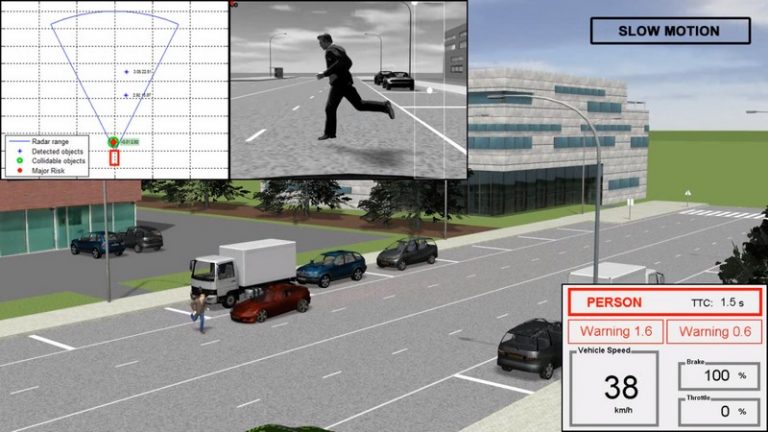
Download Siemens Simcenter PreScan – Advanced Simulation for Automotive Safety Systems
Siemens Simcenter PreScan is a specialized automotive simulation platform developed by Siemens AG. It is engineered for the detailed design, development, and simulation of Advanced Driver Assistance Systems (ADAS) and vehicle safety technologies. This software is essential for automotive engineers, particularly those working on sensor integration and autonomous vehicle development.
Overview of Siemens Simcenter PreScan
History and Evolution
Siemens Simcenter PreScan was initially developed under the name TASS International PreSCAN, reflecting its origins in specialized automotive simulation. Over time, it has evolved into a core component of Siemens’ Simcenter portfolio, integrating advanced simulation capabilities. This evolution has enhanced its features for modeling complex automotive systems, particularly those involving dynamic sensor interactions and environmental conditions.
Key Applications in Automotive Industry
The primary focus of Siemens Simcenter PreScan lies in empowering the automotive industry to create safer and more advanced vehicles. Its capabilities span critical areas of vehicle development:
- ADAS Development: Facilitates the design and testing of systems like adaptive cruise control, lane keeping assist, and automatic emergency braking.
- Vehicle Safety Systems: Enables the simulation of collision avoidance, pedestrian detection, and other safety-critical functions.
- V2V and V2I Communications: Supports the modeling of vehicle-to-vehicle (V2V) and vehicle-to-infrastructure (V2I) communication protocols, vital for connected and cooperative driving environments.
- Autonomous Driving Systems: Provides a robust platform for developing and validating the complex sensor fusion and decision-making algorithms required for autonomous vehicles.
Simulation Capabilities and Sensor Modeling
Siemens Simcenter PreScan offers advanced tools for simulating the complex interaction between vehicle systems and their environment, with a particular emphasis on diverse sensor technologies.
Supported Sensor Technologies
The software excels at modeling various sensor types that are crucial for modern automotive systems. This allows engineers to accurately assess system performance under different conditions:
- Radar: Simulates the behavior of radar systems for object detection, distance measurement, and velocity calculation.
- Cameras: Models visual input from cameras, including image processing functions crucial for lane detection, traffic sign recognition, and object classification.
- Lidar: Replicates the functionality of Lidar sensors for precise 3D environmental mapping and object detection.
- GPS: Integrates Global Positioning System data for accurate vehicle localization within the simulated environment.
Integration with Engineering Tools
To facilitate model-based development and streamline workflows, Siemens Simcenter PreScan is designed for extensive compatibility with other leading engineering software. This interoperability ensures that engineers can leverage their existing toolchains without significant disruption.
- MATLAB and Simulink: Offers seamless integration for algorithm development, simulation, and model-based design, enabling users to test their control logic within a realistic sensor environment.
- CarSim: Allows for comprehensive vehicle dynamics simulation, providing a more accurate representation of vehicle response to control inputs and environmental factors.
- LabVIEW: Supports integration for hardware-in-the-loop (HIL) testing and real-time simulation applications.
Real-World Scenario Testing
Siemens Simcenter PreScan is adept at reproducing diverse environmental conditions and complex traffic scenarios, enabling thorough validation of automotive systems. Engineers can construct and test against a wide array of situations that might be challenging or dangerous to replicate in physical testing.
- Environmental Simulation: Includes modeling of various road surfaces, weather conditions (rain, fog), and lighting (day, night) to assess system performance under diverse operational conditions.
- Traffic and Obstacle Interactions: Simulates the dynamic behavior of other vehicles, pedestrians, cyclists, and static obstacles to test responsiveness and safety algorithms.
- Scenario Construction: Provides tools to define specific test scenarios, including complex interactions between multiple agents, to rigorously validate ADAS and safety functions.
Advantages Over Competitors
Siemens Simcenter PreScan distinguishes itself through a combination of advanced simulation capabilities and flexible integration, making it a preferred choice for complex automotive development projects.
- Multi-Sensor Simulation: Its robust support for simulating multiple sensor types simultaneously, including radar, cameras, and lidar, allows for advanced sensor fusion algorithm development.
- Open and Flexible Architecture: Compatibility with industry-standard tools like MATLAB, Simulink, and CarSim provides users with a flexible and extensible simulation environment, avoiding vendor lock-in.
- Focus on Real-Time Testing: The platform supports real-time simulation, crucial for hardware-in-the-loop (HIL) testing and the validation of control systems in a live environment.
- Comprehensive Scenario Design: The ability to create highly detailed and complex real-world scenarios ensures thorough testing of safety-critical functions under demanding conditions.
Frequently Asked Questions
What types of sensors can be simulated using Siemens Simcenter PreScan?
Siemens Simcenter PreScan supports a wide range of sensors, including radar, cameras, lidar, and GPS, allowing users to model complex automotive sensor environments. This comprehensive sensor modeling capability is fundamental for developing accurate ADAS and autonomous driving systems.
How does Siemens Simcenter PreScan integrate with other engineering software?
The software seamlessly integrates with tools like MATLAB, Simulink, and CarSim, enhancing its functionality and facilitating a more streamlined workflow in automotive system design. This interoperability allows for robust model-based development and testing processes.
What are the main benefits of using Siemens Simcenter PreScan for testing automotive systems?
The main benefits include real-time testing capabilities, comprehensive environmental simulations, and the ability to design complex scenarios that reflect real-world conditions, ultimately leading to improved safety and performance assessments. This allows for efficient validation of ADAS and vehicle safety technologies.







Reviews
There are no reviews yet.