

Download RockLab 2020.5 – Advanced Logging Data Management and Geomechanics Software
RockLab 2020.5 is a specialized geomechanics software developed by Kerogen, designed for comprehensive logging data management and interpretation within the oil and gas exploration sector. This application provides geoscientists and geological engineers with essential tools for analyzing subsurface geological data, facilitating informed decisions in reservoir characterization and production optimization. Its modular design emphasizes advanced analytical capabilities crucial for the demanding environment of oil and gas operations.
Introduction to RockLab 2020.5
Overview and Key Functions
RockLab 2020.5 serves as a critical platform for professionals in the oil and gas industry, particularly those involved in geological engineering and subsurface analysis. The software is engineered to streamline the complex processes of handling and interpreting well log data. Its core functionalities revolve around robust data management, detailed log interpretation, and sophisticated petrophysical modeling, all aimed at enhancing the understanding of geological formations and optimizing exploration strategies.
Applications in Oil and Gas Exploration
In the oil and gas industry, RockLab 2020.5 plays a vital role across various stages of exploration and field development. It supports geoscientists in characterizing potential reservoirs by analyzing detailed well log data, which is fundamental for assessing hydrocarbon presence and volume. The software aids in making critical decisions related to drilling, well completion, and production strategies by providing accurate insights into rock properties and their distribution within subsurface formations.
Logging Data Management Capabilities
Multi-well and Single-well Management
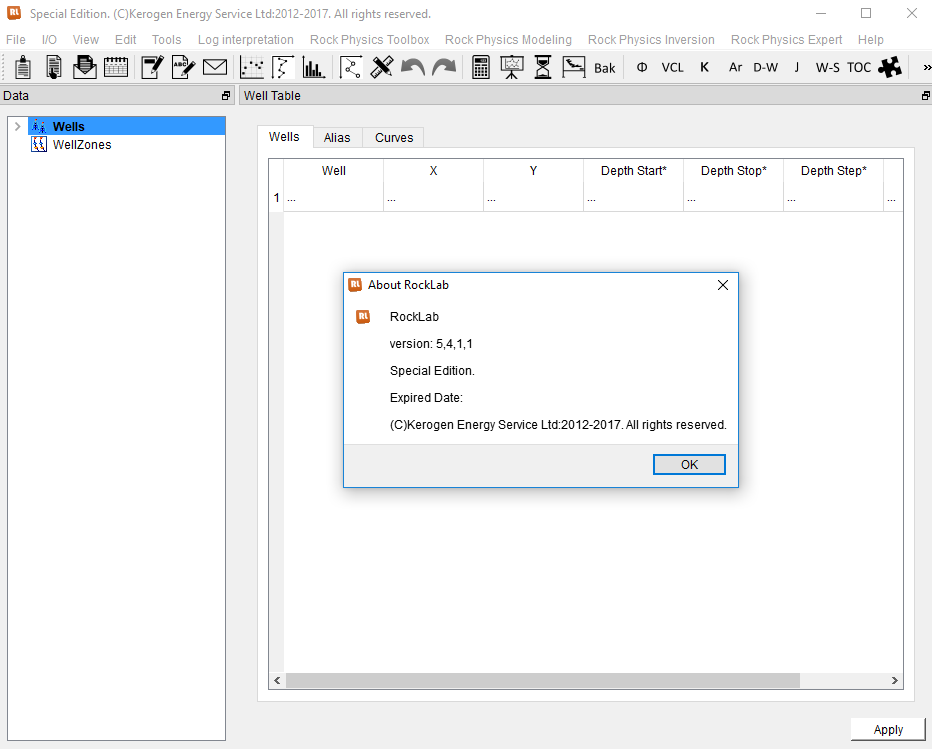
RockLab 2020.5 offers robust features for both single-well and multi-well logging data management, ensuring structured and accessible storage of extensive geological information. The system is designed to handle diverse logging data formats, allowing geoscientists to efficiently organize, review, and query data from various wells. This capability is essential for comparative analysis and understanding geological trends across different areas of a field.
Data Visualization Options
Effective visualization is central to the utility of RockLab 2020.5, providing users with critical tools to interpret complex subsurface data. The software includes specialized windows like the Curves Window, which graphically displays log readings, and a 3D Visualization Window for spatial representation of geological models and data distributions. These visualization tools enhance pattern recognition and facilitate a deeper understanding of reservoir characteristics.
Log Interpretation Functionalities
Key Calculation Modules
The software houses a suite of specialized calculation modules dedicated to detailed log interpretation. These modules enable users to perform essential geological assessments with precision, providing quantitative results that inform critical project decisions within the oil and gas sector. The integrated nature of these functionalities streamlines the analytical workflow for geoscientists.
- Clay Volume Calculation: Quantifies the amount of clay within rock formations, influencing porosity and permeability estimates.
- Porosity Calculation: Determines the void spaces within rock, a key indicator of a reservoir’s storage capacity.
- Permeability Calculation: Estimates the ability of rock to allow fluids to pass through, critical for production flow assessment.
- Total Organic Carbon (TOC) Calculation: Assesses the organic content of source rocks, vital for evaluating hydrocarbon generation potential.
Rock Physics Modeling Features
RockLab 2020.5 integrates advanced rock physics modeling capabilities, essential for petrophysical analysis and quantitative interpretation of seismic and well log data. These features allow geoscientists to build models that relate physical properties of rocks to their geological characteristics, thereby improving the accuracy of subsurface interpretations and reservoir evaluations. Understanding these relationships is fundamental in geological engineering.
Real-world Applications and Case Studies
While specific case studies are proprietary, RockLab 2020.5 is applied in scenarios where precise geological interpretation and data management are paramount for operational efficiency in oil and gas projects. For instance, its analytical modules can help identify zones with favorable petrophysical properties, leading to more targeted drilling efforts and optimized production strategies. The integration of various analytical tasks within one platform helps improve project timelines and reduce interpretive uncertainties.
Frequently Asked Questions
What is RockLab 2020.5 used for in the oil and gas industry?
RockLab 2020.5 is used primarily for managing and interpreting geological logging data in oil and gas exploration. It assists engineers and geoscientists in analyzing subsurface characteristics to make informed exploration and production decisions.
What are the key modules available in RockLab for log interpretation?
The key modules in RockLab include Clay Volume Calculation, Porosity Calculation, Permeability Calculation, and Total Organic Carbon (TOC) Calculation, each providing sophisticated analytical capabilities for geological assessment.
How does RockLab handle data visualization of logging information?
RockLab offers various visualization windows, such as Curves Window and 3-D Window, enabling users to interpret complex data visually and facilitate better decision-making in geological assessments.





Reviews
There are no reviews yet.