

Download PIE Well Test Analysis 2023 – Advanced Well Test Analysis Software
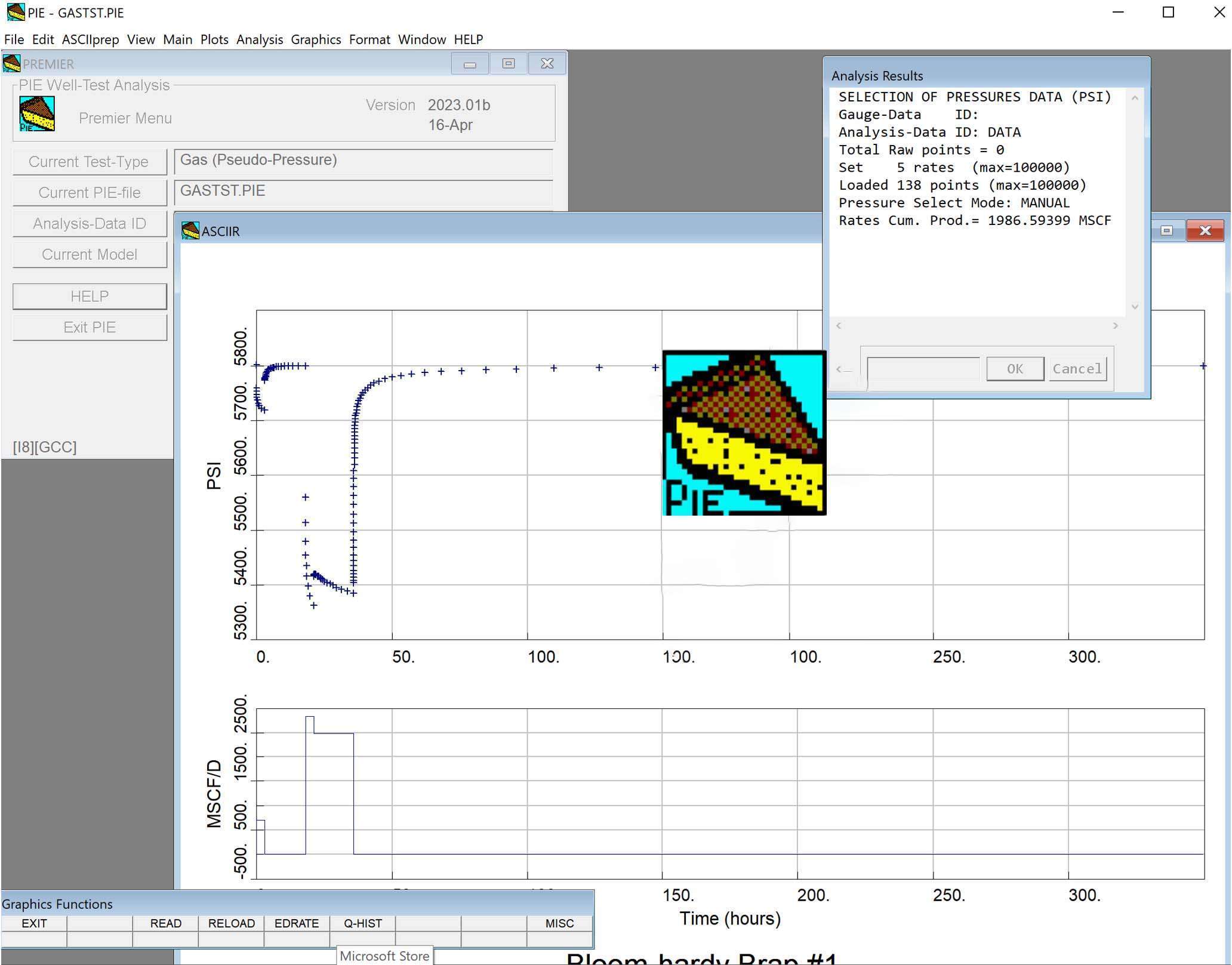
PIE Well Test Analysis 2023 is a specialized application developed for the oil and gas industry, designed to assist petroleum engineers in the critical task of analyzing well test data. This software offers interactive tools for visualizing and manipulating data, enabling detailed simulations and performance evaluations of oil and gas wells. It is an essential component for professionals focused on optimizing reservoir understanding and recovery.
Overview of PIE Well Test Analysis 2023
A Brief Introduction
PIE Well Test Analysis 2023 provides petroleum engineers with an interactive, window-based application for comprehensive well test analysis. The software is engineered to facilitate the detailed examination of well performance by allowing users to visualize raw data, perform sophisticated simulations, and derive essential reservoir parameters. Its application is fundamental in the exploration and production phase of the oil and gas industry, contributing to informed decision-making regarding reservoir management and hydrocarbon extraction.
Key Features and Functional Capabilities
Interactive Data Analysis
The application allows engineers to directly interact with well test data through a user-friendly interface. This includes the ability to import, plot, and manipulate various datasets, enabling immediate visual feedback on test behavior. Engineers can adjust parameters and observe the impact on the analysis in real-time, streamlining the diagnostic process and enhancing the interpretation of well behavior.
Type-Curve Modeling
PIE Well Test Analysis excels in type-curve simulation, a critical method for reservoir characterization. The software enables users to match observed test data against established analytical models, including those involving Bessel functions. This feature is crucial for estimating reservoir properties such as permeability and skin effect, thereby providing insights into the efficiency and productivity of a well.
Applications in the Oil and Gas Industry
In the oil and gas industry, PIE Well Test Analysis is indispensable for a range of applications that support efficient resource management and production optimization. Its capabilities are applied across various stages of reservoir evaluation:
- Reservoir Characterization: Defining reservoir properties like permeability, reservoir thickness, and heterogeneities through the analysis of transient and boundary-dominated flow regimes.
- Well Performance Evaluation: Assessing the productivity index and skin effect to understand the near-wellbore condition and identify potential completion issues.
- Production Optimization: Providing data-driven insights to develop effective strategies for maximizing hydrocarbon recovery and optimizing operational parameters.
- Resource Estimation: Contributing to more accurate estimations of recoverable reserves by providing a clearer understanding of reservoir dynamics.
Technical Integration and Output
PIE Well Test Analysis is designed to fit within broader engineering workflows, ensuring that its analytical results can be leveraged across different project phases. The software facilitates the export of processed data and analysis reports in formats compatible with other industry-standard applications. This allows for seamless integration into larger reservoir simulation or field development planning processes. Outputs typically include graphical representations of data matches, calculated reservoir parameters, and summary reports detailing the analytical findings.
Comparative Advantages Over Competitors
PIE Well Test Analysis distinguishes itself through its emphasis on interactive data manipulation and user-centric design, setting it apart from other well test analysis software. Key advantages include:
- Enhanced Interactivity: An intuitive window-based interface that allows for direct manipulation and visualization of data, facilitating quicker analysis iterations.
- Advanced Simulation Tools: Robust capabilities for type-curve matching and simulation, directly supported by well-established analytical solutions.
- Focus on Core Principles: While advanced, the software remains grounded in fundamental petroleum engineering principles, making it a reliable tool for accurate reservoir assessment.
Real-World Use Cases and Success Stories
PIE Well Test Analysis has been applied in numerous scenarios within the oil and gas sector to address complex reservoir challenges. For instance, it has been utilized to diagnose stimulation treatment effectiveness by analyzing pre- and post-treatment well tests, providing clear data on changes in skin effect and permeability. In exploration projects, the software aids in the initial appraisal of newly discovered reservoirs by determining their flow characteristics and potential productivity. These applications demonstrate the software’s crucial role in enabling engineers to make informed decisions that enhance operational efficiency and profitability.
Frequently Asked Questions
What is PIE Well Test Analysis used for?
PIE Well Test Analysis is primarily used by petroleum engineers to analyze well test data, helping to determine reservoir properties critical for effective oil and gas extraction. It aids in understanding reservoir behavior, assessing well productivity, and identifying issues such as a high skin effect.
How does type-curve modeling work in PIE?
Type-curve modeling in PIE Well Test Analysis uses analytical solutions and graphical representations, often involving complex mathematical functions, to match testing data with model predictions. This process assists engineers in evaluating well performance and estimating reservoir parameters like permeability.
Is PIE Well Test Analysis compatible with other engineering tools?
Yes, PIE Well Test Analysis can often integrate with other engineering tools, allowing for an enhanced workflow in analyzing oil and gas data and facilitating data transfer with commonly used applications. This compatibility ensures that its analytical outputs can be seamlessly incorporated into broader reservoir management and development workflows.





Reviews
There are no reviews yet.