

Download Gas Turbine Simulation Program – GSP 12.0 – Advanced Performance Analysis Tool
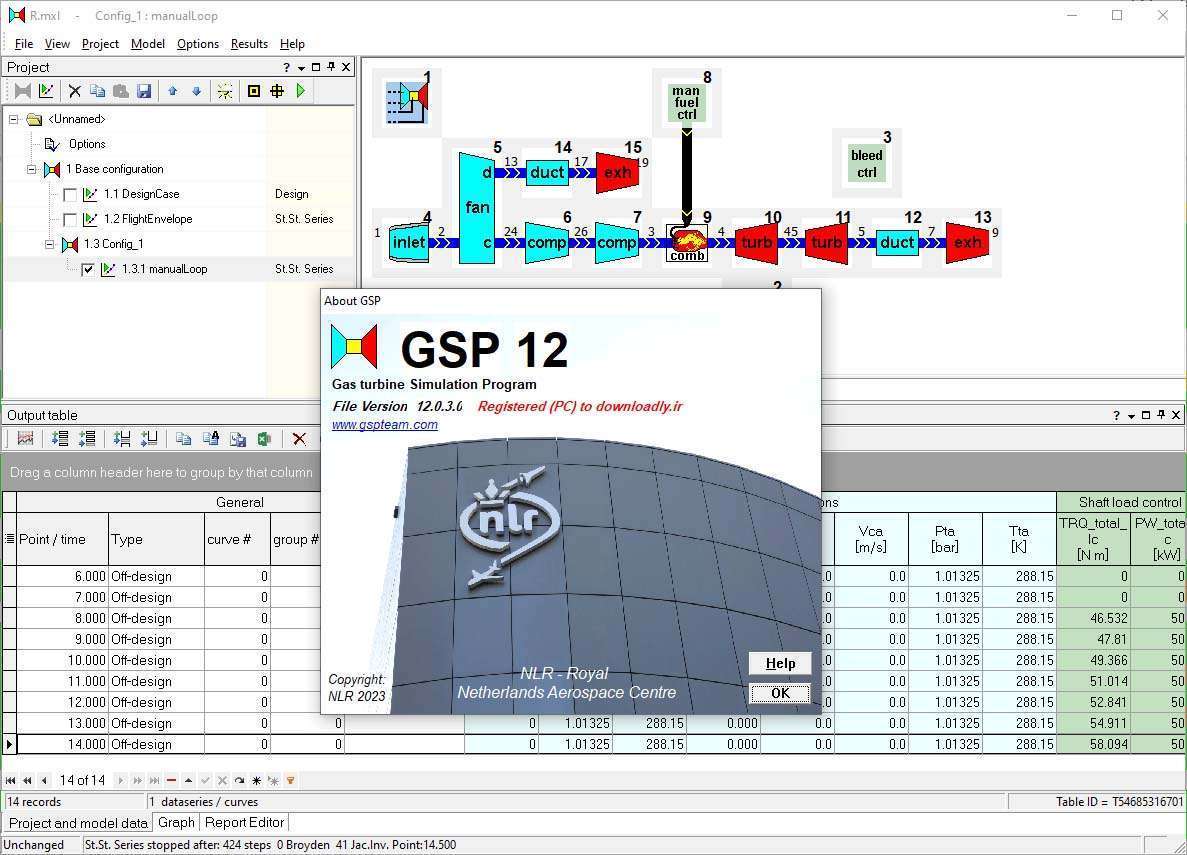
The Gas Turbine Simulation Program (GSP) 12.0, developed by the Royal Netherlands Aerospace Centre (NLR), is a specialized component-based modeling environment designed for the performance analysis of gas turbine engines. This sophisticated tool is critical for professionals in aerospace engineering and energy production, offering advanced capabilities for simulating complex thermodynamic cycles and operational behaviors.
Introduction to GSP and Its Applications in Aerospace
Overview of Gas Turbine Simulation
Gas Turbine Simulation Program (GSP) 12.0 is a robust software application engineered by the Royal Netherlands Aerospace Centre (NLR) for the comprehensive performance analysis of gas turbine engines. Its primary function is to enable detailed simulation of various gas turbine configurations, providing engineers with critical data for design, optimization, and operational assessment. The software plays a vital role in fields such as aerospace, where precise engine performance is paramount, and in the energy sector for power generation applications.
Capabilities and Core Features of GSP
Flexible Modeling Environment
GSP distinguishes itself through an object-oriented architecture that underpins its flexible modeling capabilities. This design philosophy allows users to construct complex gas turbine systems by stacking component models, which can be easily customized and rearranged. The software’s ability to handle diverse gas turbine configurations, including their interactions with external loads, means it can be adapted to a wide range of specific engineering challenges.
Simulation Techniques and Approaches
Steady-State vs Transient Simulation
GSP supports both steady-state and transient simulations, offering versatility in analyzing gas turbine behavior. Steady-state simulations are crucial for evaluating performance under consistent operating conditions, providing baseline data for design and efficiency assessments. Transient simulations, on the other hand, are essential for understanding how a gas turbine responds to changes in operating parameters or external loads over time, enabling the analysis of dynamic responses and system stability.
User Configurable Options and Performance Analysis
Output Formats and Analysis Tools
The software provides users with significant control over simulation outputs, allowing for configurable tabular and graphical data presentations. This feature enhances the interpretability of simulation results, enabling engineers to quickly identify trends, performance deviations, and areas for improvement. The ability to customize outputs ensures that the data generated by GSP is directly relevant to the specific analytical requirements of aerospace and energy production projects.
Practical Use Cases and Industry Applications
Real-World Examples of GSP in Energy Production
The Gas Turbine Simulation Program (GSP) finds extensive application in critical engineering sectors. In aerospace, it is used for the in-depth performance analysis of aircraft engines, contributing to design optimization and safety. Within the energy production industry, GSP is applied to simulate and analyze various gas turbine configurations used in power plants, helping to improve efficiency and reliability. Its capability to simulate interactions with external loads, such as pumps and generators, makes it a valuable tool for complex system integration and performance assessment.
Comparison with Competing Simulation Tools
Distinct Features of GSP
Compared to other simulation software, GSP offers a unique combination of flexibility and speed, largely due to its object-oriented approach and its utilization of zero-D models for thermodynamic cycles. This architecture allows for rapid simulations, particularly in transient scenarios, which can be a significant advantage in research and development cycles. While general engineering simulation tools may exist, GSP is specifically tailored for gas turbine performance analysis, offering specialized components and analysis methods not found in broader software packages.
Conclusion and Future Developments
The Gas Turbine Simulation Program (GSP) 12.0 represents a powerful and flexible tool for the advanced performance analysis of gas turbine engines, developed by the Royal Netherlands Aerospace Centre (NLR). Its component-based modeling, support for both steady-state and transient simulations, and user-configurable outputs make it invaluable for aerospace and energy production applications. As simulation technology continues to advance, GSP is positioned to remain a key asset for engineers seeking detailed insights into gas turbine performance and system dynamics.
Frequently Asked Questions
What types of gas turbine configurations can GSP model?
GSP is capable of modeling a wide variety of gas turbine configurations, including those with external loads such as generators and pumps. Its flexible architecture allows users to customize models extensively, making it suitable for diverse research and industrial applications.
How does GSP facilitate transient simulations?
GSP utilizes zero-D modeling techniques to average flow properties and enhances simulation speed, making it ideal for transient analysis of gas turbine thermodynamic cycles. This approach allows for efficient evaluation of dynamic performance characteristics.
Can GSP integrate with other engineering tools?
While specific integrations may vary, GSP’s architecture is designed to allow for the import and export of data, making it easier to collaborate with other engineering software and tools in analysis workflows. This facilitates its use within broader simulation and design ecosystems.




Reviews
There are no reviews yet.