

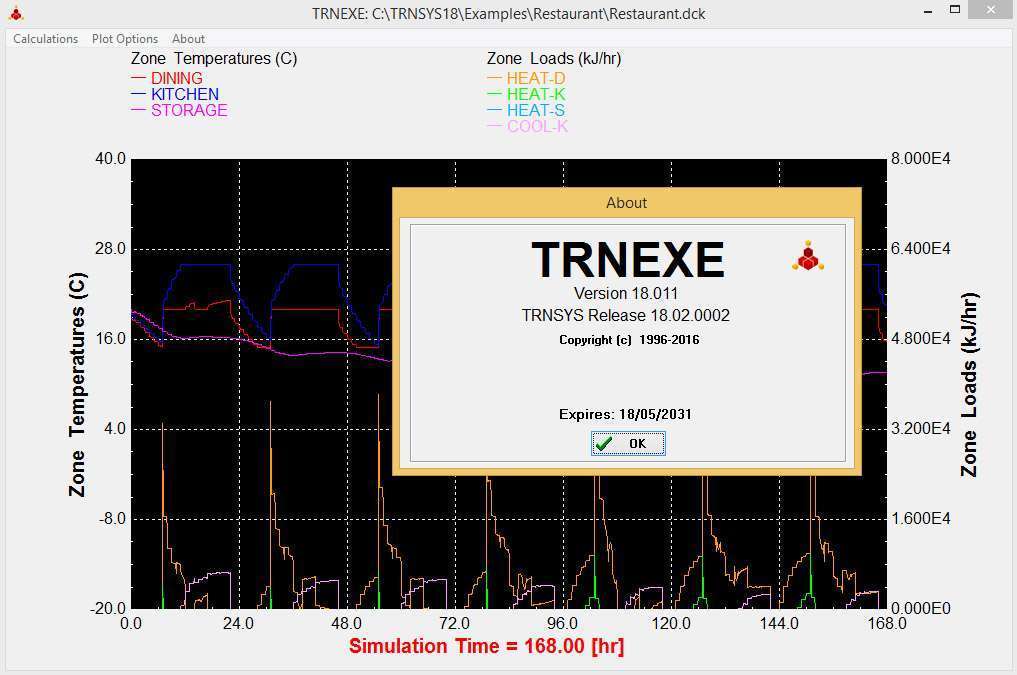
Download TRNSYS 18.02 – Advanced Simulation Software for Renewable Energy Systems
TRNSYS 18.02 is an advanced simulation environment developed by the University of Wisconsin-Madison, Solar Energy Laboratory, designed for modeling transient systems. This powerful software is utilized by engineers and researchers across the renewable energy sector and for comprehensive building energy simulations. Its primary purpose lies in analyzing the performance of dynamic energy systems, with capabilities extending beyond thermal and electrical to other transient processes, making it an indispensable tool for complex system evaluations.
An Overview of TRNSYS
What is TRNSYS?
TRNSYS, which stands for TRaNsient SYStems simulation program, is a modular simulation environment that allows users to create and analyze dynamic systems. Developed by the Solar Energy Laboratory at the University of Wisconsin-Madison, it provides a graphical interface for building complex simulation models. The software excels at evaluating systems that change over time, such as those incorporating renewable energy sources or complex HVAC components, by connecting pre-defined mathematical models.
Key Functional Capabilities
Modeling Energy Systems
TRNSYS offers an extensive library of simulation models, known as TRNSYS components, that cover a wide array of energy systems and related processes. This comprehensive collection enables users to build detailed models with ease, ensuring that various aspects of an energy system can be accurately represented and analyzed.
- A vast selection of components for simulating thermal energy systems, including solar thermal collectors, storage tanks, and heat exchangers.
- Models for electrical systems, power electronics, and energy conversion devices.
- Specialized components for geothermal systems, enabling detailed analysis of ground-source heat pumps and other related technologies.
- Tools for modeling weather data, optimizing system variables, and analyzing the thermophysical properties of materials.
- Capabilities to simulate renewable energy integrations such as solar PV, wind energy, and biomass systems.
Industry Applications of TRNSYS
Renewable Energy and Building Simulation
Professionals leverage TRNSYS for critical applications in the renewable energy sector and for detailed building performance analysis. Its transient simulation capabilities are particularly valuable for understanding how systems perform under varying conditions and over time.
- Detailed building energy simulations for optimizing HVAC system design, improving energy efficiency, and supporting LEED certification processes.
- Analysis of hybrid renewable energy systems, assessing the performance and interaction of solar thermal, geothermal, and photovoltaic technologies.
- Performance evaluation of advanced energy storage solutions and their integration into existing infrastructure.
- Research and development of new energy technologies by simulating and validating their operational behavior.
- Study of urban energy systems, including district heating and cooling networks.
Integration and Customization
TRNSYS is designed with flexibility in mind, allowing for deep integration into various engineering workflows and extensive user customization. This adaptability ensures that the software can meet the unique demands of different projects and research initiatives.
The platform supports the creation of custom components using external programming languages such as FORTRAN, C, or online servers, enabling users to model proprietary technologies or specialized system behaviors not covered by the standard library. This feature is crucial for advanced research where novel components or system configurations need to be accurately simulated. Furthermore, TRNSYS can interface with other simulation tools and analytical software, facilitating a more comprehensive system analysis.
Performance Validation and Simulation Accuracy
Ensuring the accuracy and reliability of simulation results is paramount in engineering analysis, and TRNSYS provides tools and methodologies to support performance validation. The software’s modular structure facilitates detailed examination of individual components and system variables, allowing for precise identification of system behaviors and potential issues.
Users can compare simulation outputs against experimental data or established benchmarks to validate the model’s predictive capabilities. Analyzing system variables and transient behavior over time helps in understanding the dynamics and ensuring that the simulated performance aligns with real-world expectations. The transparent nature of the simulation process in TRNSYS allows for a thorough review of the underlying mathematical models and their parameters, contributing to trusted results.
User Examples and Case Studies
TRNSYS has been instrumental in numerous research projects and practical applications across the globe. These examples highlight the software’s utility in addressing complex energy challenges and advancing technological development.
- A building simulation project to assess the energy performance of a novel passive solar design, incorporating detailed climate data and occupant behavior models.
- The integration of a hybrid renewable energy system comprising solar thermal collectors and a geothermal heat pump for a commercial facility, analyzing system efficiency and cost-effectiveness.
- Research into the performance of concentrated solar power (CSP) systems with thermal energy storage, optimizing operational strategies under variable solar irradiation.
- Development and testing of microgrid control strategies for educational campuses, simulating the interplay between renewable generation, battery storage, and grid connection.
- Studies on the energy consumption and thermal comfort in residential buildings with advanced insulation materials and smart window technologies.
Conclusion and Further Resources
TRNSYS 18.02 stands as a powerful and flexible simulation software, indispensable for professionals and researchers in the renewable energy and building simulation fields. Its extensive component library, coupled with robust customization options, provides a unique platform for analyzing complex transient systems with high accuracy. For those interested in detailed energy system modeling and performance evaluation, TRNSYS offers a comprehensive solution.
For more in-depth information on TRNSYS, you can explore the resources provided by the University of Wisconsin-Madison, Solar Energy Laboratory. Further details regarding specific functionalities, component models, and licensing can be found on their official documentation pages.
Frequently Asked Questions
What types of systems can be simulated using TRNSYS?
TRNSYS is versatile in simulating various systems, including thermal energy systems, electrical systems, and even traffic flow processes. It is well-suited for analyzing renewable energy integrations like solar thermal and geothermal systems, as well as complex HVAC configurations and energy storage solutions.
How does TRNSYS handle model customization?
TRNSYS allows users to modify existing simulation models or create entirely new components from scratch. This is achievable through various programming interfaces, enabling tailored simulations that precisely fit specific research objectives or project requirements beyond the standard component library.
What is the relevance of TRNSYS in renewable energy research?
TRNSYS plays a significant role in renewable energy research by providing a robust platform to evaluate the dynamic performance of thermal and renewable energy systems. Its ability to model transient behaviors under changing conditions aids in the assessment and development of new energy technologies and system designs.





Reviews
There are no reviews yet.