
Download Synopsys LucidShape 2.1 – Advanced Automotive Lighting Design Software
Synopsys LucidShape 2.1 is a specialized software solution developed by Synopsys Inc. for the intricate field of automotive lighting design. This application provides engineers with advanced tools to design, simulate, and analyze lighting systems, making it an essential component for automotive manufacturers and suppliers aiming to meet evolving lighting standards and aesthetic requirements. Its comprehensive capabilities address the complex optical challenges inherent in modern vehicle lighting, from headlights and taillights to interior illumination.
Introduction to Synopsys LucidShape
Synopsys LucidShape stands as a leading software for automotive lighting design, offering a robust suite of tools engineered to meet the rigorous demands of the automotive industry. Developed by Synopsys Inc., a prominent name in electronic design automation, LucidShape is specifically tailored for creating and evaluating complex optical systems found in vehicles. It enables designers and engineers to visualize light distribution, optimize performance, and ensure compliance with regulatory standards, thereby streamlining the development cycle for automotive lighting components.
Key Features of LucidShape
Comprehensive Design Tools
Synopsys LucidShape offers a rich set of design capabilities that support the creation of a wide array of automotive lighting products. These tools are optimized for precision and efficiency, facilitating complex optical surface definitions and component integration.
- Parametric design functions allow for the creation and modification of optical surfaces, ensuring that design changes can be made efficiently.
- Tools for defining and managing complex geometries are included, supporting the development of intricate headlight and taillight assemblies.
- The software facilitates the design of diffusers, reflectors, and lenses, among other optical components, with specialized workflows for each.
Optical Simulation and Analysis
At its core, LucidShape leverages advanced algorithms to provide highly accurate optical simulations. This allows engineers to predict the performance of lighting designs before physical prototyping, saving time and resources.
- Expert algorithms are employed to accurately calculate light distribution, intensity, and color performance.
- Simulations cover a broad spectrum of analyses, including photometric testing, glare evaluation, and uniformity assessments.
- The software enables virtual testing under various environmental and operational conditions, crucial for validating real-world performance.
Interactive Tools and User Environment
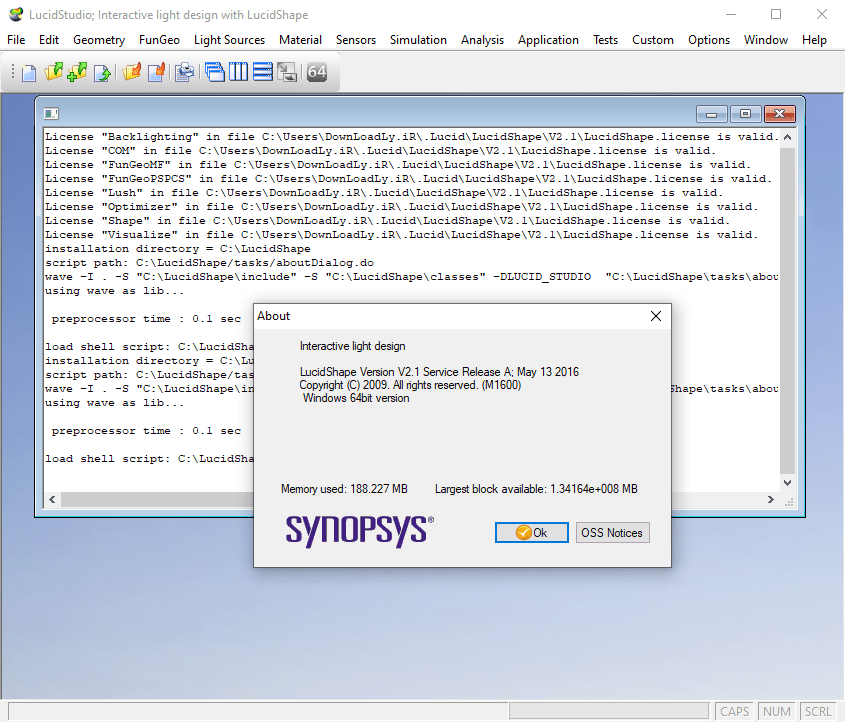
LucidShape provides an intuitive and interactive user environment that enhances productivity and collaboration among design teams.
- The user interface is designed for ease of navigation, providing quick access to a wide range of design and simulation functionalities.
- Interactive visualization tools allow users to render designs and simulation results in real-time, aiding in design exploration.
- Customizable toolbars and workflows help users tailor the environment to their specific project needs and preferences.
Different Variants of LucidShape
Synopsys offers several variations of LucidShape to cater to different user needs and integration requirements within the automotive design ecosystem.
- LucidShape: The core application providing comprehensive design and simulation capabilities.
- LucidShape CAA V5 Based: This version integrates seamlessly with the CATIA V5 platform, enabling design engineers to leverage LucidShape’s optical tools within their familiar CAD environment.
- LucidShape Lite: A streamlined version offering essential design and simulation features for less complex projects or for users needing a focused toolset.
- LucidDrive: Specialized software focused specifically on the design and simulation of rear-end lighting systems and signaling.
Industrial Applications and Case Studies
Synopsys LucidShape is instrumental in various real-world automotive lighting projects, aiding engineers in overcoming design challenges and achieving optimal results.
- Automotive manufacturers utilize LucidShape for the design and validation of complex headlight systems, ensuring compliance with international lighting regulations such as ECE and SAE standards.
- The software is applied in the development of distinctive taillight designs, enabling the creation of advanced LED matrix and signal patterns that enhance vehicle aesthetics and safety.
- Interior lighting simulations using LucidShape help designers create ambient and functional lighting solutions that improve the cabin experience.
- Engineers employ LucidShape to analyze light spill and glare for adaptive driving beam systems, optimizing road illumination while minimizing discomfort to other drivers.
Conclusion and Future Developments
Synopsys LucidShape 2.1 continues to be a pivotal platform in the automotive lighting sector, empowering engineers with the tools needed for cutting-edge design and validation. Its comprehensive feature set, advanced simulation capabilities, and flexible integration options address the evolving landscape of automotive illumination technology.
As automotive lighting trends move towards more sophisticated LED technologies, advanced driver-assistance systems (ADAS) integration, and customizable lighting experiences, LucidShape is poised to evolve further. Future developments are expected to focus on enhancing simulation speeds, expanding the material library, and integrating AI-driven design optimization, ensuring it remains at the forefront of automotive lighting innovation.
Frequently Asked Questions
What is Synopsys LucidShape used for?
Synopsys LucidShape is primarily used for designing, simulating, and analyzing automotive lighting products. It allows engineers to visualize and optimize lighting systems such as headlights, taillights, and interior lights efficiently, ensuring performance and compliance with standards.
What types of simulations does LucidShape support?
LucidShape supports various optical simulations, including the analysis of light patterns, photometric performance, glare evaluation, and beam uniformity for automotive headlight and taillight designs under different operational conditions.
How does LucidShape integrate into existing workflows?
LucidShape can be integrated into existing design workflows, particularly through its CATIA V5-based variant, allowing for seamless collaboration and optimization of automotive lighting designs directly within the familiar CAD environment.





Reviews
There are no reviews yet.