

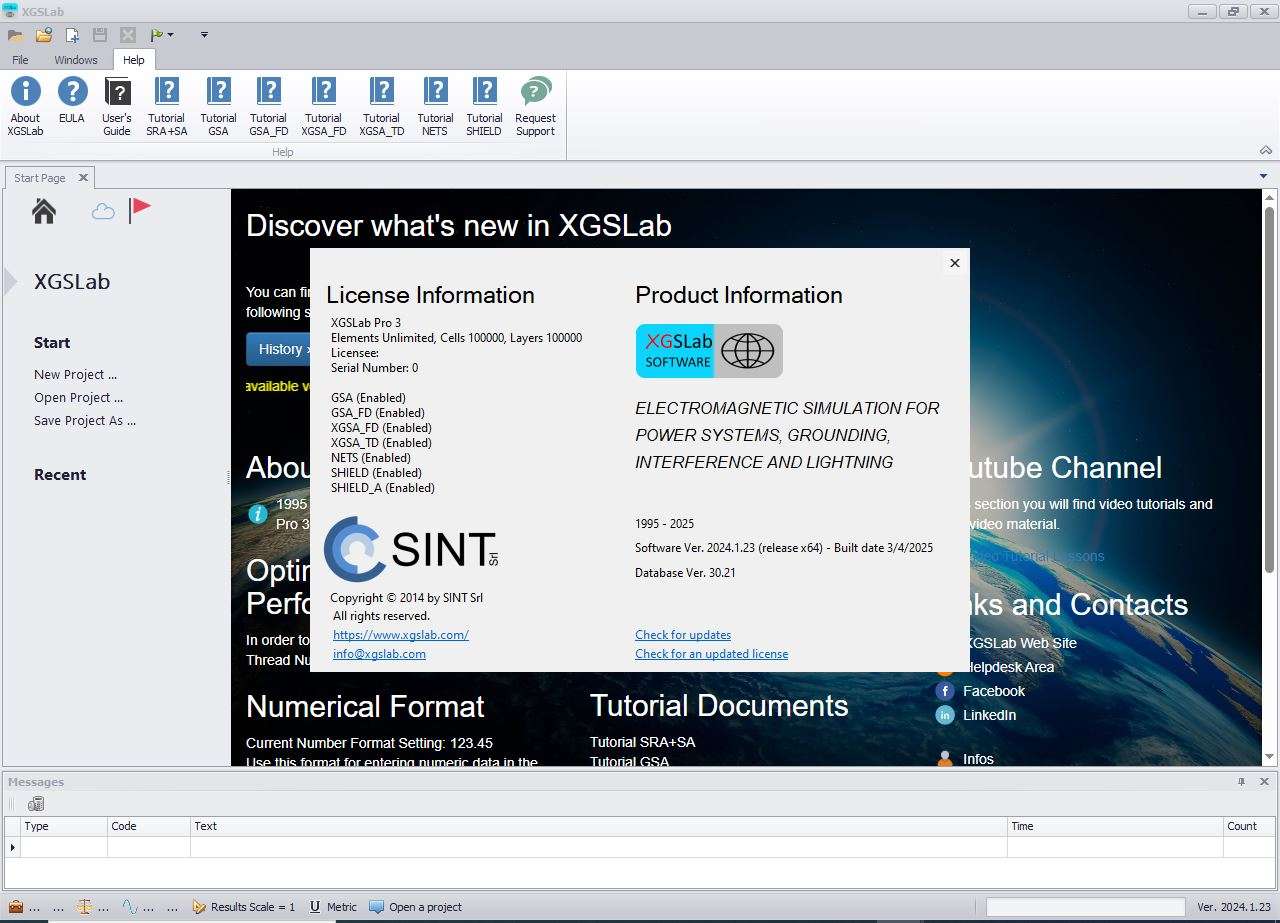
Download XGSLab 2025.1.9 – Advanced Electromagnetic Field Simulation Software for Electrical Engineering
XGSLab 2025.1.9 is a sophisticated electromagnetic simulation software designed for electrical engineers and researchers. Developed with a focus on electromagnetic field theory and advanced computational methods, it addresses complex challenges in grounding systems, power networks, and lightning protection. This scientific and engineering tool leverages Maxwell’s equations to provide precise analysis, making it indispensable for academic and industrial applications worldwide.
Comprehensive Electromagnetic Analysis for Power and Grounding Systems
XGSLab serves as a powerful platform for detailed electromagnetic simulations, crucial for the design and analysis of electrical infrastructure. Its core capabilities extend to understanding electromagnetic field behavior, optimizing grounding systems, assessing interference, and designing effective lightning protection measures. By grounding its analysis in fundamental electromagnetic field theory and Maxwell’s equations, XGSLab enables engineers to achieve accurate predictive models for critical power system components and networks.
Modular Design Tailored to Diverse Electromagnetic Applications
The software’s architecture is built around distinct modules, each dedicated to specific areas of electromagnetic analysis, ensuring both specialized focus and integrated functionality.
Grounding System Analysis Modules
Modules such as GSA, GSA_FD, XGSA_FD, and XGSA_TD are specifically engineered for comprehensive grounding system analysis. These tools employ the advance PEEC (Partial Element Equivalent Circuit) method, a robust numerical technique that models electromagnetic fields efficiently. They allow for detailed investigation into grounding electrode behavior and system performance under various conditions.
Network Solver and Lightning Shielding Tools
The NETS module is designed for solving complex network parameters, utilizing the Phase Components Method (PCM). Complementing this, the SHIELD and SHIELD_A modules focus on lightning protection design. These tools allow engineers to create and analyze 3D graphical models of protective systems, implementing established methods like the Rolling Sphere and Eriksson models to ensure effective shielding against lightning strikes.
Advanced Computational Techniques for Accuracy and Speed
XGSLab integrates several advanced computational techniques to ensure simulation accuracy and efficiency. The software harnesses the power of parallel computing, significantly reducing analysis times for complex models. It employs methods such as Sommerfeld Integrals and Green functions for analyzing electromagnetic wave propagation and Jefimenko equations for field calculations. Furthermore, the utilization of fast Fourier transforms contributes to its capability in performing precise frequency and time-domain analyses efficiently.
Data Integration and Interoperability with Engineering Workflows
Designed for seamless integration into professional engineering workflows, XGSLab offers robust data import and export capabilities. It supports common CAD formats like DXF and DWG, facilitating the import of existing designs. Data can also be exchanged with industry-standard simulation tools such as EMTP, ATP, and MATLAB, while results can be easily processed further in Excel. For geographical analysis, XGSLab allows export of simulation data compatible with Google Earth, enabling clear visualization of grounding systems and other field analyses in a real-world context.
Practical Use Cases Demonstrating Industry and Academia Adoption
XGSLab’s proven capabilities are recognized globally, with widespread adoption in both academic research and industrial practice. Universities utilize the software for educating future electrical engineers and conducting advanced research in electromagnetics. Leading electrical utilities and engineering firms rely on XGSLab for critical tasks like optimizing grounding system performance in substations, conducting power system transient simulations, and designing robust lightning protection systems for critical infrastructure. This broad adoption underscores its reliability and effectiveness in real-world engineering challenges.
How XGSLab Supports Engineers at All Expertise Levels
XGSLab is engineered with a user-centric approach, offering an intuitive interface that balances powerful analytical capabilities with ease of use. While the underlying electromagnetic theory and numerical methods are advanced, the software’s design ensures that engineers, regardless of their specific expertise in electromagnetics, can effectively employ its tools. This accessibility allows both novice users and seasoned experts to leverage its sophisticated simulation features for their design and analysis projects with confidence.
Frequently Asked Questions
What types of electromagnetic simulations can XGSLab perform?
XGSLab supports a wide range of electromagnetic simulations including grounding system analysis, frequency and time domain simulations, network parameter calculations, and lightning shielding design. Its modular structure allows engineers to analyze complex electromagnetic scenarios with scientific precision.
How does XGSLab integrate with other engineering software tools?
XGSLab provides extensive interoperability through import/export of CAD files (DXF, DWG), data exchange with power system tools like EMTP and ATP, and compatibility with MATLAB and Excel for numerical data processing. It also allows export of geographical data for visualization in Google Earth.
Is XGSLab suitable for beginners or does it require advanced electromagnetic knowledge?
XGSLab features an intuitive interface designed to accommodate both beginners and expert users. While it relies on advanced electromagnetic theory, the software is engineered to be accessible and provides tools that do not require specialized knowledge for effective use.







Reviews
There are no reviews yet.