

Download Crystal 17 – Computational Chemistry Software for Crystalline Solids
Crystal 17 is a specialized computational chemistry software designed for the rigorous study of crystalline solids and other periodic systems. It facilitates advanced quantum chemical calculations for researchers, professors, and students in computational chemistry, materials science, and physics. The software enables detailed analysis of electronic structures, molecular properties, and material behaviors, making it an essential tool for scientific inquiry into periodic systems.
Overview of Crystal 17 and Its Role in Crystalline Solid Modeling
Crystal 17 serves as a powerful platform for performing quantum chemical calculations on systems exhibiting periodicity. Its primary focus is on enabling scientists to model and understand the behavior of crystalline solids at an atomic level. By implementing a range of sophisticated computational methods, the software provides deep insights into the electronic and structural properties of materials, crucial for advancements in diverse scientific fields.
Advanced Quantum Mechanical Methods Implemented in Crystal 17
The software implements a comprehensive suite of quantum mechanical methods essential for accurate electronic structure calculations. These methods provide different levels of approximation and sophistication for simulating molecular and material behavior.
- Hartree-Fock (HF) Approximation: Forms a baseline for many quantum chemical calculations, providing a non-relativistic approach to electron correlation.
- Pure Density Functional Theory (DFT): Utilizes various DFT functionals to approximate the exchange-correlation energy, offering a balance between accuracy and computational cost for periodic systems.
- Hybrid Functionals: Crystal 17 supports a significant variety of hybrid functionals, which mix exact Hartree-Fock exchange with DFT-based correlation and exchange. This includes established functionals like B3PW and B3, alongside generalized gradient approximation (GGA) variants like mGGA. Furthermore, it incorporates popular functionals such as the 21-MM06 suite, enabling researchers to select highly customized and accurate computational strategies for their specific research questions on crystalline materials.
Supported Systems and Structural Calculations
Crystal 17 is engineered to handle a broad spectrum of periodic systems, extending beyond simple crystalline solids to include more complex structures relevant to materials science research. This versatility allows for thorough investigations into various physical phenomena.
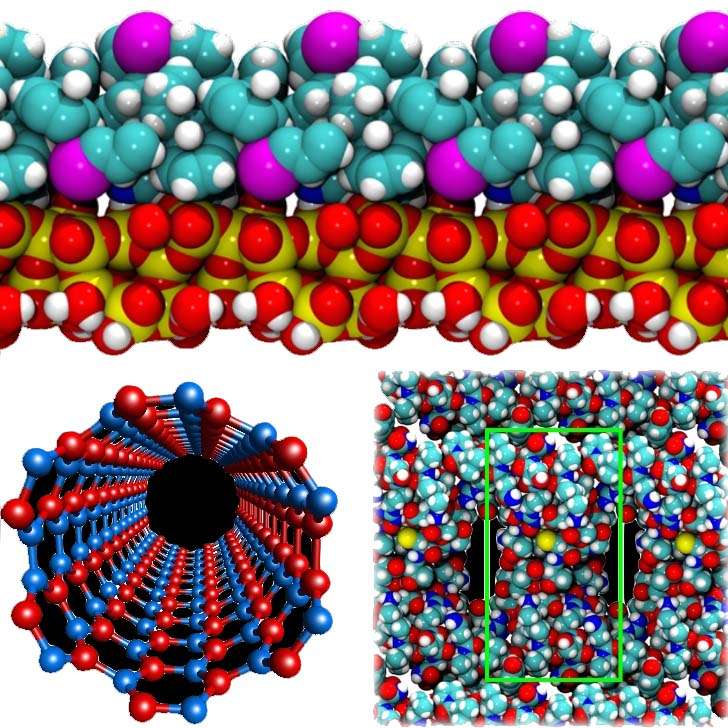
- Periodic Systems: The software excels in modeling one-, two-, and three-dimensional periodic systems, encompassing molecules, crystals, rods, films, and surfaces.
- Vibrational Frequency Calculations: Detailed simulations of vibrational modes and frequencies can be performed, crucial for interpreting spectroscopic data and understanding material stability.
- Structural Optimization: Crystal 17 allows for the automated optimization of atomic positions and unit cell parameters, determining the most stable configurations for crystalline structures and related systems.
Basis Sets and Polar Functionality in Crystal 17
The precision of quantum chemical calculations heavily relies on the choice of basis sets. Crystal 17 offers extensive support for a variety of basis sets and polar functions, allowing computational chemists to tailor calculations for specific elements and properties.
- Basis Set Flexibility: The software supports a wide range of atomic orbital basis sets, enabling users to select appropriate representations for the electronic wavefunctions of different atoms.
- Polar Functions: Inclusion of polar functions (e.g., d-orbitals on first-row atoms, p-orbitals on hydrogen) is critical for accurately describing chemical bonding, molecular geometries, and the electronic properties of crystalline solids, especially for polar materials and surfaces.
Applications and Research Use Cases in Computational Chemistry and Physics
Crystal 17 finds extensive application in academic and research settings, supporting fundamental scientific discovery and materials development. Its capabilities are instrumental in fields requiring detailed understanding of periodic structures.
- Materials Science: Researchers use Crystal 17 to predict and analyze the electronic, optical, and mechanical properties of new or existing crystalline materials, aiding in the design of advanced functional materials.
- Solid-State Physics: The software is employed to study phenomena such as superconductivity, magnetism, and electronic band structures in solids by accurately calculating their electronic configurations.
- Catalysis Research: Modeling surfaces and interfaces with Crystal 17 helps in understanding catalytic mechanisms and designing more efficient catalysts for chemical reactions.
- Academic Research and Education: Students and professors utilize Crystal 17 to learn and conduct research in quantum chemistry, computational physics, and materials modeling, providing hands-on experience with cutting-edge simulation techniques.
Frequently Asked Questions
What types of calculations can Crystal 17 perform in computational chemistry?
Crystal 17 performs electronic structure calculations using Hartree-Fock, density functional theory (DFT), and hybrid functional methods. It supports vibrational frequency analysis, structural optimizations, and periodic system modeling for crystals, rods, films, and surfaces.
Which hybrid functionals are implemented in Crystal 17 for density functional theory calculations?
Crystal 17 includes several hybrid functionals such as B3PW, mGGA, B3, and the 21-MM06 functionals, allowing flexible and accurate density functional theory computations on periodic systems.
Who are the typical users of Crystal 17, and what industries benefit from it?
Crystal 17 is chiefly used by computational chemists, physicists, researchers, and students focusing on crystalline solids, materials science, and periodic system analysis in academic and scientific research environments.



Reviews
There are no reviews yet.