

Download FRED Optimum 24.10.3 – Advanced Optical Simulation Software for Ray Tracing and Laser System Design
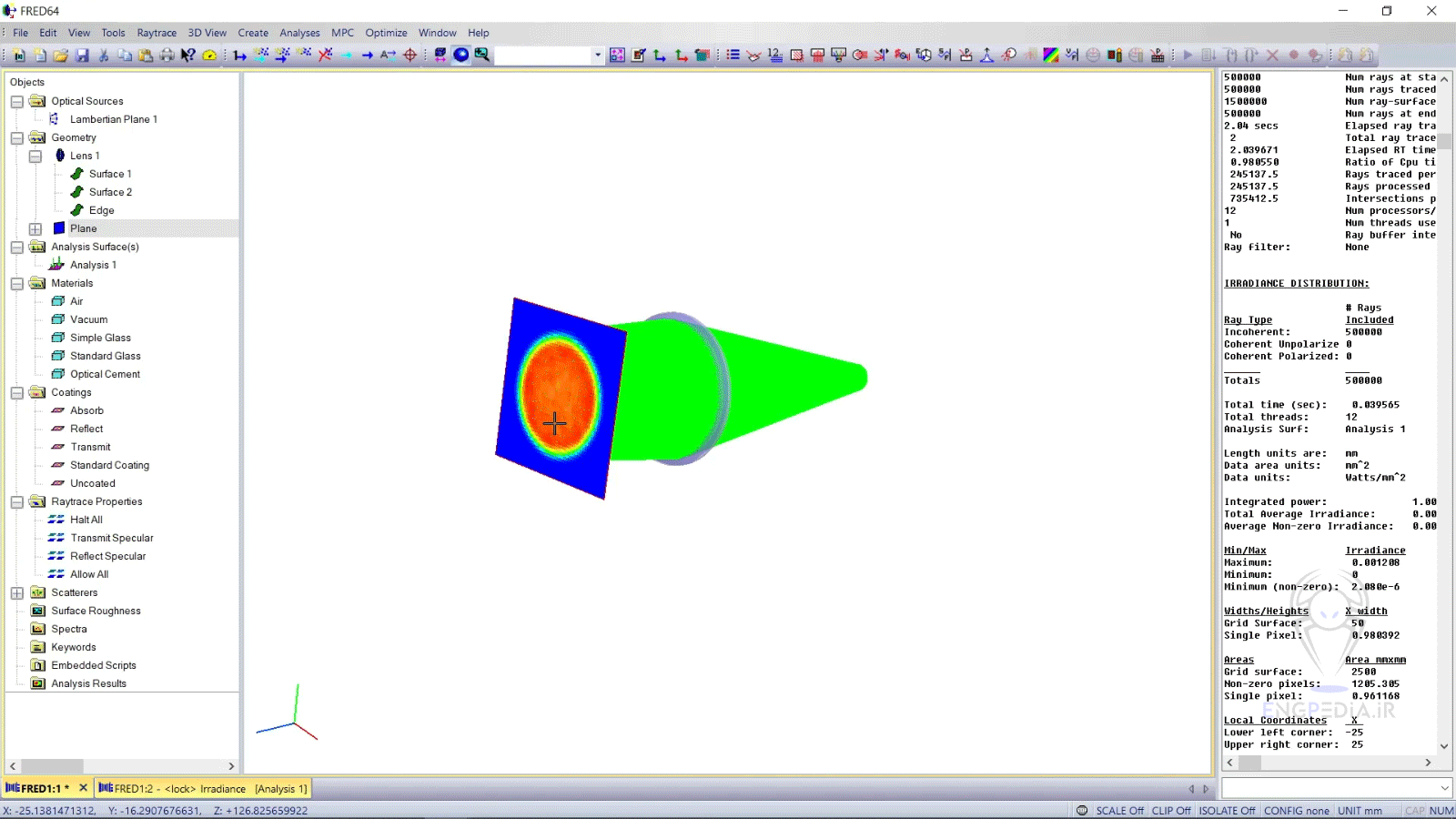
FRED Optimum 24.10.3, developed by CBS Europe, is a specialized optical simulation and analysis software designed for optical engineers. It provides advanced capabilities for ray tracing, enabling the detailed modeling, analysis, and optimization of complex optical systems. This software is crucial in fields such as aerospace, automotive, consumer electronics, medical instrumentation, lighting systems, and laser system design, offering precise solutions for optical engineering challenges.
Advanced Modeling for Optical and Imaging Systems
FRED Optimum excels in simulating sophisticated optical systems, making it an indispensable tool for professionals in optical engineering. The software is widely applied across demanding industries including aerospace for advanced optics, automotive for lighting solutions, consumer electronics for display technologies, and medical device development.
Core functionalities include comprehensive scattered light analysis to understand and mitigate stray light, detailed imaging system optimization for enhanced performance, and precise laser system modeling for applications requiring high-intensity light sources. These capabilities empower engineers to design and refine optical components and systems with exceptional accuracy.
High-Speed Ray Tracing Powered by GPU and Distributed Computing
To address the computational demands of complex optical simulations, FRED Optimum integrates significant performance enhancements through hardware acceleration and parallel processing. The software leverages GPU acceleration, alongside multi-core processing capabilities, to execute ray tracing calculations at high speeds.
This approach can lead to simulation speed improvements of up to 100 times over traditional methods, drastically reducing the time required for analyzing intricate optical designs. Furthermore, FRED Optimum supports distributed computing across a network, enabling users to scale their simulation tasks across multiple machines to further enhance computational throughput and handle extremely large or complex projects efficiently.
Comprehensive Support for Optical Phenomena and 3D CAD Integration
FRED Optimum provides robust simulation capabilities for a wide range of optical phenomena, supporting both coherent and incoherent light sources. This includes the accurate modeling of interference and diffraction effects, which are critical for understanding wave propagation and its impact on system performance.
- Simulation of coherent and incoherent light, including interference and diffraction.
- Modeling of light scattering on surfaces and within volumes to effectively control stray light.
- Import and export of industry-standard 3D CAD file formats such as IGES, STEP, and OBJ, facilitating seamless integration into optomechanical system design workflows.
This comprehensive support for optical physics and its integration with mechanical design tools allow for a holistic approach to optical system development.
Automation and Customization with BASIC Scripting and Optimization Algorithms
FRED Optimum offers powerful tools for automating and customizing simulation workflows, enhancing engineer productivity and enabling advanced design exploration. The software includes extensive BASIC scripting capabilities, allowing users to tailor simulation processes, automate repetitive tasks, and integrate custom functionalities.
In addition to scripting, FRED Optimum features advanced design parameter optimization using multivariate algorithms. These optimization tools enable iterative refinement of optical designs to achieve specific performance targets, such as maximizing light throughput or minimizing aberrations, thereby accelerating the design cycle for complex optical instruments.
Applications Across Industries: From Medical Devices to Aerospace Optics
The versatile capabilities of FRED Optimum enable its application in a diverse array of high-technology sectors, addressing specific engineering challenges with precision optical analysis.
- Aerospace: Engineering advanced optical systems for telescopes, satellite imaging, and surveillance systems, often requiring rigorous scattered light analysis to ensure image quality.
- Automotive: Designing sophisticated lighting systems, including headlights, taillights, and interior illumination, with a focus on efficiency, beam control, and glare reduction.
- Medical Instrumentation: Developing optical components for diagnostic devices, surgical tools, and imaging equipment, where accuracy and light-tissue interaction modeling are paramount.
- Consumer Electronics: Optimizing display technologies, camera modules, and illumination systems for smartphones, augmented reality devices, and other electronic products.
- Lighting Systems: Designing efficient and precise lighting solutions using LEDs, freeform optics, and complex optical elements.
- Laser Systems: Modeling the behavior of lasers, including fiber optics and laser line generators, for applications in industrial, scientific, and telecommunications fields.
- Optical Instruments: Optimizing the performance of instruments such as spectrometers, interferometers, and microscopes for research and analytical purposes.
Frequently Asked Questions
What types of light can FRED Optimum simulate?
FRED Optimum can simulate both coherent light, such as lasers, and incoherent light sources. This comprehensive capability extends to the analysis of complex wave phenomena like interference and diffraction, ensuring accurate modeling of a wide range of optical systems and their behavior under different light conditions.
How does FRED Optimum enhance simulation speed for optical designs?
FRED Optimum significantly accelerates ray tracing calculations by utilizing GPU-based processing and supporting distributed computing across multiple CPU cores, up to 127 cores. This advanced parallel processing can dramatically reduce simulation times, potentially by up to 100 times compared to conventional CPU-only multithreaded calculations, enabling faster design iterations.
Can FRED Optimum integrate mechanical CAD models into optical simulations?
Yes, FRED Optimum is designed for seamless integration with mechanical design workflows. It supports importing and exporting common 3D CAD file formats, including IGES, STEP, and OBJ. This feature is essential for combined optomechanical system design, allowing engineers to incorporate precise mechanical geometries into their optical simulations.







Reviews
There are no reviews yet.