

Download Mecway 28.0 – Comprehensive Finite Element Analysis Software for Mechanical and Thermal Simulation
Mecway 28.0 is a general-purpose finite element analysis (FEA) software designed for mechanical and thermal simulations. Developed by Mecway Ltd, it offers an integrated environment for engineers and students in mechanical engineering, structural analysis, and manufacturing design. The software provides a cost-effective yet capable solution for simulation needs, particularly suited for small to medium engineering firms and educational institutions.
Overview of Mecway and Its Role in Mechanical Engineering Simulation
Mecway serves as a comprehensive tool within the mechanical engineering software landscape, focusing on making advanced finite element analysis more accessible. It allows professionals to validate designs and understand product performance under various physical conditions. The software supports a broad spectrum of analyses, catering to industries that require rigorous testing of components and systems before physical prototyping.
Mechanical and Thermal Analysis Capabilities in Mecway
Linear and Non-Linear Stress Analysis
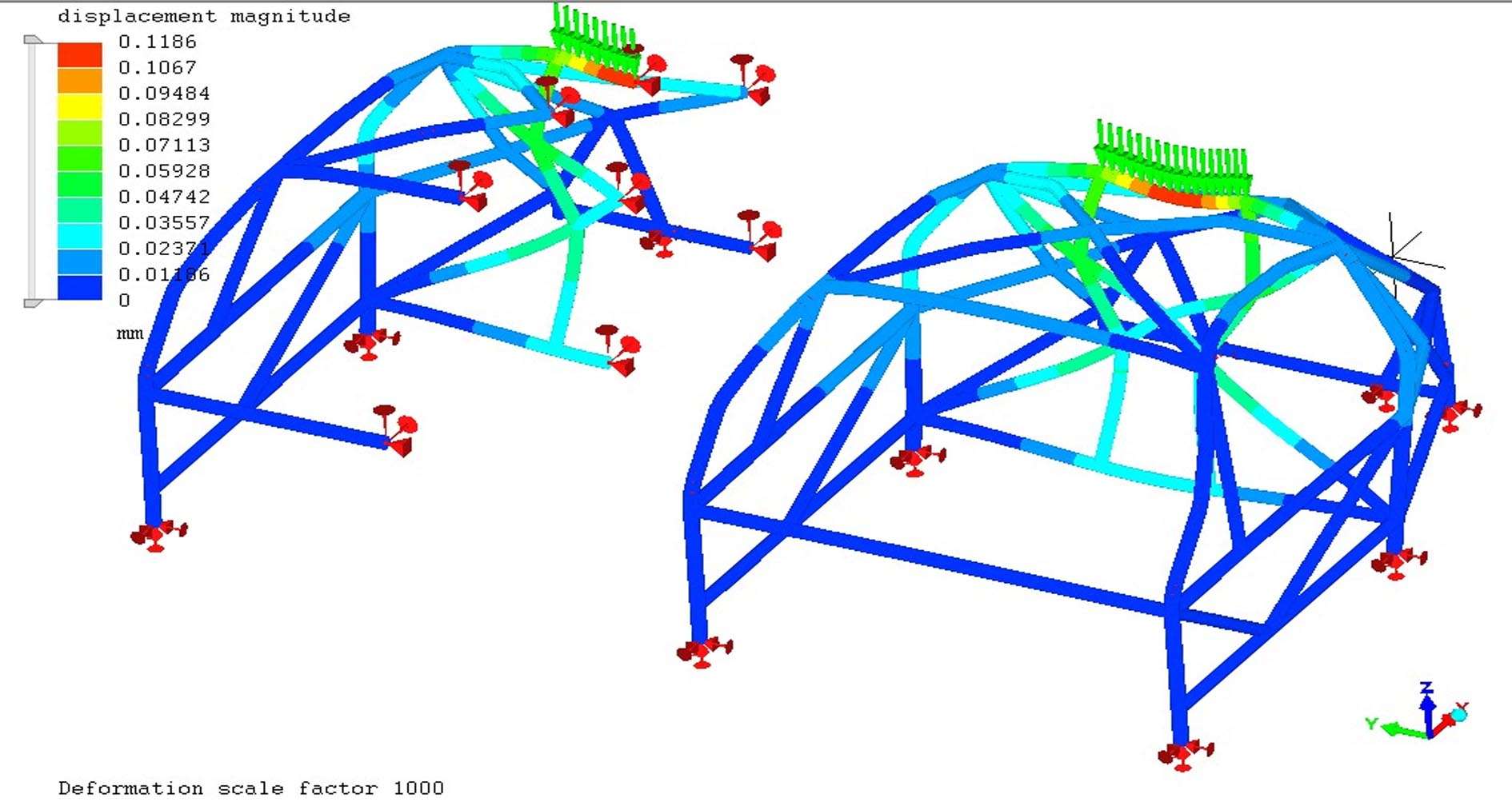
Mecway enables users to perform detailed stress analyses essential for structural integrity. This includes linear static analysis to assess stress, strain, and displacement under typical operational loads. For scenarios involving material yielding or large deformations, the software supports non-linear static analysis, accurately predicting behavior beyond the elastic limit.
Dynamic and Modal Analysis Features
Understanding a structure’s response to dynamic forces and vibrations is crucial. Mecway offers modal analysis to identify natural frequencies and mode shapes, preventing resonance issues. It also includes buckling analysis to determine critical loads at which a structure may become unstable, and dynamic analysis functionalities for simulating responses to time-varying loads.
Thermal Simulation and Coupled Thermal-Structural Analysis
The software facilitates comprehensive thermal simulations, including steady-state and transient thermal analyses. This allows engineers to predict temperature distributions and heat transfer within components. Furthermore, Mecway supports coupled thermal-structural analysis, where the effects of thermal expansion or contraction are considered alongside mechanical loads, providing a more realistic simulation of combined physics.
Integrated Preprocessing, Meshing, and CAD Interface
Geometry Creation and CAD Import Options
Mecway streamlines the initial stages of the analysis workflow by offering basic geometry creation tools and robust CAD import capabilities. It supports standard file formats such as STEP and IGES, allowing seamless integration with existing CAD data from various design software, ensuring compatibility and reducing data translation errors.
Mesh Generation and Refinement Controls
A critical step in FEA is generating a suitable mesh. Mecway provides automatic mesh generation, capable of producing both tetrahedral and hexahedral elements, which are fundamental for accurate simulation results. Users also have control over local mesh refinement, enabling them to concentrate computational effort on critical areas of the model for improved accuracy without excessively increasing model size.
Solver Technology and Automation through Scripting
Mecway Native Solver and Calculix Integration
Mecway features its own proprietary solver for mechanical and thermal analyses. To enhance user confidence and provide validation options, it also integrates with the well-established open-source Calculix solver. This dual-solver approach allows users to cross-verify results, ensuring a high level of reliability in their simulation outcomes.
Lua Scripting and Parameterized Studies
Workflow efficiency is enhanced through Mecway’s support for Lua scripting. This powerful feature allows users to automate repetitive tasks, program custom load cases, boundary conditions, and post-processing routines. Additionally, the capability for parameterized studies enables efficient design exploration by systematically varying input parameters and observing their impact on simulation results.
Application Examples and Industry Use Cases
Mecway finds application in numerous real-world engineering scenarios. Mechanical engineers utilize it for product design validation, ensuring components can withstand operational stresses and environmental conditions. Vibration analysis helps in designing quieter and more durable machinery, while thermal studies are crucial for managing heat in electronics and mechanical systems. In educational settings, Mecway serves as a valuable tool for training students in the principles and practice of finite element analysis.
System Compatibility and Performance Optimization
Mecway is designed to run efficiently on standard professional workstations. While specific system requirements are proprietary, its architecture is optimized to leverage modern hardware, ensuring that both complex simulations and routine analyses can be performed with practical turnaround times in typical engineering environments.
Frequently Asked Questions
What types of mechanical simulations can I perform with Mecway 28.0?
Mecway supports a range of mechanical simulations including linear and non-linear static stress analysis, modal analysis for natural frequencies, buckling analysis, and dynamic response simulations, making it versatile for structural engineering applications.
How does Mecway’s integration with the Calculix solver benefit the user?
The integration with the open-source Calculix solver offers users an additional, reputable solver option for validating simulation results, increasing confidence and flexibility in analysis workflows.
Can I automate repetitive tasks in Mecway to improve my workflow?
Yes, Mecway includes built-in Lua scripting that enables customization, automation of repetitive tasks, and advanced user-defined load or boundary conditions helping to streamline complex projects.






Reviews
There are no reviews yet.