

Download MSC Elements 2025.1 – Cloud-Native Multiphysics Simulation Software
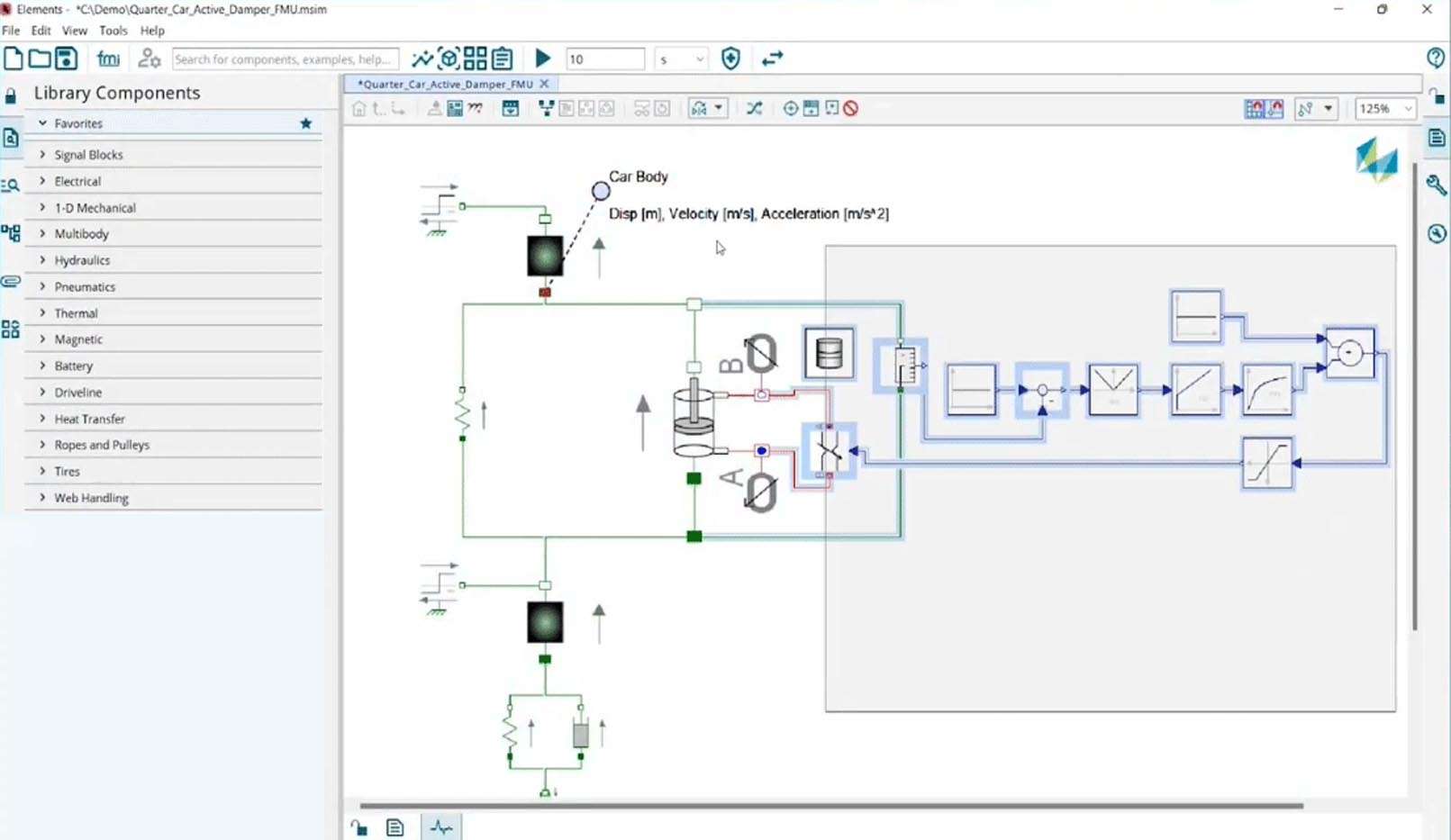
MSC Elements 2025.1 is a cloud-native simulation platform developed by Hexagon AB, part of its Manufacturing Intelligence division. This software is designed to integrate multiphysics simulation directly into the engineering product development lifecycle, serving design engineers, simulation specialists, and product developers across industries like automotive, aerospace, and electronics cooling. Its architecture emphasizes accessibility, automation, and collaboration, making advanced simulation capabilities available through a web browser.
Overview of MSC Elements and Its Role in Modern Engineering
MSC Elements represents a shift towards democratizing simulation by providing intuitive, cloud-based tools accessible via a web browser or lightweight client. It enables engineers to perform complex structural, thermal, and fluid dynamics analyses early in the design process. This integrated multiphysics approach helps accelerate product development cycles by providing rapid and reliable insights directly from CAD geometry, thereby reducing the need for specialized simulation expertise or high-end local computing resources.
Comprehensive Simulation Capabilities Across Structural, Thermal, and Fluid Domains
MSC Elements 2025.1 offers a unified environment for analyzing multiple physics phenomena, streamlining the simulation workflow without requiring separate software packages for different analysis types.
Structural Simulation Modules
The structural simulation capabilities within MSC Elements allow engineers to assess the mechanical integrity of designs. This includes performing linear static stress analysis to understand material behavior under load, normal modes analysis to predict vibration characteristics, and simplified nonlinear analyses for evaluating more complex structural responses.
Thermal Analysis Features
For thermal management challenges, MSC Elements provides robust tools for heat transfer simulation. Users can model both steady-state and transient heat conduction, convection, and radiation phenomena. This is critical for applications ranging from electronics thermal management to predicting operational temperatures of mechanical components under various environmental conditions.
Computational Fluid Dynamics (CFD) Applications
The CFD module in MSC Elements enables the simulation of fluid flow, crucial for understanding performance and optimizing designs in many engineering applications. It supports the analysis of internal and external fluid flows, employs various turbulence models, and allows for accurate prediction of pressure drops, velocity profiles, and heat transfer in fluid systems, making it particularly useful for electronics cooling and general fluid systems design.
Cloud-Based Platform Advantages and Collaborative Workflow
The cloud-native architecture of MSC Elements provides significant advantages in terms of performance, accessibility, and collaboration for modern engineering teams.
Cloud HPC Scalability and Accessibility
Leveraging elastic cloud High-Performance Computing (HPC) resources, MSC Elements allows simulations to scale dynamically to meet demand, enabling faster solution times for complex problems. Its browser-based interface means engineers can access powerful simulation tools from any location without the need for installing demanding software or procuring expensive local hardware, lowering the barrier to adopting advanced simulation.
Data Centralization and Team Collaboration
The platform features a centralized cloud environment for project storage, which enhances data management and team collaboration. Features such as version control and easy project sharing facilitate seamless teamwork, enabling multiple engineers to work on different aspects of a design simulation concurrently and track revisions effectively.
Seamless CAD Integration and User-Focused Automation
MSC Elements is designed to integrate smoothly into existing engineering workflows, with a strong focus on simplifying the simulation preparation process through automation and direct CAD connectivity.
Live CAD Links with Major Software
The software offers direct, live integration with major CAD software, including SolidWorks, Siemens NX, Autodesk Inventor, and PTC Creo. This connectivity ensures that simulation models can be automatically updated whenever changes are made to the original CAD geometry, maintaining accuracy and significantly reducing manual rework.
Geometry Cleanup and Automated Meshing
MSC Elements includes tools for geometry cleanup and simplification, such as defeaturing, to prepare complex CAD models for simulation. Its robust automatic meshing capabilities generate high-quality meshes tailored to specific physics, with options for physics-aware refinement, further automating a traditionally time-consuming step in the simulation process.
Guided User Interface and Template-Based Workflows
The user interface is intentionally designed for ease of use and to reduce the learning curve for engineers who may not be simulation specialists. Reusable, template-based workflows enable standardization across projects and teams, ensuring consistency and efficiency in setting up and running simulations.
Practical Use Cases and Industry Applications
MSC Elements 2025.1 is applied across various industries to accelerate innovation and improve product design through early-stage simulation.
In the **automotive sector**, engineers use it for simulating structural integrity of components, thermal management in engines and electric vehicles, and aerodynamic performance. For **aerospace applications**, it aids in analyzing lightweight structures for aircraft and spacecraft, thermal loads, and fluid dynamics. The **electronics industry** benefits from its capabilities in simulating heat dissipation in components and enclosures, preventing thermal runaway and ensuring reliability. By enabling faster design iterations and fostering collaboration in the cloud, MSC Elements empowers teams to make informed decisions early in the product development cycle, leading to optimized designs and reduced time-to-market.
Frequently Asked Questions
What types of simulations can MSC Elements 2025.1 perform?
MSC Elements 2025.1 supports structural finite element analysis (FEA), thermal heat transfer simulations, and computational fluid dynamics (CFD) including fluid flow and electronics cooling. This multiphysics capability allows engineers to simulate mechanical, thermal, and fluid phenomena within one integrated environment.
How does MSC Elements leverage cloud technology for simulation?
MSC Elements utilizes cloud-native architecture allowing simulations to run on scalable HPC resources accessible from a standard web browser or a lightweight desktop client. This eliminates the need for expensive local hardware and facilitates collaboration through centralized cloud data storage and sharing.
Can MSC Elements interface directly with CAD software?
Yes, MSC Elements offers live integration with popular CAD platforms such as SolidWorks, Siemens NX, Autodesk Inventor, and PTC Creo. Changes in the CAD model automatically propagate to simulation setups, streamlining the iteration process and ensuring accuracy.






Reviews
There are no reviews yet.