

Download Keysight PathWave Vector Signal Analysis (89600 VSA) – Advanced RF and Wireless Signal Analysis Software
Keysight PathWave Vector Signal Analysis (89600 VSA) software, is a sophisticated tool developed by Keysight Technologies, Inc., designed to transform general-purpose signal analyzers and oscilloscopes into advanced vector signal analyzers. This powerful software is engineered for professionals in the telecommunications, RF/Microwave engineering, wireless communications (including 5G/6G, Wi-Fi, and satellite), radar & electronic warfare, automotive radar, and academic research fields, providing critical capabilities for complex signal analysis.
Overview of Keysight PathWave Vector Signal Analysis and Industry Applications
The 89600 VSA software represents a significant evolution in signal analysis, building upon Keysight Technologies’ legacy in test and measurement. It empowers engineers to dissect and understand intricate modulated radio frequency (RF) signals by enhancing the capabilities of available hardware. This software is particularly vital for industries pushing the boundaries of wireless technology and sensing. Its primary applications span the global telecommunications sector, where it aids in the development and testing of 5G, anticipated 6G standards, advanced Wi-Fi protocols, and satellite communications. Furthermore, its utility extends to the defense sector for radar and electronic warfare applications, the automotive industry for radar used in advanced driver-assistance systems (ADAS), and academic institutions engaged in cutting-edge research.
Comprehensive Signal Demodulation and Multidomain Analysis Capabilities
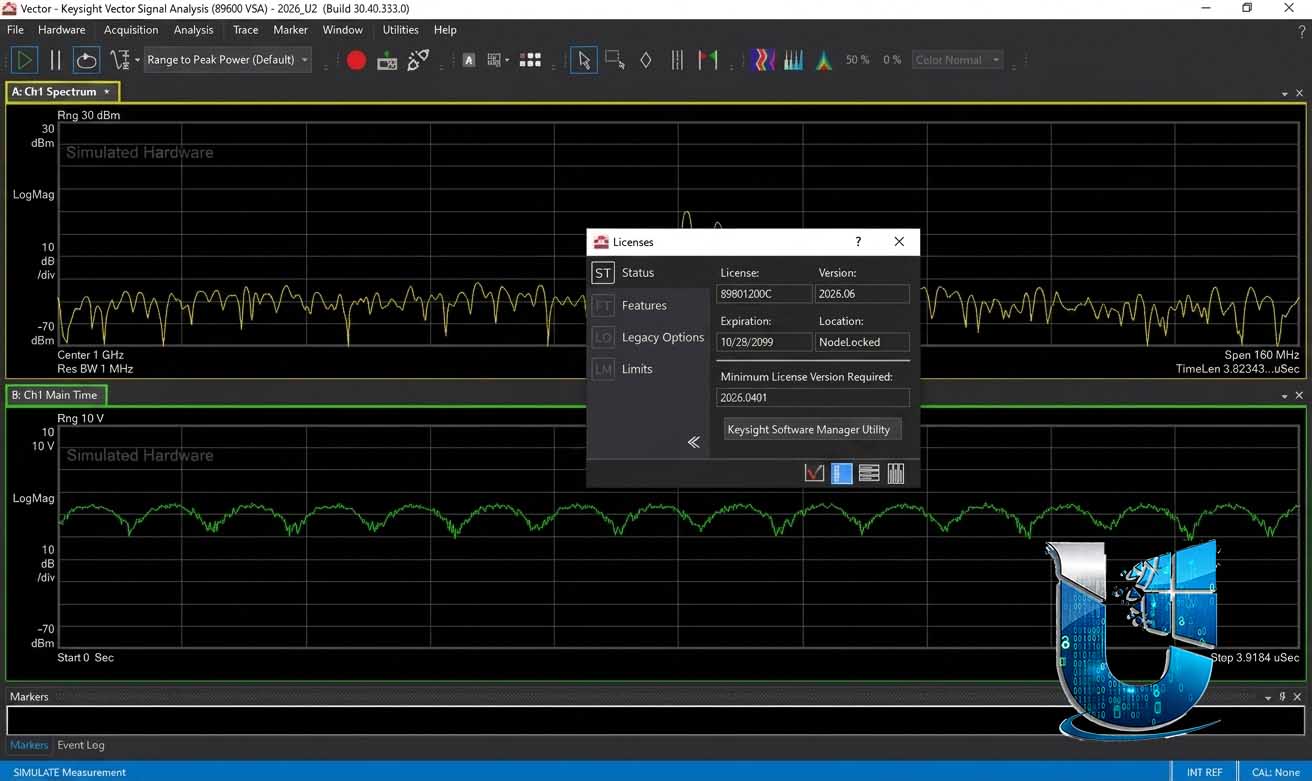
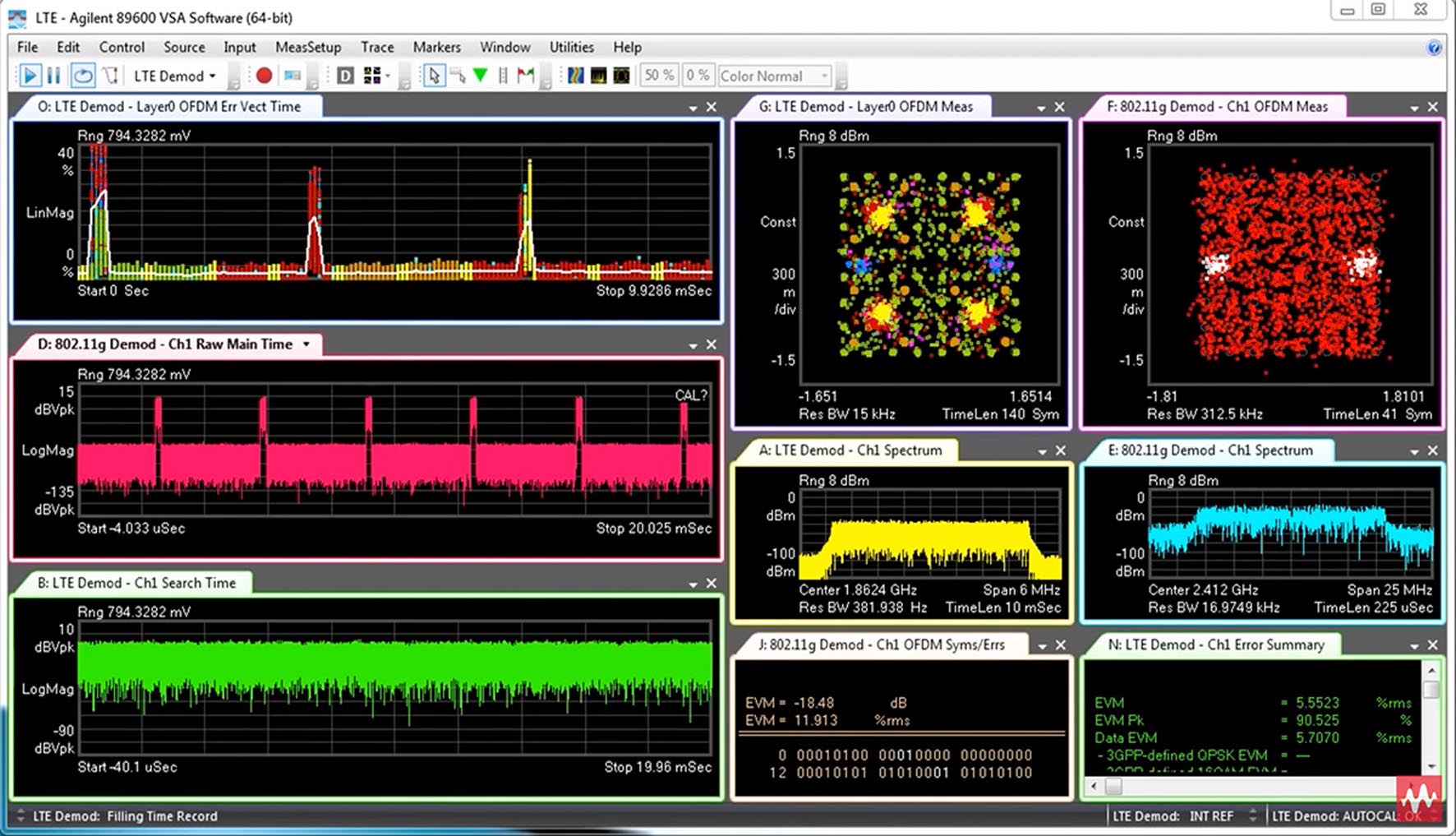
At its core, the 89600 VSA software provides unparalleled depth in signal demodulation and analysis. It offers support for over 300 digital modulation formats, encompassing both established communication standards and the latest emerging waveforms. This extensive library ensures compatibility with a vast range of legacy and next-generation signals. The software enables simultaneous multidomain analysis, allowing users to view signal characteristics across the time, frequency, and modulation domains concurrently. Coupled with real-time hardware acceleration, this provides immediate insights into signal behavior. Advanced triggering and measurement synchronization features further enhance the analysis of complex, transient, or intermittent signals, critical for high-performance testing.
Specialized Wireless Communications and Radar Signal Processing Features
The 89600 VSA software is engineered to meet the specific demands of modern wireless and radar systems. For wireless communications, it offers robust support for 5G NR (including Release 18 advancements) and preliminary waveform analysis for 6G research, alongside detailed physical layer analysis for Wi-Fi 7 and 8. Satellite communication protocols are also comprehensively addressed. In the realm of radar, the software provides specialized tools for pulse analysis, processing of Frequency Modulated Continuous Wave (FMCW) and chirp radar signals, and electronic warfare signal classification. The automotive sector benefits from its targeted analysis capabilities for automotive radar systems, essential for validating ADAS and autonomous driving technologies.
Innovations in AI-Driven Signal Analysis and Enhanced Hardware Integration
Keysight PathWave Vector Signal Analysis 2026 introduces significant advancements through artificial intelligence and enhanced hardware integration. The AI Copilot feature leverages machine learning to streamline workflows by recommending measurement setups, automatically classifying signals, detecting anomalies, and even predicting measurement results. This intelligent assistance is crucial for managing the complexity of modern signals and accelerating the development cycle. The software also demonstrates deep integration with Keysight’s advanced hardware, including novel quantum analyzers and photonics extensions, and supports scalable operations with up to 128 coherent channels for massive MIMO applications. Furthermore, the introduction of GPU acceleration and cloud-native Software as a Service (SaaS) deployment options enhances performance and enables greater collaboration across distributed teams.
Real-World Use Cases Demonstrating 89600 VSA in Advanced Telecommunications and Research
The versatility and depth of Keysight PathWave Vector Signal Analysis are showcased across numerous practical scenarios. Telecommunications engineers utilize it for rigorous testing of 5G/6G infrastructure and devices, ensuring compliance with evolving standards. In the aerospace and defense sectors, it is employed for detailed characterization of satellite signals and validation of complex radar systems, including threat detection and electronic warfare signal intelligence gathering. Academic and industrial researchers leverage its capabilities for exploratory work in emerging areas such as sub-terahertz communication systems and the analysis of signals relevant to quantum-secure communications. The software’s adaptability makes it an indispensable tool for both product development and foundational scientific inquiry.
Frequently Asked Questions
What modulation formats does Keysight 89600 VSA software support?
The Keysight 89600 VSA supports over 300 digital modulation formats, including common standards like PSK, QAM, FSK, MSK, OFDM, and emerging 6G waveforms. This extensive coverage enables it to analyze a wide array of legacy and cutting-edge wireless signals.
How does the AI functionality enhance signal analysis in the 89600 VSA software?
The software’s AI Copilot uses machine learning to recommend measurement setups, identify signal anomalies, classify signals automatically, and predict measurement outcomes based on historical data. These AI-driven features increase analysis efficiency and accuracy for users working with complex signals.
Can Keysight 89600 VSA analyze signals beyond 110 GHz?
Yes, the 2026 release extends analysis capabilities up to 300 GHz for sub-terahertz research relevant to 6G and beyond, allowing engineers to work with next-generation high-frequency communication signals.





Reviews
There are no reviews yet.