
Download Mentor Graphics ModelSim SE 2020.4 – Industry-Leading HDL Simulator for Digital Design Verification
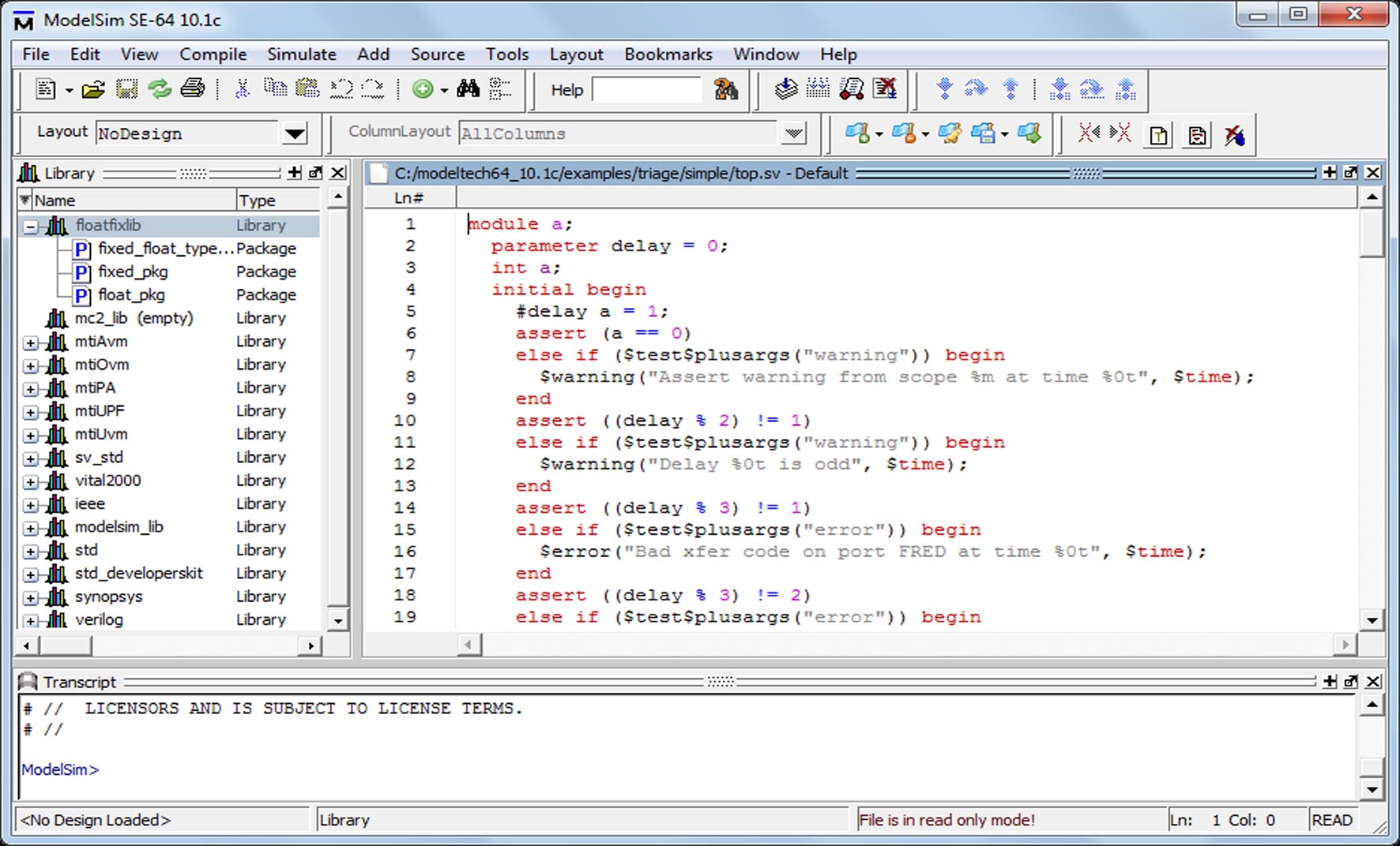
Mentor Graphics ModelSim SE 2020.4 is a pivotal hardware description language (HDL) simulator designed for the functional verification of digital designs. Developed by Mentor Graphics, now part of Siemens EDA, this software is essential for professionals in the semiconductor, FPGA, and ASIC design industries, as well as for electrical engineering education. It provides a comprehensive environment for simulating, debugging, and verifying complex digital hardware behavior prior to physical implementation, supporting critical modern verification methodologies.
Overview of ModelSim SE in Digital Design Verification
ModelSim SE serves as an industry-standard mixed-language HDL simulator, critical for the rigorous verification processes in hardware development. Its primary function is to accurately simulate the behavior of digital circuits described in standard HDLs. The software is a core component of many digital design and verification workflows, enabling engineers to identify and resolve design flaws early in the development cycle. Following Mentor Graphics’ acquisition, ModelSim SE is now integrated within the broader Siemens EDA portfolio, enhancing its interoperability with other advanced verification tools.
Comprehensive Simulation and Debugging Capabilities
Multi-Language Support for Complex Designs
ModelSim SE 2020.4 provides robust native support for VHDL, Verilog, and SystemVerilog, the most widely used hardware description languages in the industry. This allows engineers to seamlessly simulate projects that incorporate designs written in multiple languages, a common requirement for complex modern systems. The mixed-language simulation capability ensures that design interdependencies between different HDL components are accurately represented and tested.
Advanced Waveform Analysis and Debug Tools
The software features a sophisticated waveform viewer that is central to its debugging capabilities. This tool allows for detailed signal tracing, cursor measurements, and efficient signal filtering, enabling engineers to scrutinize simulation results. ModelSim SE also includes patented DataSet comparison features, which facilitate the direct comparison of simulation runs to pinpoint specific changes or regressions, thereby speeding up the debugging process.
Assertion-Based Verification and Functional Coverage
ModelSim SE 2020.4 enhances verification thoroughness through support for advanced methodologies like SystemVerilog Assertions (SVA). SVA allows engineers to embed checks directly into the design or testbench, enabling real-time detection of unintended behaviors. The tool also supports the generation of functional coverage metrics, providing crucial insights into the completeness of the verification environment and highlighting areas that may require further testing.
Performance Enhancements and Workflow Integration
Optimized Simulation Kernel and Scalability
The simulation kernel in ModelSim SE 2020.4 has been optimized for high-speed execution and scalability. This ensures fast turnaround times for simulation runs, even for very large and complex digital designs that can comprise millions of lines of code. The efficient kernel performance is critical for maintaining productivity in demanding ASIC and FPGA development cycles.
Improved UVM and SystemVerilog Support
Recent versions of ModelSim SE, including 2020.4, offer enhanced support for the Universal Verification Methodology (UVM), a standard for high-level verification in SystemVerilog. This improved compatibility with UVM allows for more efficient development and execution of sophisticated verification environments. Support for advanced SystemVerilog constructs has also been refined, further streamlining the verification of complex SoC designs.
Integration with Siemens EDA Tools
As part of the Siemens EDA ecosystem, ModelSim SE benefits from seamless integration with other leading verification tools such as Questa SIM and Veloce hardware emulation platforms. This interoperability enables the creation of powerful hybrid verification strategies, where simulation can be augmented with hardware acceleration and formal analysis, providing a more comprehensive and efficient verification flow for advanced projects.
Automation and Customization with Scripting
ModelSim SE 2020.4 offers extensive automation capabilities through its robust Tcl/Tk scripting interface. Engineers can leverage scripting to automate repetitive tasks such as launching simulation runs, managing design databases, and setting up complex testbenches. This scripting support is invaluable for establishing automated regression test suites, ensuring consistent verification over design iterations, and customizing the simulation environment to meet specific project needs.
Real-World Applications and Professional User Profiles
ModelSim SE 2020.4 is extensively used across the digital design industry for various applications. Digital design engineers and verification teams rely on it for the functional verification of ASICs and complex System-on-Chip (SoC) designs. FPGA developers utilize it to simulate and verify their hardware designs before programming FPGAs, saving significant development time. Furthermore, universities and educational institutions employ ModelSim SE to teach hardware description languages and digital design principles, preparing students for careers in electrical engineering and computer engineering.
Frequently Asked Questions
What hardware description languages does ModelSim SE 2020.4 support for simulation?
ModelSim SE 2020.4 supports simulation of VHDL, Verilog, and SystemVerilog hardware description languages, allowing users to work on mixed-language digital projects. This comprehensive language support ensures compatibility with a wide range of existing and new designs.
How does ModelSim SE improve debugging and waveform analysis for digital designs?
ModelSim SE includes an advanced waveform viewer with capabilities like cursor measurements, signal filtering, and patented DataSet features which enable efficient tracing and comparison of simulation signals over time, aiding in accurate debugging. These tools help engineers quickly identify the root cause of design issues by providing clear visualization and analysis of signal behavior during simulation.
What are the advantages of ModelSim SE’s integration with Siemens EDA’s verification ecosystem?
Integration with Siemens EDA’s tools such as Questa SIM and Veloce hardware emulators allows ModelSim SE users to leverage hybrid verification workflows, combining simulation with hardware acceleration for faster and more comprehensive verification processes. This synergy enables a more scalable and efficient approach to verifying increasingly complex modern hardware designs.






Reviews
There are no reviews yet.