

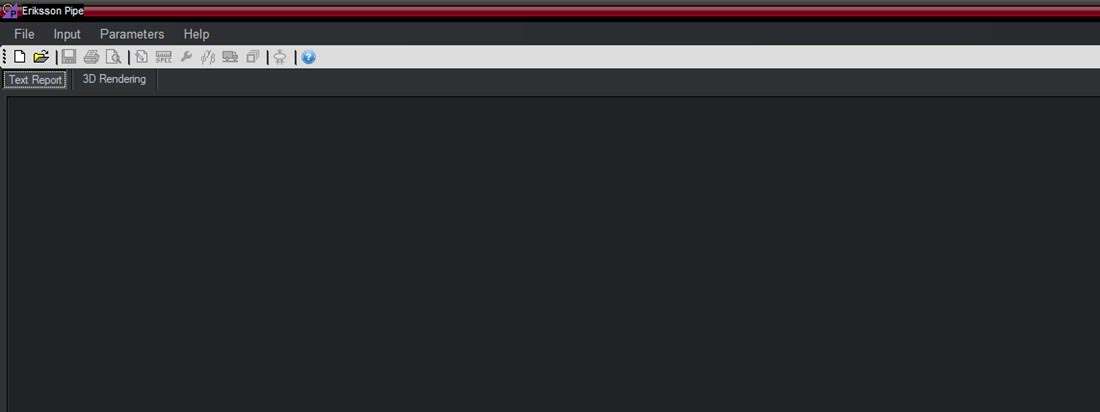
Download Eriksson Pipe 1.2.4 – Hydraulic Analysis Software for Pressurized Pipe Networks
Eriksson Pipe 1.2.4 is a specialized hydraulic analysis software engineered for the steady-state modeling of pressurized pipe networks. It is designed to serve civil engineers, hydraulic engineers, and professionals involved in municipal water system planning, pipeline design, and irrigation system development. This application is crucial for simulating complex water distribution and industrial piping systems, ensuring efficient and reliable fluid management.
Overview of Hydraulic Analysis in Civil Engineering
Effective design of water supply, irrigation, and industrial pipe networks relies heavily on accurate hydraulic analysis. This process involves simulating fluid behavior under various conditions to ensure system performance, safety, and efficiency. Steady-state flow analysis, a core function of Eriksson Pipe, is particularly important for understanding average conditions in established systems, allowing engineers to determine key parameters like flow rates and pressures. Precise modeling is essential for civil engineering projects to prevent issues such as insufficient water delivery, excessive pressure, or material failure.
Hydraulic Modeling Capabilities and Supported Formulas
Eriksson Pipe leverages established hydraulic formulas to provide robust simulation capabilities for pressurized pipe networks. The software supports critical calculation methodologies, allowing engineers to select the most appropriate model for their specific project conditions:
- Hazen-Williams equation: Widely used for water distribution systems, this formula estimates pressure loss and flow rates based on pipe roughness, diameter, and flow velocity.
- Darcy-Weisbach equation: A more general-purpose formula applicable to a wider range of fluids and flow regimes, it accounts for friction factor, pipe dimensions, fluid density, and velocity to calculate head loss.
- Manning equation: Primarily used for open channel flow but also adapted for certain pressurized pipeline scenarios, this equation relates flow depth, channel slope, and roughness to calculate flow velocity.
By integrating these formulas, Eriksson Pipe enables precise determination of pressure losses, flow rates, and necessary pipe sizing for optimal system performance.
Component Libraries and Network Design Features
The software features comprehensive databases and an intuitive interface that streamline the creation and analysis of complex pipe networks. This allows engineers to efficiently represent real-world system layouts and components:
- Extensive Component Databases: Includes a wide array of standard pipes, fittings, valves, and pumps, ensuring accurate representation of system elements.
- Network Creation Tools: Enables the modeling of intricate branched and looped pipe systems, accommodating diverse configurations and connection points.
- Elevation Data Integration: Supports the input of varying ground and pipe elevations, critical for calculating pressure dynamics influenced by gravity.
- Visual Network Editor: Provides a graphical interface for easy diagramming and manipulation of network elements, enhancing user understanding and interaction.
Users can construct detailed models that reflect the actual physical layout and operational characteristics of their hydraulic systems.
Pump Selection and System Optimization Tools
Eriksson Pipe offers specialized tools to assist hydraulic engineers in selecting and integrating pumps effectively, crucial for maintaining desired flow and pressure throughout a pressurized system. The software facilitates performance optimization through detailed analysis:
- Pump Sizing: Calculates required pump specifications based on system head curves, flow rate demands, and operating points to ensure adequate system pressure and flow.
- Performance Analysis: Allows engineers to evaluate different pump options and their impact on overall system efficiency and energy consumption.
- Material and Cost Optimization: Supports informed decisions regarding pipe materials and diameters by analyzing trade-offs between factors like initial cost, lifespan, and hydraulic performance.
This functionality helps in designing cost-effective and energy-efficient pipeline solutions.
Performance Enhancements and Reporting in Version 1.2.4
The latest iteration, Eriksson Pipe 1.2.4, introduces significant improvements focused on enhancing user experience and computational efficiency. These updates aim to provide engineers with a more powerful and streamlined tool for hydraulic analysis:
- Enhanced User Interface: A modernized interface designed for greater intuitiveness and ease of navigation, improving workflow efficiency.
- Expanded Component Database: An updated library of pipes, fittings, and pumps offers greater flexibility and accuracy in network modeling.
- Faster Calculation Engine: Optimized algorithms provide quicker simulation results, reducing analysis time for complex networks.
- Improved Reporting Capabilities: Customizable and detailed reports can be generated, presenting analysis results clearly for documentation and client communication.
- Bug Fixes: Resolved known issues enhance software stability and reliability.
Practical Applications and Industry Use Cases
Eriksson Pipe’s capabilities are directly applicable to a range of real-world engineering challenges involving pressurized pipe networks. Its specialized features make it a valuable tool for professionals across several sectors:
- Municipal Water Systems: Designing and managing city water distribution networks, including transmission mains, service lines, and distribution reservoirs, ensuring adequate water pressure and flow to all users.
- Irrigation Projects: Planning and optimizing water delivery for agricultural areas, considering factors like topography, soil type, and crop water requirements for efficient irrigation canal and pipe systems.
- Industrial Piping Design: Modeling process piping for factories, chemical plants, and power generation facilities, handling the transport of various fluids under specific pressure and temperature conditions.
- Fire Protection Systems: Analyzing the hydraulic performance of sprinkler and standpipe systems to ensure sufficient water supply and pressure in emergency situations.
Summary and Download Information
Eriksson Pipe 1.2.4 stands as a dedicated and powerful hydraulic analysis software for engineers tasked with designing and optimizing pressurized pipe networks. Its support for multiple flow equations, comprehensive component libraries, advanced pump selection tools, and cost optimization features empower professionals to tackle complex projects in municipal water supply, irrigation, and industrial applications. The recent performance enhancements and user interface improvements in version 1.2.4 further solidify its utility for efficient and accurate hydraulic modeling. Engineering students and professionals seeking a reliable tool for steady-state pipe network analysis will find Eriksson Pipe an invaluable asset for their design workflows.
Frequently Asked Questions
What types of flow equations does Eriksson Pipe support for hydraulic analysis?
Eriksson Pipe supports Hazen-Williams, Darcy-Weisbach, and Manning equations, enabling accurate hydraulic modeling for pressurized pipe networks under various conditions. These different formulas offer flexibility for engineers to select the most appropriate method based on the specific fluid properties, pipe characteristics, and flow regimes encountered in their projects.
Can Eriksson Pipe help with pump sizing and selection for a pipeline system?
Yes, the software includes tools for pump sizing and selection by analyzing system head curves and operating points, ensuring optimal pump performance for the designed network. This capability allows engineers to effectively match pump characteristics to the hydraulic demands of the system, leading to more efficient and reliable operation.
What improvements were made in Eriksson Pipe version 1.2.4?
Version 1.2.4 brings an enhanced user interface, expanded component database, faster calculation engine, improved reporting features, and fixes to known bugs for better stability. These updates are designed to streamline the user’s workflow, increase computational speed, and provide more comprehensive and customizable output for analysis and documentation.




Reviews
There are no reviews yet.