

Download Solid Angle 3ds Max to Arnold 5.8.4.0 – Advanced Physically-Based Renderer Plugin
Solid Angle 3ds Max to Arnold 5.8.4.0 is an advanced, physically-based Monte Carlo ray tracing renderer plugin designed for Autodesk 3ds Max. Developed originally by Solid Angle and now owned by Autodesk, Arnold serves as the default production renderer for 3ds Max, providing high-quality visual outputs for professionals in architecture, film, animation, and game development.
Overview of Arnold Renderer Integrated with 3ds Max
Arnold is a production-proven, unbiased Monte Carlo ray tracing renderer renowned for its ability to simulate light accurately. Its seamless integration into Autodesk 3ds Max makes it a staple for technical professionals requiring photorealistic visuals. Originally developed by Solid Angle, its acquisition by Autodesk has solidified its position as the go-to rendering solution within the 3ds Max ecosystem.
The renderer has been credited in numerous high-profile visual effects and animation productions, including major films that demonstrate its capacity for complex, cinematic imagery. This widespread industry adoption is a testament to its reliability and performance in demanding production pipelines.
Rendering Capabilities and Physically-Based Techniques
Arnold’s core architecture is built around the principles of physically-based rendering (PBR), utilizing unbiased Monte Carlo ray tracing. This technique accurately simulates the complex behavior of light in the real world, leading to highly realistic and photorealistic image generation. By adhering to physical laws, Arnold minimizes the need for manual artistic interpretation of lighting phenomena, ensuring predictable and consistent results.
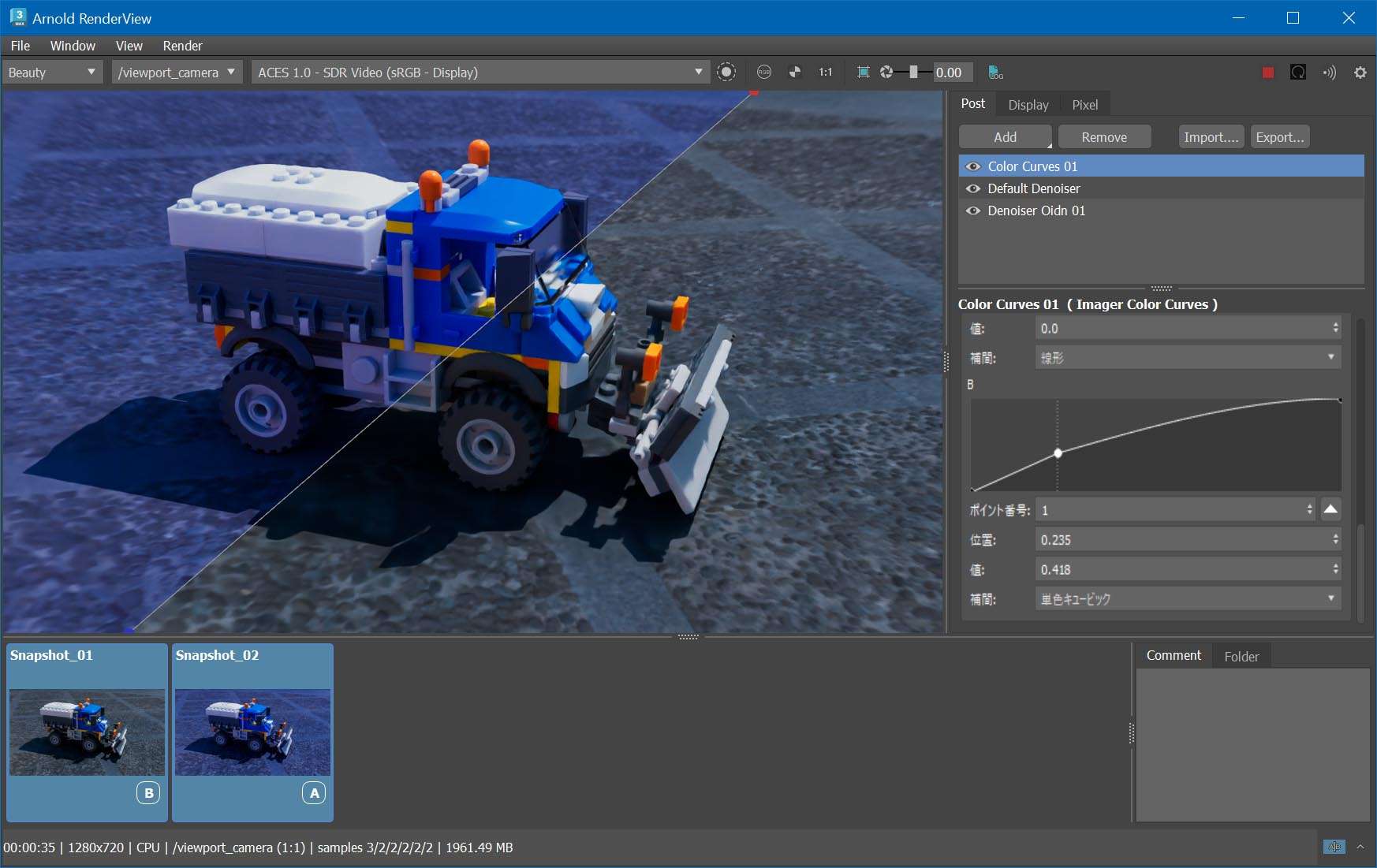
The renderer supports an interactive feedback workflow, allowing artists to see changes and iterate rapidly on their scenes. This is achieved through efficient rendering algorithms that provide quick previews, significantly enhancing productivity for complex visual effects and animation projects.
Support for Complex Geometry and Scene Optimization
Designed for large-scale projects, Arnold efficiently handles complex geometric datasets commonly found in visual effects and architectural visualization. Its architecture is optimized to process vast amounts of polygon data, including instancing and adaptive subdivision, without compromising performance.
This efficient handling of geometry reduces the number of render passes required and minimizes storage needs for scene data. Consequently, professionals working with intricately detailed models and extensive environments can achieve faster render times and more manageable project files.
GPU Acceleration and Performance Enhancements in Version 5.8.4.0
The Arnold 5.8.4.0 release introduces significant advancements in GPU acceleration, particularly for NVIDIA graphics architectures. This optimized GPU rendering capability allows for considerably faster render times on supported hardware, enabling quicker iteration and final output generation.
Further performance gains include optimizations in its core ray-tracing algorithms and enhancements to its advanced denoising technologies. The integration of updated OptiX denoiser features improves the quality of denoised images, allowing for cleaner results with fewer render samples, thereby saving valuable render time.
Customization and Extensibility through Shaders and Plugins
Arnold features a robust node-based system that provides extensive customization and extensibility. This allows users to create custom shaders for unique material appearances, develop specialized cameras, implement procedural geometry generation, and write custom render filters.
This node-based extensibility integrates smoothly with the tools available within Autodesk 3ds Max, empowering artists to tailor the rendering pipeline precisely to their project’s specific requirements and creative vision.
Applications and Use Cases in Film, Architecture, and Visualization
Arnold’s unparalleled realism and efficiency have made it a staple in the film industry, contributing to the visual fidelity of numerous blockbuster movies. Its application in architectural visualization allows designers and architects to create highly accurate and compelling renderings of proposed structures, aiding in client presentations and design validation.
Beyond film and architecture, Arnold is utilized in game development for creating high-quality cinematic sequences and promotional materials. Its ability to simulate complex lighting and materials makes it ideal for generating realistic product visualizations and character renderings across various digital content creation fields.
Compatibility and Integration with Autodesk 3ds Max
The Solid Angle 3ds Max to Arnold plugin is developed to work seamlessly with Autodesk 3ds Max. It functions as the integrated default renderer, ensuring a smooth workflow for users familiar with the 3ds Max interface and tools. System requirements are typically aligned with those of the most recent 3ds Max versions, benefiting from Autodesk’s continuous development.
Version 5.8.4.0 specifically includes improvements that enhance its integration with newer functionalities within 3ds Max, streamlining the overall production process. This tight integration minimizes compatibility issues and maximizes the efficiency of rendering workflows for 3ds Max users.
Frequently Asked Questions
What makes Arnold renderer different from other rendering engines for 3ds Max?
Arnold uses unbiased Monte Carlo ray tracing that simulates realistic light behavior, providing highly accurate and photorealistic results. Unlike many biased renderers, it requires less manual tweaking and offers interactive feedback to enhance artist productivity.
How does the Arnold 5.8.4.0 update improve rendering performance?
The 5.8.4.0 update enhances GPU acceleration with better utilization of NVIDIA architectures and optimizes ray-tracing algorithms for faster rendering complex scenes. It also improves denoising with updated OptiX technology for cleaner outputs with fewer samples.
Can I customize Arnold renderer to fit specific project needs in 3ds Max?
Yes, Arnold features a node-based extensible system allowing custom shaders, cameras, filters, and procedural geometry, enabling artists to tailor rendering workflows and outputs according to project requirements.





Reviews
There are no reviews yet.