

Download Comprehensive Meta-Analysis (CMA) v4 – An Essential Tool for Meta-Analysis in Research
Comprehensive Meta-Analysis (CMA) v4 is a specialized software tool developed by Biostat, Inc., designed for conducting robust meta-analyses. This application is instrumental in healthcare, pharmaceuticals, psychology, social sciences, and education, assisting researchers in synthesizing quantitative data from multiple studies to achieve reliable collective conclusions. CMA v4 facilitates complex statistical operations essential for validating findings and resolving discrepancies across diverse research disciplines.
Introduction to Comprehensive Meta-Analysis
Understanding Meta-Analysis
Meta-analysis is a powerful statistical technique that systematically combines the quantitative results from independent studies to provide a more precise and reliable estimate of an effect. It is a critical component of evidence synthesis, enabling researchers to identify patterns, resolve conflicting findings, and increase the statistical power of their conclusions. The applications of meta-analysis span numerous fields, critically informing clinical guidelines, health policies, and the direction of future research.
Key Features of CMA v4
Data Integration and Analysis
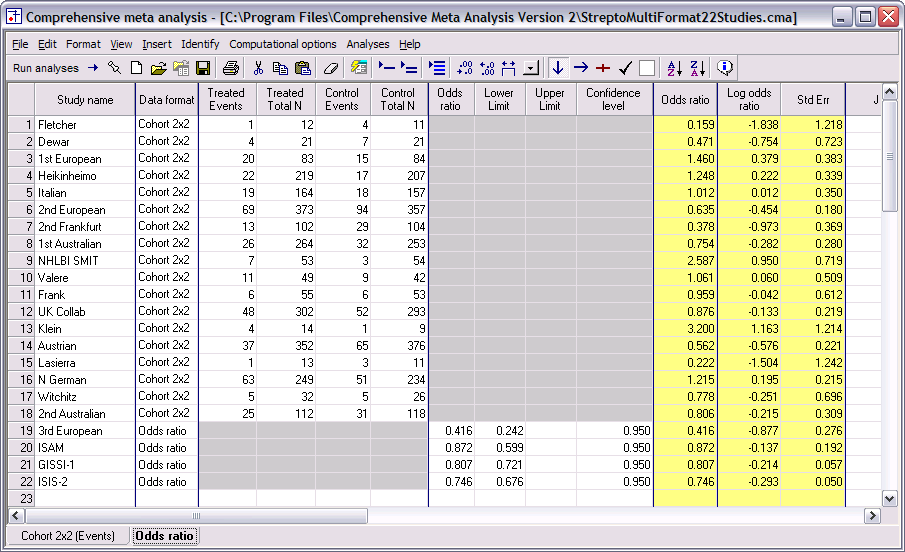
CMA v4 simplifies the integration of data from a wide array of studies. The software automatically calculates key statistical measures such as effect sizes, confidence intervals, and measures of heterogeneity, streamlining the analytical process for researchers. This feature allows for a unified view of evidence, uncovering trends that might be missed when analyzing studies individually.
Supported Formats and Models
A significant advantage of CMA v4 is its extensive compatibility, supporting over 100 information formats for seamless data import. This broad support ensures that researchers can incorporate data from diverse sources without extensive pre-processing. The software also accommodates various computational models, including fixed-effect and random-effects models, enabling flexibility in analysis depending on the nature of the included studies.
Applications of CMA in Different Industries
Healthcare and Pharmaceuticals
In healthcare and pharmaceuticals, Comprehensive Meta-Analysis software is vital for drug validation and the development of treatment protocols. It enables researchers to review the efficacy and safety of medications by synthesizing data from clinical trials, which is often a requirement for regulatory bodies. This rigorous approach to evidence synthesis contributes directly to informed clinical decision-making and public health policy.
Psychology and Social Sciences
Within psychology and social sciences, CMA v4 is employed to validate research outcomes and understand complex behavioral phenomena. By aggregating findings from numerous studies, researchers can establish more robust conclusions regarding psychological interventions, social trends, and educational strategies. This capability is essential for advancing theoretical understanding and practical applications in these fields.
Comparative Analysis of Meta-Analysis Tools
Compared to other meta-analysis software, Comprehensive Meta-Analysis (CMA) v4 distinguishes itself through its extensive support for over 100 data formats, offering unparalleled flexibility in data integration. While many tools perform similar statistical calculations, CMA v4’s user-friendly interface and comprehensive output options make it an accessible yet powerful option for researchers at various levels of expertise. Its focus on facilitating detailed subgroup analyses and the visualization of results further enhances its utility in producing high-quality systematic reviews.
User Guidelines and Best Practices
Effective use of Comprehensive Meta-Analysis software involves adhering to rigorous methodological standards. Researchers should begin with a clearly defined research question and a comprehensive search strategy to identify all relevant studies. When using CMA v4, it is crucial to select the appropriate statistical model (fixed-effect vs. random-effects) based on the heterogeneity of the included studies. Careful interpretation of effect sizes and heterogeneity statistics, such as I², is essential for drawing valid conclusions and reporting findings transparently.
Frequently Asked Questions
What is Comprehensive Meta-Analysis (CMA) used for?
Comprehensive Meta-Analysis (CMA) is used to synthesize quantitative data from multiple studies, allowing researchers to derive a combined effect size and provide a clearer understanding of research findings. It enhances statistical power and resolves uncertainties associated with individual studies.
How does CMA handle different data formats?
CMA supports over 100 different data formats, enabling users to import data from various sources seamlessly. This flexibility is crucial for comprehensive analysis across diverse research disciplines.
In which fields is CMA particularly beneficial?
CMA is particularly beneficial in healthcare, pharmaceuticals, psychology, and social sciences, helping to validate research outcomes and inform policy decisions through meta-analytical approaches.






Reviews
There are no reviews yet.