

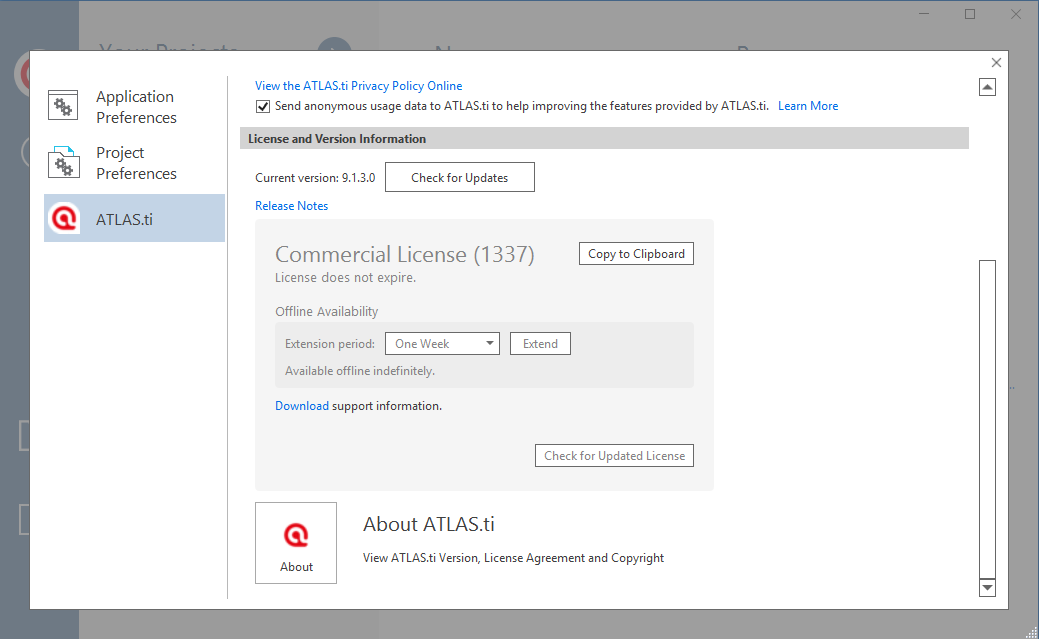
Download ATLAS.ti 24.1.1 – Advanced Software for Qualitative Data Analysis
ATLAS.ti 24.1.1 is advanced qualitative data analysis software designed to assist researchers in systematically analyzing unstructured data. Developed by ATLAS.ti Scientific Software Development GmbH and now part of Lumivero, this research software is a cornerstone for professionals in the social sciences, market research, and mixed methods research fields. Its comprehensive features allow for in-depth exploration and interpretation of complex data sets.
Overview of ATLAS.ti
Introduction to the Software
ATLAS.ti provides a robust environment for computer-assisted qualitative data analysis (CAQDAS), empowering researchers to manage and interpret diverse forms of unstructured information. Originating from development at Technische Universität Berlin with its first commercial release in 1993, the software has evolved significantly. It supports a systematic approach to qualitative research, enabling users to uncover themes, patterns, and insights within their data through structured analytical processes.
Key Features and Capabilities
Data Handling and Analysis
This qualitative data analysis software excels in managing a wide array of data types, facilitating comprehensive analysis. ATLAS.ti accommodates unstructured data in various formats, including textual documents, audio recordings, video files, and images. This multi-modal data handling allows researchers to integrate different forms of evidence into a single analytical project, providing a richer and more nuanced understanding of their research subjects.
Coding and Annotation Tools
At the core of ATLAS.ti’s functionality are its powerful coding and annotation tools, essential for unstructured data analysis. Researchers can meticulously code segments of their data, assigning tags and labels to identify themes, concepts, and categories of interest. The software supports hierarchical coding structures and extensive annotation capabilities, allowing for detailed commentary and linkage between different data segments, crucial for thematic analysis and theory development.
Visualization and Reporting
ATLAS.ti offers a suite of visualization techniques to help researchers explore relationships within their coded data and present findings effectively. Tools such as network diagrams, matrices, and query tools allow for the mapping of connections between codes, documents, and concepts. These visualizations aid in identifying emergent patterns and constructing arguments, while the software also facilitates the generation of comprehensive reports summarizing the analysis process and key findings.
Applications in Diverse Fields
The versatility of ATLAS.ti makes it an indispensable research software across numerous academic and professional disciplines. Its robust capabilities are leveraged by researchers in sociology, criminology, education, psychology, architecture, and management studies, among others. Whether conducting in-depth interviews for a sociological study, analyzing video data in architectural research, or exploring patient feedback for healthcare improvements, ATLAS.ti provides the tools necessary for rigorous qualitative investigation.
Integration and Collaborations
Cross-Platform Accessibility
ATLAS.ti distinguishes itself through its cross-platform accessibility, enhancing its utility for modern research workflows. The software is available across multiple operating systems and offers a web-based version, allowing researchers to access their projects from virtually anywhere. This flexibility is crucial for global research teams and for researchers who prefer to work across different devices. The ongoing integration with other Lumivero tools is expected to further expand its connectivity.
Collaboration Features
Designed to support collaborative research environments, ATLAS.ti includes features that facilitate teamwork among multiple researchers. Project sharing and synchronized analysis enable teams to work together on large qualitative datasets, ensuring consistency and efficiency. The software’s structured environment helps manage contributions from different team members, making it a practical choice for complex, multi-researcher projects in social sciences software applications.
Why Choose ATLAS.ti?
ATLAS.ti stands out in the CAQDAS landscape due to its user-friendly interface combined with powerful analytical capabilities. While other qualitative data analysis software packages exist, ATLAS.ti’s comprehensive handling of multi-modal data, extensive visualization options, and robust cross-platform accessibility offer a unique advantage. Its straightforward approach to coding and annotation, coupled with advanced query functions, makes it an effective tool for both novice and experienced qualitative researchers.
Frequently Asked Questions
What is ATLAS.ti used for?
ATLAS.ti is primarily used for qualitative data analysis, allowing researchers to organize, code, and visualize unstructured data for insights and interpretations. It provides a systematic framework for managing complex data sets across various research methodologies.
Can ATLAS.ti handle multimedia files?
Yes, ATLAS.ti supports various data formats including text, audio, video, and images, enabling comprehensive analysis of multimedia content. This allows researchers to incorporate diverse data sources into their qualitative analysis.
Who are the typical users of ATLAS.ti?
Typical users include researchers from fields such as sociology, education, and business, as well as market researchers and professionals engaged in mixed methods research. Its broad applicability spans across many academic and professional domains requiring deep data interpretation.



Reviews
There are no reviews yet.