

Download Watercom DRAINS 2023 – Advanced Stormwater Drainage Design Software
Watercom DRAINS 2023 is a specialized software application developed by Watercom for the civil engineering sector, focusing on the analysis and design of stormwater drainage systems. It is engineered to assist urban planners and civil engineers in creating efficient and robust drainage solutions for complex projects, leveraging advanced hydraulic modeling capabilities within a user-friendly interface.
Introduction to Watercom DRAINS 2023
Overview of Its Purpose and Capabilities
Watercom DRAINS 2023 serves as a comprehensive tool for engineers involved in stormwater management. Its primary purpose is to facilitate the detailed analysis and design of drainage networks, ensuring effective management of runoff in urban and rural environments. The software is recognized for its capacity to handle complex hydraulic analyses through an intuitive graphical user interface, making sophisticated stormwater modeling accessible.
Features and Functionalities of DRAINS 2023
Key Hydrological Modeling Techniques
DRAINS 2023 incorporates several advanced hydrological modeling techniques to provide accurate stormwater analysis. It supports established industry standards and analytical methods, enabling users to select the most appropriate approach for their specific project requirements. These features are critical for understanding and mitigating the impacts of rainfall events on infrastructure.
- Support for ARR2016 (Australian Rainfall and Runoff 2016) guidelines, offering up-to-date methodologies for hydrological design.
- Integration of the ILSAX model, a detailed rainfall-runoff simulation method for accurate event-based analysis.
- Capabilities for runoff analysis across various surface types and catchment characteristics.
Application in Urban and Rural Designs
Real-world use cases and integration possibilities
The software is extensively utilized in both urban planning and rural development projects, demonstrating its versatility in stormwater management. Its ability to manage large-scale networks makes it particularly suitable for sprawling urban areas, while its detailed analytical functions also support precise design in smaller rural applications. DRAINS can often integrate with other civil engineering software, creating a more cohesive design workflow.
- Designing new stormwater infrastructure for developing urban areas.
- Upgrading existing drainage systems in older city sections to meet current standards.
- Modeling runoff and drainage for rural subdivisions and infrastructure projects.
- Assessing the impact of development on natural watercourses and downstream facilities.
Benefits of Using DRAINS for Hydraulic Analysis
Employing Watercom DRAINS 2023 for hydraulic analysis offers significant advantages in project execution and design quality. The software streamlines the often complex process of hydraulic calculations, leading to improved efficiency and more reliable outcomes. Its analytical depth allows engineers to thoroughly understand system performance under various conditions.
- Simplifies complex hydraulic calculations through automated processes.
- Provides clear visualizations of flow dynamics and system performance.
- Enhances project efficiency by reducing design time and iteration cycles.
- Supports informed decision-making through accurate simulation results.
Comparison with Other Drainage Design Software
Positioning DRAINS Among Competitors
Watercom DRAINS 2023 distinguishes itself within the stormwater drainage design software market through a combination of advanced analytical capabilities and an accessible user interface. While many tools offer hydraulic modeling, DRAINS provides a powerful yet user-friendly platform that supports extensive network analysis without prohibitive size limitations.
- Offers greater depth in specific hydrological modeling techniques compared to some general civil design platforms.
- Features a more integrated approach to stormwater management workflows than basic calculation tools.
- The software’s design philosophy emphasizes user efficiency for complex hydraulic analysis, a key differentiator.
User Experience and Interface Design
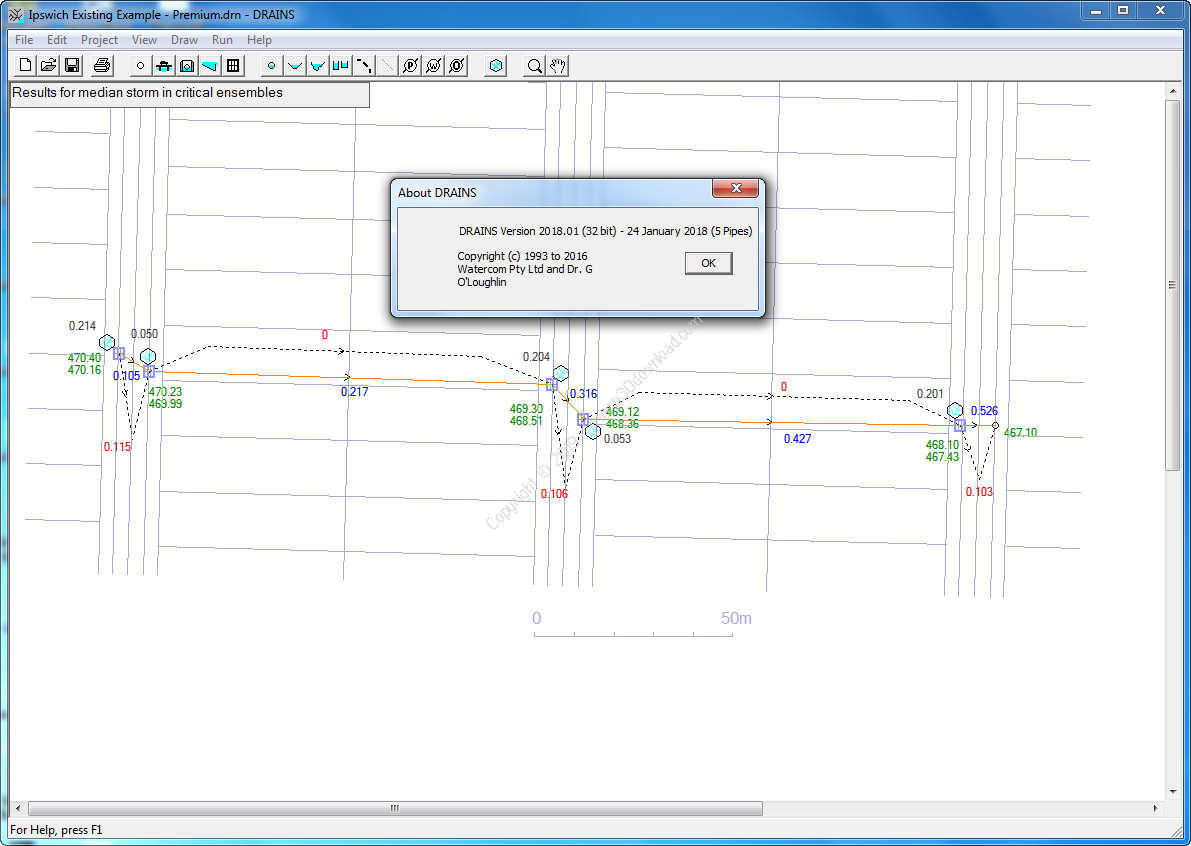
The graphical user interface (GUI) of Watercom DRAINS 2023 is a central aspect of its design, aimed at improving user interaction and comprehension. It provides visual feedback and intuitive controls that facilitate straightforward navigation and data input, enhancing the overall user experience for complex stormwater modeling tasks.
- Features a clean, organized layout for easy access to tools and data.
- Provides dynamic visual feedback such as network schematics and flood mapping.
- Incorporates user feedback mechanisms to support iterative design processes.
Conclusion and Recommendations
Watercom DRAINS 2023 is a highly capable stormwater drainage design software recommended for civil engineers and urban planners engaged in detailed hydraulic analysis and network design. Its advanced features, combined with a user-friendly interface and robust analytical capabilities, make it a valuable tool for ensuring effective stormwater management in diverse project environments, from extensive urban developments to specific rural infrastructure needs.
Frequently Asked Questions
What is Watercom DRAINS 2023 used for?
Watercom DRAINS 2023 is designed for the modeling, design, and analysis of stormwater drainage systems, enabling engineers to create efficient drainage layouts for both urban and rural projects. It specifically addresses the complexities of managing rainwater runoff and preventing flooding.
How does DRAINS handle large drainage networks?
DRAINS can analyze vast networks without size limitations, allowing for the design of thousands of pipes effectively, which is essential for substantial urban projects. This scalability ensures that comprehensive system performance can be assessed, even in the most extensive infrastructures.
Can I integrate other design tools with Watercom DRAINS?
Yes, Watercom DRAINS facilitates the integration of additional design tools and analysis methods, enhancing its versatility for comprehensive stormwater management. This interoperability allows engineers to incorporate findings and outputs into broader project workflows.







Reviews
There are no reviews yet.