

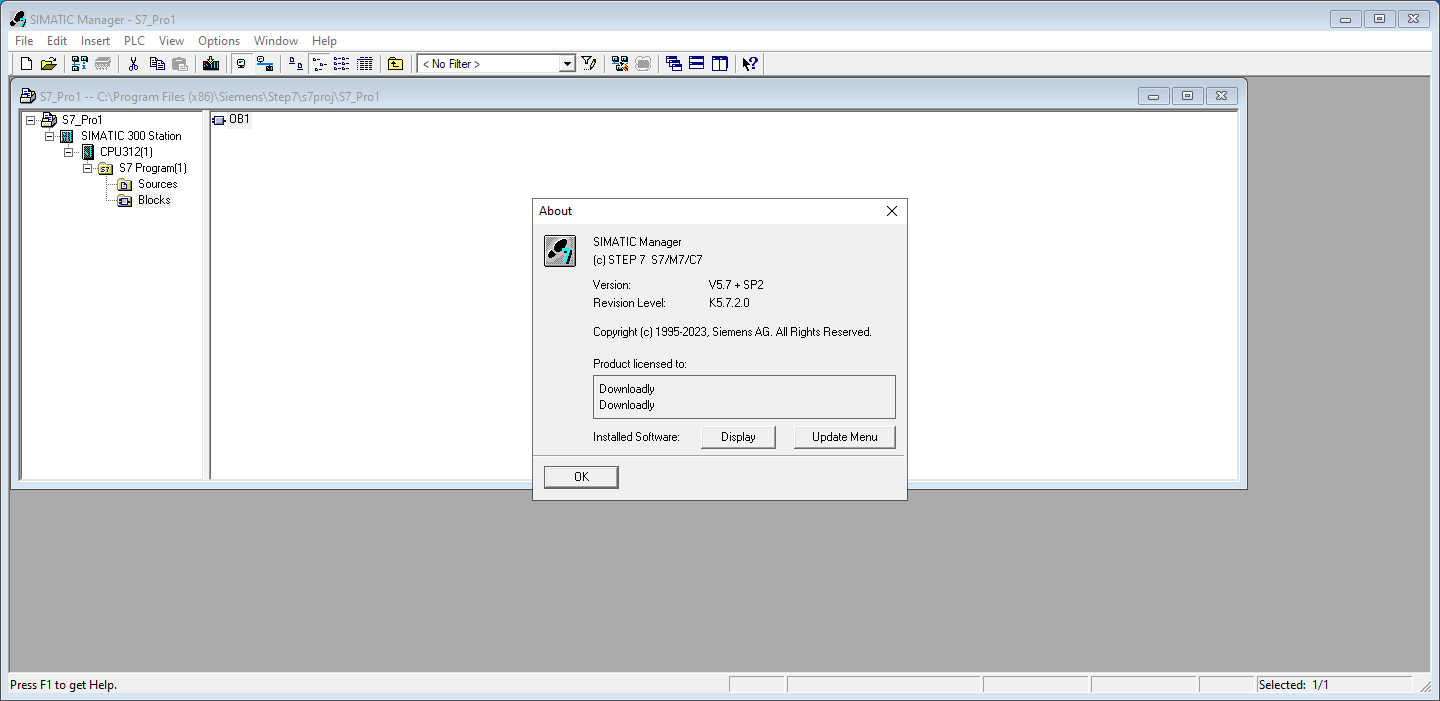
Download Siemens SIMATIC STEP 7 v5.7 SP2 Professional 2021 – Advanced Automation Software
Siemens SIMATIC STEP 7 v5.7 SP2 Professional 2021 is an advanced automation software developed by Siemens AG, a global leader in industrial automation. This comprehensive platform is designed for programming, configuring, and diagnosing Siemens Programmable Logic Controllers (PLCs), serving critical roles in industrial automation, manufacturing, and process control environments. It empowers automation engineers and technicians with robust tools to manage complex industrial operations efficiently.
Introduction to Siemens SIMATIC STEP 7
Overview of Automation Software
In the realm of industrial automation, software like Siemens SIMATIC STEP 7 forms the backbone of modern control systems. It enables the precise command and monitoring of machinery and processes, ensuring operational efficiency and safety within manufacturing and production facilities. The significance of such software lies in its ability to translate complex engineering requirements into executable logic for PLCs, making it indispensable for engineers working with Siemens automation technology.
Core Functionality and Features
Programming Languages and Interfaces
Siemens SIMATIC STEP 7 supports a range of industry-standard programming languages, allowing engineers to select the most appropriate method for their specific automation tasks. This flexibility is crucial for adapting to diverse project needs and enhancing development efficiency.
- Ladder Logic (LAD): A graphical programming language that uses a structure similar to electrical relay logic diagrams, widely preferred for its ease of understanding and use in sequential control tasks.
- Function Block Diagram (FBD): Another graphical language that represents system functions as blocks, beneficial for visualizing data flow and complex logic operations.
- Instruction List (IL): A low-level, text-based programming language that offers direct control over PLC operations, often used for optimizing performance in critical sections of code.
- Structured Control Language (SCL): A high-level, text-based language similar to Pascal, suitable for complex algorithms, data handling, and advanced programming tasks.
Hardware Configuration and Management
Within the STEP 7 environment, users can configure and manage the diverse range of Siemens hardware components integral to an automation system. This includes detailed parameterization of controllers, input/output modules, and communication processors, ensuring seamless integration and operation.
- Detailed configuration of PLC hardware racks and modules.
- Parameter assignment for analog and digital I/O modules.
- Setup of communication protocols for distributed I/O and network integration.
- Hardware-specific diagnostics and status monitoring capabilities.
Project Management Capabilities
Utilizing the SIMATIC Manager
The SIMATIC Manager serves as the central project management interface within STEP 7. It provides a unified environment for organizing all project-related data, from hardware configurations and software blocks to documentation and version control.
- Centralized management of all automation project components.
- Efficient archiving and backup of project data.
- Tools for creating and managing project documentation integral to engineering workflows.
- Version control features to track changes and manage project iterations.
System Diagnostics and Parameter Management
STEP 7 incorporates powerful diagnostics features that provide real-time insights into the automation system’s performance and health. This assists significantly in troubleshooting issues and optimizing operational parameters.
- Real-time monitoring of PLC statuses and diagnostic events.
- Tools for detecting and analyzing hardware and software faults.
- Parameterization and management of controller settings for optimal performance.
- Online access for troubleshooting and adjustments without interrupting production where feasible.
Applications in Various Industries
Use Cases in Manufacturing Automation
Siemens SIMATIC STEP 7 is extensively utilized across various sectors of industrial automation, particularly in manufacturing environments where precision and reliability are paramount.
- Process Control: Managing continuous and discrete processes in chemical plants, refineries, and water treatment facilities.
- Machine Control: Automating complex machinery on production lines in the automotive, packaging, and electronics industries.
- Material Handling: Controlling automated guided vehicles (AGVs), conveyor systems, and robotic sorting in logistics and warehousing.
- Building Automation: Managing HVAC systems, lighting, and security within large industrial complexes.
Integration with Other Siemens Tools
STEP 7 is designed to integrate seamlessly with other Siemens automation products, creating a cohesive and powerful ecosystem for industrial control solutions. This integration enhances overall system functionality and efficiency.
- Works in conjunction with Siemens HMI software for intuitive operator interfaces.
- Integrates with Siemens SCADA systems for plant-wide monitoring and control.
- Supports communication with Siemens drives and motion control systems.
- Facilitates data exchange with higher-level manufacturing execution systems (MES) and enterprise resource planning (ERP) systems.
Comparative Analysis with Similar Tools
Evaluating Competitors
Siemens SIMATIC STEP 7 distinguishes itself within the PLC programming software market through its robust feature set and deep integration with Siemens hardware. While other vendors offer powerful automation solutions, STEP 7’s strengths lie in its comprehensive project management and diagnostic capabilities tailored for Siemens PLCs.
- Programming Flexibility: Offers a wider array of programming languages beyond basic ladder logic, including SCL for complex tasks.
- Hardware Integration: Provides unparalleled compatibility and advanced diagnostic features when used with Siemens hardware components.
- Project Management: The SIMATIC Manager offers an integrated approach to handling all aspects of an automation project within a single interface.
- System Scalability: Supports a broad spectrum of PLC families, from compact controllers to high-performance systems, catering to projects of all sizes.
Frequently Asked Questions
What is Siemens SIMATIC STEP 7 used for?
Siemens SIMATIC STEP 7 is primarily used for programming and configuring Siemens PLCs in various industrial automation applications. It supports multiple programming languages and provides tools for effective project management and diagnostics, enabling engineers to build, monitor, and maintain automated systems.
What programming languages does STEP 7 support?
STEP 7 supports multiple programming paradigms including Ladder Logic (LAD), Function Block Diagram (FBD), Instruction List (IL), and Structured Control Language (SCL), which cater to different user preferences and project requirements in automation engineering.
How does STEP 7 assist in hardware configuration?
STEP 7 offers comprehensive tools for parameterizing hardware, configuring controllers, and monitoring system diagnostics to ensure optimal performance and management of industrial automation projects, simplifying the setup and maintenance of complex systems.






Reviews
There are no reviews yet.