

Download PSR SDDP 17.2 – Advanced Stochastic Modeling for Energy Systems
PSR SDDP 17.2 is an advanced software application developed by PSR, a company founded by Mario Veiga Ferraz Pereira. This software is specifically designed for the energy sector, leveraging the power of stochastic modeling to optimize operations within electrical, gas, and hydrogen networks. It is recognized for its robust capabilities in managing complex energy systems and planning market strategies.
Overview of PSR SDDP
Introduction to Stochastic Dual Dynamic Programming
The Stochastic Dual Dynamic Programming (SDDP) algorithm is a powerful mathematical framework for solving multistage stochastic optimization problems. Developed initially for applications in hydroelectric scheduling, this approach is critical for decision-making under uncertainty. PSR SDDP 17.2 implements this algorithm to provide sophisticated solutions for planning and operational studies in energy systems, allowing for effective management of variability and risk.
Key Applications in Energy Systems
Supporting Various Operational Scenarios
PSR SDDP 17.2 is highly versatile and supports a wide range of operational scenarios crucial for the energy sector. Its analytical capabilities extend to long-term strategic planning, medium-term resource allocation, and short-term operational adjustments. This flexibility allows energy companies to conduct detailed studies for various aspects of power systems, ensuring efficient resource utilization and market engagement.
- Long-term planning for investment and capacity expansion.
- Medium-term studies for energy generation scheduling and market forecasting.
- Short-term operational analyses for real-time system management.
- Hydroelectric scheduling optimization, considering water availability and demand fluctuations.
Core Features of PSR SDDP 17.2
Flexible Modeling Capabilities
A significant strength of PSR SDDP 17.2 lies in its flexible modeling capabilities, which accommodate the complex temporal and spatial characteristics of modern energy infrastructures. The software can effectively model distinct demands and supply characteristics across different geographical locations and time horizons. This allows for detailed analysis of integrated electrical, gas, and hydrogen networks, providing a holistic view of energy system dynamics.
- Temporal flexibility to model daily, weekly, monthly, and yearly operational cycles.
- Spatial disaggregation to represent individual substations, plants, or market zones.
- Integrated modeling of interdependencies between electrical, gas, and hydrogen networks.
- Capacity for managing a large number of stages and uncertainties within optimization problems.
Integration and Reporting Tools
Graphical Interface and Report Generation
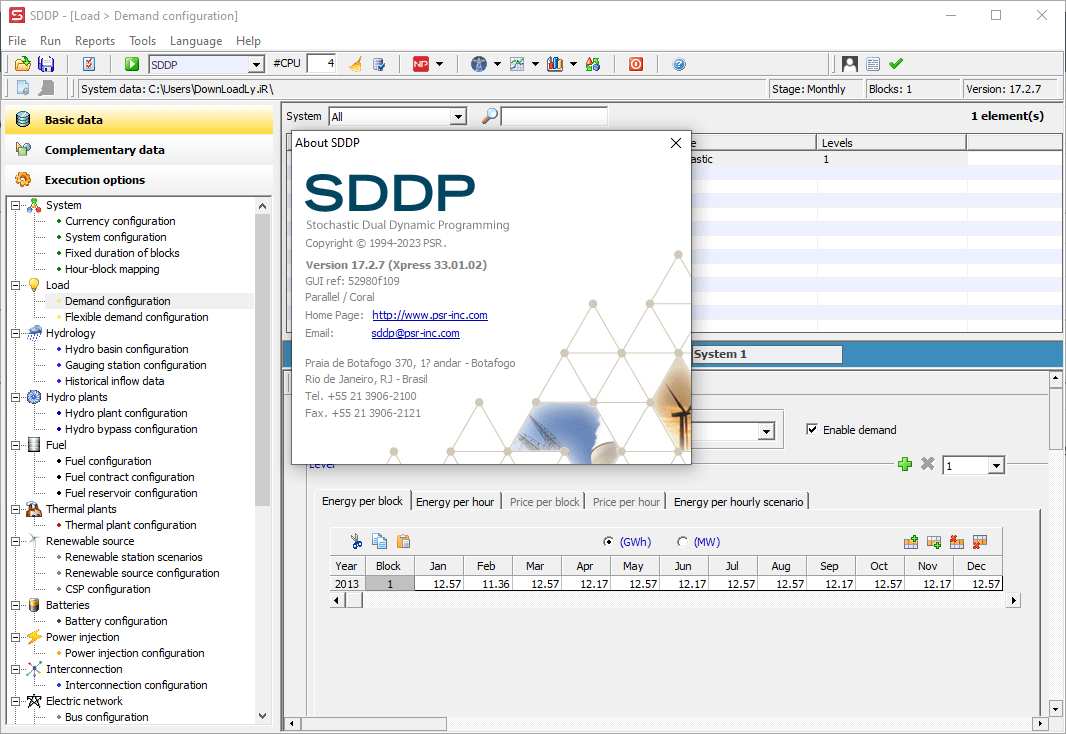
PSR SDDP 17.2 offers a user-friendly graphical interface designed to simplify complex data analysis and reporting. Users can interact with the software through an intuitive dashboard and generate a comprehensive suite of over 450 customizable reports. These reports can be exported in various formats, including Excel and CSV, facilitating detailed analysis, stakeholder communication, and integration with other business intelligence tools.
- Intuitive dashboard for managing studies and visualizing results.
- Over 450 configurable reports covering system performance, costs, and optimization outcomes.
- Export options for reports in common formats like Excel and CSV.
- Supports the analysis of marginal costs and shadow prices for better economic insights.
Case Studies and Real-World Uses
Implementation Examples in Different Regions
The efficacy of PSR SDDP 17.2 is demonstrated through its successful implementation across diverse energy markets globally. Companies have utilized the software for critical energy planning and management tasks, validating its robustness and a wide range of analytical capabilities. These applications span various regions, including Brazil and Canada, showcasing its adaptability to different regulatory environments and market structures.
- Advanced energy market optimization in large-scale power systems.
- Strategic planning for renewable energy integration in various countries.
- Management of complex generation portfolios and transmission networks.
- Application in national and regional energy planning initiatives.
Comparison with Other Software in Similar Categories
While numerous software solutions exist for energy system analysis, PSR SDDP 17.2 distinguishes itself through its specialized focus on stochastic optimization using the SDDP algorithm. Its strength lies in handling multistage decision processes with significant uncertainties, particularly for long-term planning in complex energy networks. Competitors may offer broader simulation tools, but PSR SDDP provides deeper analytical capabilities for managing risk and optimizing operations within dynamic energy markets.
Frequently Asked Questions
What industries can benefit from using PSR SDDP?
PSR SDDP is primarily used in the energy sector, particularly in operations involving power systems, gas networks, and hydrogen markets. Industries related to energy management, utility operations, and market analysis would find it highly beneficial for optimizing their strategic and operational planning.
How does PSR SDDP handle data reporting and visualization?
PSR SDDP offers a user-friendly graphical interface that generates over 450 customizable reports in Excel format and CSV files, facilitating data visualization and sharing through a dashboard. This comprehensive reporting system allows users to gain deep insights into system performance, costs, and optimization results.
What is the Stochastic Dual Dynamic Programming algorithm and why is it important?
The Stochastic Dual Dynamic Programming algorithm is a mathematical approach used for optimization in multistage decision processes, particularly relevant in energy system planning and operation. It is important because it efficiently handles uncertainty and complex interdependencies, allowing for robust optimization strategies in dynamic environments like energy markets.






Reviews
There are no reviews yet.