

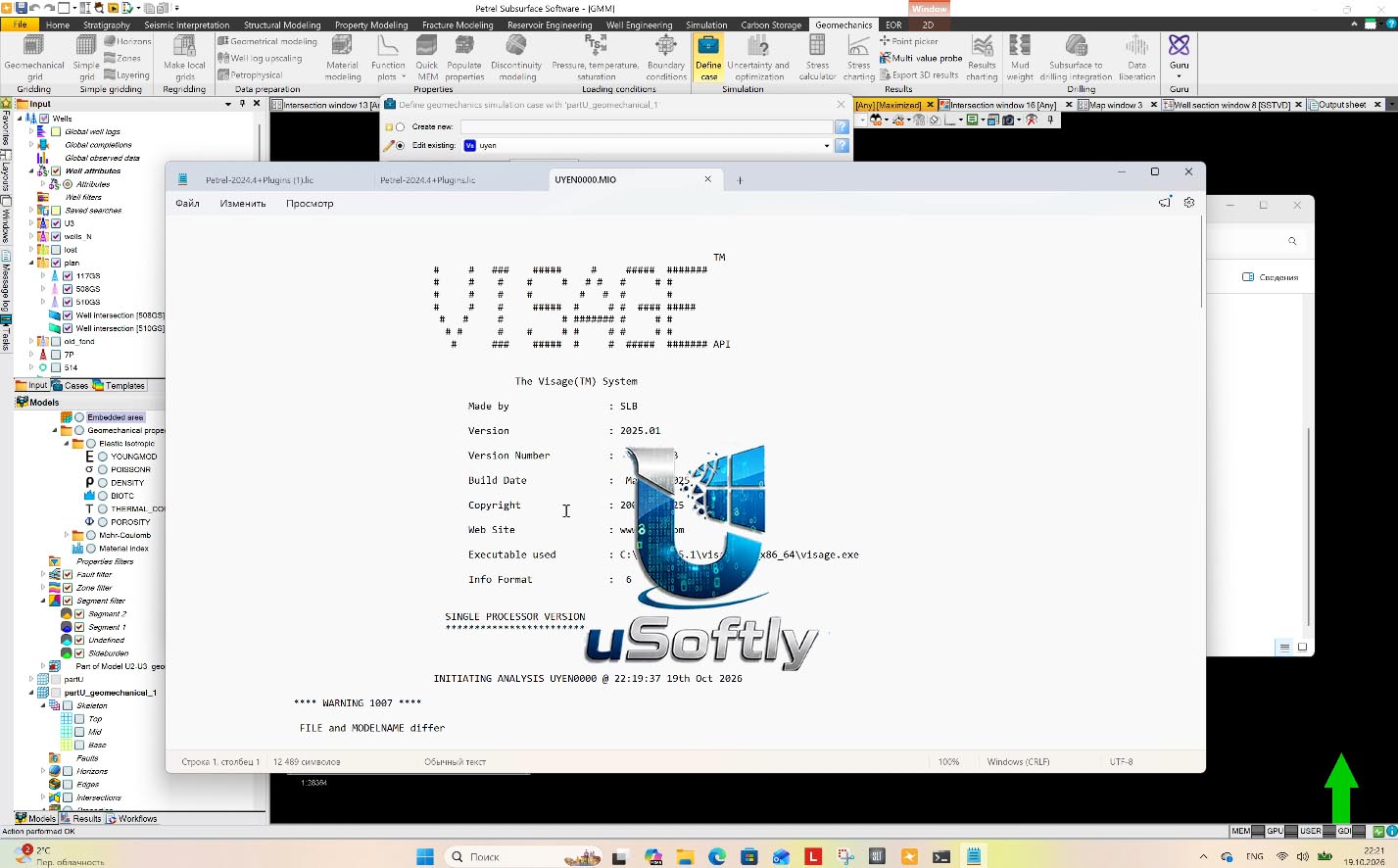
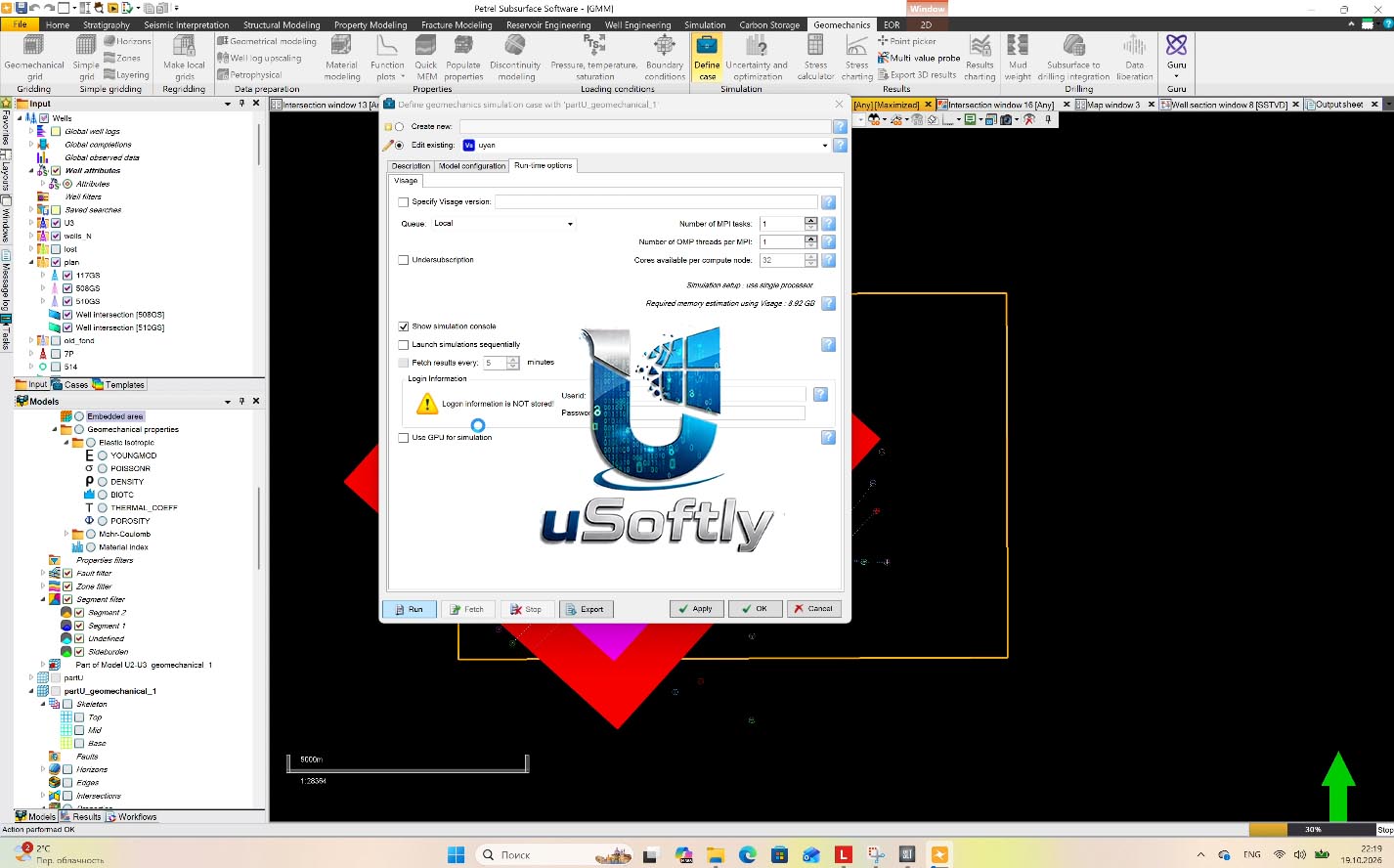
Download Schlumberger Visage 2025.1 – Advanced Geomechanics Simulation Software
Schlumberger Visage 2025 is a sophisticated finite-element geomechanics simulator developed by Schlumberger Limited for the oil and gas industry. This software is engineered to perform advanced reservoir modeling, offering critical insights into geomechanical behaviors essential for risk mitigation and integrity assessments in complex subsurface projects. Geoscientists and reservoir engineers rely on Schlumberger Visage 2025 to address intricate challenges in geomechanics simulation.
Introduction to Schlumberger Visage
Overview of the Software
Schlumberger Visage is a powerful numerical simulation tool dedicated to geomechanics. It enables engineers and geoscientists to model and understand the mechanical behavior of rock formations and fluids within oil and gas reservoirs. This capability is vital for ensuring operational safety, optimizing production, and managing the long-term integrity of reservoirs and associated infrastructure.
Key Applications in Oil and Gas Engineering
In the demanding field of oil and gas engineering, Schlumberger Visage 2025 supports a wide range of critical applications. Its advanced finite-element analysis capabilities are instrumental in addressing complex subsurface challenges. Key applications include:
- Assessing and ensuring wellbore integrity under various operational stresses.
- Predicting and analyzing naturally occurring or induced fracture behavior.
- Modeling rock mass deformation and surface subsidence related to resource extraction.
- Simulating geomechanical impacts of thermal recovery processes.
- Evaluating the geomechanical stability for CO2 disposal and other subsurface storage projects.
Numerical Simulation Capabilities
Integration with Other Software
A significant advantage of Schlumberger Visage 2025 is its capability for seamless integration with other leading Schlumberger software solutions. This interoperability enhances the efficiency and accuracy of complex reservoir management workflows.
- Visage integrates with Petrel, providing geoscientists and engineers with a unified platform for geological interpretation, reservoir modeling, and geomechanics simulation.
- Its compatibility with Eclipse, Schlumberger’s reservoir simulator, allows for the coupling of fluid flow and geomechanical simulations, delivering a more holistic understanding of reservoir performance under stress.
Complex Modeling Features
Schlumberger Visage 2025 is built to handle the complexities inherent in geological formations and reservoir engineering. It allows for the creation and analysis of sophisticated models that accurately represent real-world subsurface conditions. The software supports the modeling of heterogeneous geological structures and complex material behaviors, providing realistic simulations for critical decision-making.
Benefits of Using Schlumberger Visage
The adoption of Schlumberger Visage 2025 offers substantial benefits for engineering and geoscience teams involved in reservoir development and management. Its primary advantages stem from its advanced simulation power and its integration within a broader geological software ecosystem.
- Enables end-to-end integration, starting from seismic data interpretation in Petrel through to advanced reservoir and geomechanics simulation.
- Provides robust finite-element analysis tools for accurate prediction of geomechanical responses.
- Facilitates better risk management by simulating potential issues like wellbore instability or surface subsidence before they occur.
- Supports informed decision-making through detailed quantitative analysis of reservoir behavior.
Real-World Use Cases
Schlumberger Visage 2025 is employed in numerous challenging projects within the oil and gas sector, demonstrating its practical utility. While specific project details are proprietary, its application is crucial in scenarios requiring detailed geomechanical understanding. Engineers utilize Visage for:
- Analyzing the stability of deepwater wellbores subjected to high pressures and temperatures.
- Assessing the impact of hydraulic fracturing on reservoir integrity and fluid recovery.
- Predicting ground movement and subsidence above or near large-scale extraction sites.
- Simulating the geomechanical effects of enhanced oil recovery techniques like steam injection.
Conclusion
Schlumberger Visage 2025 stands as a critical tool for modern geomechanics simulation in the oil and gas industry. Its advanced finite-element analysis capabilities, coupled with seamless integration into the Schlumberger software suite, empower geoscientists and reservoir engineers to tackle complex subsurface challenges with greater confidence. By enabling accurate modeling and risk assessment, Visage plays an indispensable role in optimizing reservoir performance and ensuring operational integrity.
Frequently Asked Questions
What is the primary function of Schlumberger Visage?
Schlumberger Visage is a finite-element geomechanics simulator designed to model geomechanical behavior in oil and gas reservoirs, allowing engineers to plan and mitigate risks associated with subsurface conditions. It provides critical insights into how rock formations and associated fluids respond to changes in stress and temperature.
How does Schlumberger Visage integrate with other Schlumberger software?
Visage integrates seamlessly with other Schlumberger tools like Petrel and Eclipse, enabling users to perform comprehensive geomechanics simulations and reservoir modeling with familiar interfaces. This integration streamlines workflows from data interpretation through to simulation execution and analysis.
What types of geomechanical problems can be simulated using Visage?
Visage can simulate various geomechanical problems, including well integrity assessments, fracture behavior, subsidence, and thermal recovery challenges, making it versatile for reservoir engineering. It helps in understanding phenomena such as rock deformation, stress redistribution, and fluid-rock interaction under mechanical loads.



Reviews
There are no reviews yet.