

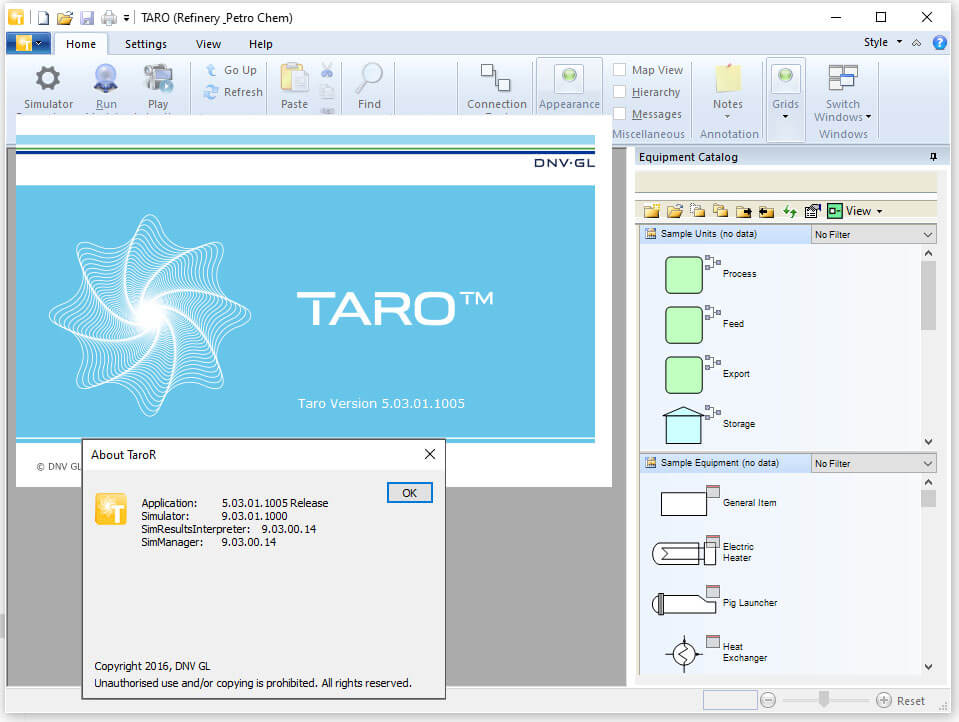
Download DNV GL Taro 5.03.01 – Advanced Process Modeling Software for Oil & Gas
DNV GL Taro 5.03.01 is a specialized process modeling software developed by DNV, a leader in assurance and risk management services for the energy sector. This application is designed to support engineers in the oil and gas industry by providing advanced simulation capabilities. Taro aids in the efficient and accurate modeling of complex processes, contributing to enhanced asset performance and operational safety within demanding industrial environments.
Introduction to DNV GL Taro
Overview and Historical Context
DNV GL Taro, now part of DNV’s suite of engineering software solutions, represents an evolution in process modeling tools specifically for the oil and gas and energy sectors. Developed by a company with deep roots in industrial assurance and technical expertise, Taro has been updated to incorporate features that address the dynamic nature of production and refining processes. Its development reflects DNV’s commitment to leveraging research and innovation to provide effective tools for critical industrial simulations.
Enhanced Modeling Capabilities
Transient Yield Definitions
A significant enhancement in Taro 5.03.01 is the capability to directly define transient yields. This feature allows users to specify how yields change over time within a process simulation. By enabling transient yield definitions directly within the Node property window, the software streamlines the modeling of dynamic operational conditions, thereby improving the quality checks and complexity management of sophisticated simulations.
Flow Management and Variability
Flow Grid View Overview
The Flow Grid View is a key functionality within DNV GL Taro designed to manage the variability of feed streams in process simulations. This tool provides engineers with a clear tabular overview and control over different flow conditions. It is particularly useful for modeling scenarios such as varying feed compositions or flow rates that can occur in continuous industrial operations like oil refineries, ensuring that simulations accurately represent real-world operational challenges.
Industrial Applications and Use Cases
DNV GL Taro is engineered for a range of critical applications within the oil and gas and broader energy industries. Its advanced modeling features are particularly suited for complex requirements encountered in upstream production, midstream transportation, and downstream refining processes. Specific use cases include:
- Simulating the impact of changing feed compositions on refinery unit performance.
- Modeling dynamic production rates and compositions in oil and gas fields.
- Analyzing and optimizing process designs under varying operational parameters.
- Ensuring safety and asset integrity through detailed process simulations.
Comparative Analysis with Other Tools
Compared to general-purpose process simulation software, DNV GL Taro distinguishes itself through specialized features tailored for the oil and gas sector. Its key differentiators include the direct integration of transient yield definitions within the node properties, offering a more intuitive workflow than solutions requiring extensive unit operations to achieve similar dynamic modeling. The sophisticated flow grid view also provides a focused approach to managing feed variability, which may be less streamlined in other platforms.
Conclusion and Further Implications
DNV GL Taro 5.03.01 represents a focused advancement in process modeling software, equipping oil and gas engineers with enhanced tools for simulation. The introduction of direct transient yield definitions and the robust Flow Grid View empower users to model dynamic conditions with greater accuracy and efficiency. As the energy industry continues to evolve, tools like Taro play a vital role in optimizing performance, ensuring safety, and driving innovation in process engineering.
Frequently Asked Questions
What is DNV GL Taro primarily used for?
DNV GL Taro is primarily used for process modeling in the oil and gas industry, allowing users to simulate various operational conditions and design processes effectively. Its capabilities support engineers in analyzing and optimizing complex industrial operations.
How does Taro improve transient yield modeling compared to previous versions?
Taro now allows for the direct definition of transient yields at the Node property window, streamlining model complexity and enhancing quality checks over earlier methods that involved multiple units. This integration makes it easier to represent changing process characteristics accurately.
What industries can benefit from using DNV GL Taro?
DNV GL Taro is primarily beneficial for industries involved in oil and gas, energy production, and process engineering, where complex modeling and simulation are required. Its specialized features are particularly valuable for refining and production operations.


Reviews
There are no reviews yet.