

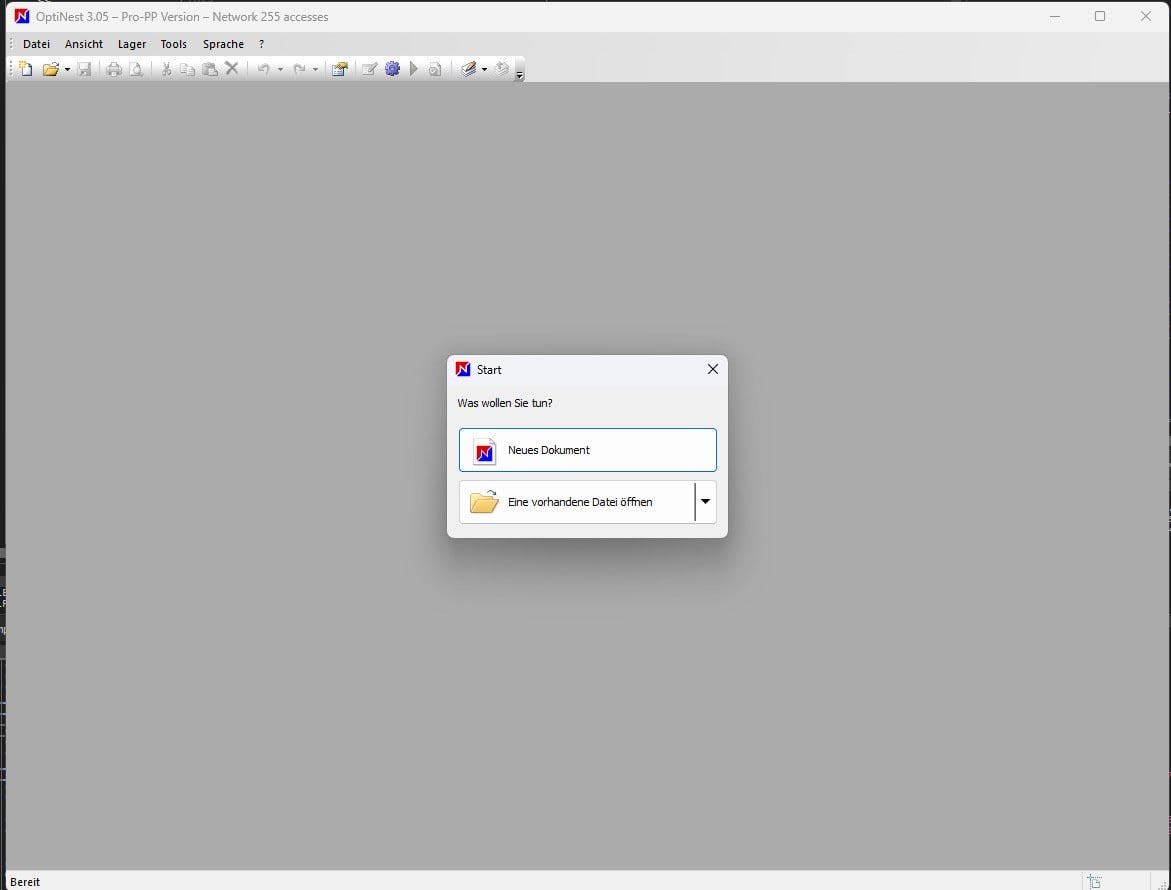
Download OptiNest 3.05 – Advanced Nesting Optimization Software for Manufacturing
OptiNest s a specialized nesting optimization software designed for manufacturing industries that require efficient material cutting. It automates the complex task of arranging parts on raw materials, significantly reducing waste and improving yield. This tool is particularly beneficial for sectors like sheet metal fabrication, woodworking, glass processing, and textile manufacturing, where maximizing material utilization is critical for cost-effectiveness.
Overview of OptiNest and Its Role in Manufacturing Optimization
Nesting software plays a crucial role in modern manufacturing by optimizing the placement of various shapes onto larger stock materials such as sheets, rolls, or panels. OptiNest addresses this challenge head-on, employing sophisticated algorithms to generate layouts that minimize scrap. By improving material utilization, OptiNest directly contributes to lower production costs and a reduced environmental footprint, making it an indispensable tool for manufacturers focused on efficiency and sustainability.
Advanced Shape Nesting and Algorithmic Optimization Techniques
At the core of OptiNest’s performance are its advanced nesting algorithms, powered by BOOLE & PARTNERS CalepiLib functions. The software supports true profile nesting, which accurately arranges parts based on their exact outlines, distinguishing it from simpler bounding-rectangle methods. Key algorithmic features include adjustable calculation depth, a smoothing factor for refined contours, and propagation mode for efficient piece placement. Users can configure parameters such as piece grouping and propagation to further tailor the nesting process to specific production requirements, leading to superior material savings.
File Compatibility and Import/Export Features with DXF Formats
OptiNest offers robust support for the DXF file format, a widely adopted standard in CAD and CAM environments. The software can import detailed designs described by closed polylines, arcs, and lines, effectively processing piece outlines, internal toolings, and openings. This comprehensive DXF compatibility ensures that designs created in various CAD programs can be seamlessly integrated into the nesting workflow. Furthermore, OptiNest’s export functionality provides fully detailed nesting maps, also in DXF format, preserving important information crucial for subsequent manufacturing processes and CNC machine programming.
Customization Options for Cutting Parameters and Piece Handling
To meet diverse manufacturing demands, OptiNest provides extensive customization capabilities for cutting parameters and piece handling. Users can specify cutting tool thickness to account for kerf width, define panel trimming allowances, and manage individual piece properties such as rotation and reversal. The software also supports color coding for different piece types and flexible quantity management, allowing precise control over the nesting output. These features ensure that the generated cutting layouts are precisely tailored to the specific material, machinery, and production objectives.
Real-World Applications and Benefits in Manufacturing Workflows
In sheet metal fabrication, OptiNest’s true profile nesting significantly reduces scrap from complex contours, leading to direct material cost savings. For woodworking and furniture manufacturing, efficient layout of irregular shapes minimizes waste on large panels. In the textile industry, the software optimizes cutting patterns on rolls of fabric, improving yield and reducing costly remnants. By automating the nesting process with advanced algorithms and customizable parameters, OptiNest empowers manufacturers to boost productivity, lower their scrap rates, and enhance overall operational efficiency.
Comparison with Other Nesting Software Solutions
OptiNest distinguishes itself through its specialized focus on true profile nesting powered by the robust CalepiLib algorithm library, offering deep algorithmic control over the nesting process. Its comprehensive handling of DXF formats, including detailed descriptions for import and export, further sets it apart from software with more limited file compatibility. While other nesting solutions may offer broader feature sets, OptiNest’s strength lies in its precise parameter adjustments and its effectiveness in maximizing material yield for complex shape nesting applications where detailed customization is paramount.
Frequently Asked Questions
How does OptiNest improve material utilization in manufacturing?
OptiNest uses advanced nesting algorithms that optimize the layout of complex-shaped parts on raw material sheets to minimize waste. It factors in tool thickness, cutting paths, and piece rotation to maximize material usage efficiency, directly reducing material costs for manufacturers.
What file formats does OptiNest support for importing and exporting designs?
OptiNest primarily supports DXF format for importing piece outlines, toolings, and inner openings, and exports fully detailed nesting maps in DXF. This ensures high compatibility with most CAD and CNC software commonly used in industrial manufacturing environments.
Can OptiNest handle irregularly shaped parts and complex cutting requirements?
Yes, OptiNest specializes in profile nesting for general shapes including irregular forms. It processes outlines defined by polylines, arcs, and lines, allowing precise nesting of complex parts with customized cutting adjustments and parameters.





Reviews
There are no reviews yet.