

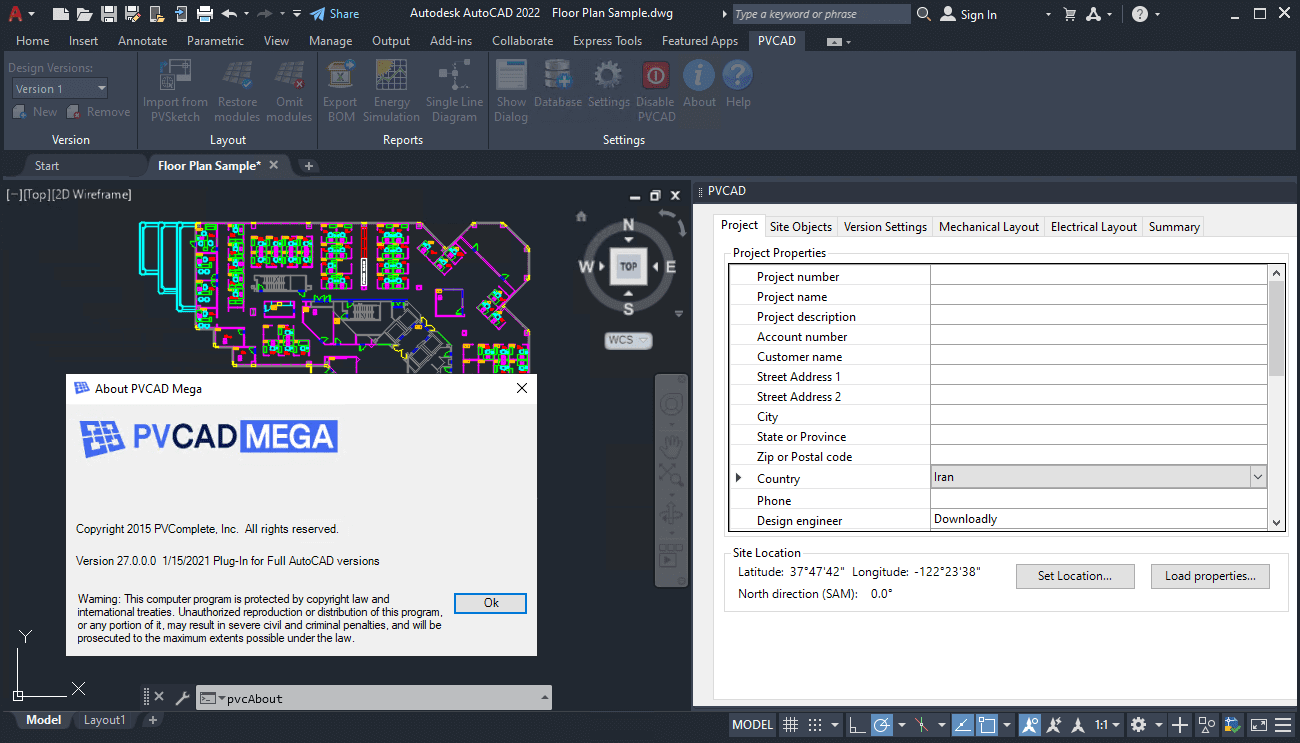
Download PVCAD 2025 – Advanced Solar Engineering Software
PVCAD 2025 is an advanced mechanical engineering application designed for the solar energy sector, developed with Autodesk technology. This software is built to streamline the process of designing solar power plants, catering to engineers and professionals in renewable energy. It offers sophisticated tools for site evaluation and automated design, making it a key solution for efficient photovoltaic project development.
Introduction to PVCAD 2025
PVCAD 2025 represents a specialized solution within the mechanical engineering software landscape, focusing specifically on the complexities of solar power plant design. Leveraging Autodesk’s technological framework, the software aims to optimize the entire design workflow for photovoltaic projects. It empowers engineers and project managers to accelerate design cycles and improve the accuracy of site assessments and layout planning in the rapidly evolving renewable energy industry.
Key Features of PVCAD 2025
- Fast automatic projection for solar projects, enabling quicker initial design phases.
- Seamless tracker placement and comprehensive site evaluations for optimal array configuration.
- Advanced topographic analysis integration for understanding terrain impacts on solar farm development.
- CSV output for data portability, facilitating easy integration with other analytical tools and databases.
- Compatibility with PVSyst for enhanced energy modeling and performance simulation.
Applications in Solar Project Design
PVCAD 2025 is instrumental in various stages of solar power plant design. Its automated capabilities simplify the process of laying out photovoltaic arrays across complex terrains. The software facilitates rapid site evaluations, allowing engineers to quickly assess the feasibility and potential of new renewable energy sites. By automating repetitive tasks in tracker placement and site analysis, PVCAD 2025 enables design professionals to focus on critical engineering decisions, ensuring efficient and effective project planning for utility-scale and distributed solar installations.
How PVCAD Compares to Other Solar Engineering Tools
Compared to general-purpose CAD software, PVCAD 2025 offers highly specialized features tailored for photovoltaic design. Its key differentiators include automated projection capabilities and seamless integration with PVSyst, a leading energy modeling tool. While other solar engineering software might offer broader functionalities, PVCAD 2025 excels in streamlining the initial site layout and evaluation phases, providing a focused approach to plant design. This specialization allows for greater efficiency in tasks such as tracker placement and topographic analysis, which are critical for optimizing solar farm performance.
Integrating PVCAD 2025 with Other Software
The functionality of PVCAD 2025 can be significantly expanded through integration with complementary software. Its compatibility with PVSyst is a cornerstone feature, allowing designers to import PVCAD layouts directly into PVSyst for detailed energy yield simulations and performance analysis. Furthermore, the CSV output feature ensures that design data generated in PVCAD 2025 can be easily exported and utilized in other engineering and project management platforms, supporting a holistic workflow from initial design to final project execution.
Real-World Use Cases
PVCAD 2025 has been utilized in the design of numerous solar power projects, contributing to the efficient development of renewable energy infrastructure. For example, engineers have employed its automated projection and tracker placement tools to quickly lay out large-scale solar farms in varied geographical locations. The software’s advanced topographic analysis has proven essential in identifying optimal zones for array installation, mitigating challenges posed by uneven terrain, and ensuring minimal environmental impact. These applications highlight PVCAD 2025’s role in accelerating project timelines and enhancing the viability of solar energy investments.
Conclusion
PVCAD 2025 offers a powerful set of tools for professionals engaged in solar power plant design. Its automated features, combined with expert integration capabilities, particularly with PVSyst, make it an indispensable asset for efficient and accurate photovoltaic project development. By focusing on rapid site evaluation and streamlined design processes, PVCAD 2025 empowers engineers to deliver high-performance solar solutions, supporting the global transition towards renewable energy.
Frequently Asked Questions
What are the main features of PVCAD 2025?
PVCAD 2025 includes fast automatic projection, easy tracker placement, advanced topographic analysis, and CSV data output for easy portability. It also integrates seamlessly with PVSyst for energy modeling capabilities, enhancing the overall design and analysis workflow for solar projects.
How does PVCAD 2025 assist in solar power plant design?
PVCAD 2025 allows users to design solar power plant sites efficiently, enabling rapid site evaluations and automated design processes that facilitate effective project planning. The software’s specialized tools reduce the time and effort required for complex layout configurations.
Can I integrate PVCAD 2025 with other software tools?
Yes, PVCAD 2025 integrates well with PVSyst and other engineering tools through its data export functionalities like CSV output, enhancing its capabilities in energy modeling and project management.






Reviews
There are no reviews yet.