

Download MSC Romax 2025.1 – Advanced Drivetrain Design and Simulation Software
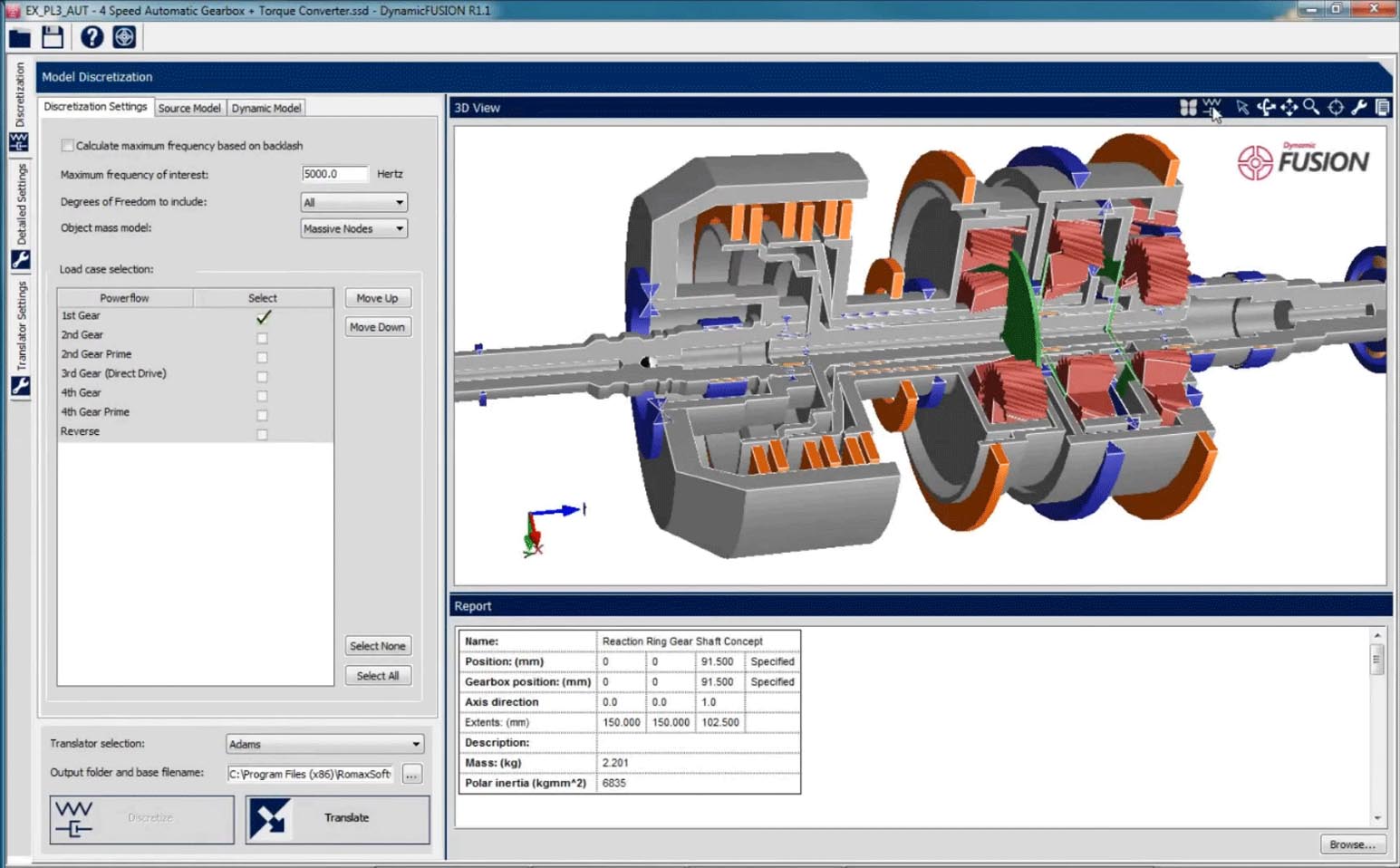
MSC Romax 2025.1 is a specialized Computer-Aided Engineering (CAE) software developed by MSC Software, now part of Hexagon AB, engineered for the intricate analysis and design of mechanical drivetrain systems. This advanced application is crucial for engineers in the automotive, aerospace, wind energy, and industrial machinery sectors. It provides a comprehensive suite of tools essential for designing and simulating gears, bearings, shafts, and entire transmission systems, with a particular focus on enhancing durability and minimizing noise, vibration, and harshness (NVH).
Comprehensive Simulation Environment for Mechanical Drivetrains
Originally developed by Romax Technology and later acquired by MSC Software, MSC Romax has established itself as an industry-standard solution for mechanical drivetrain system analysis. Its integrated approach allows engineers to model and simulate complex systems, from individual component behavior to overall drivetrain performance. The software is utilized by specialists in various high-performance industries to ensure the reliability, efficiency, and quiet operation of their mechanical designs.
Precision Gear Design and Analysis Capabilities
MSC Romax 2025.1 offers extensive capabilities for the detailed design and optimization of gears. It features advanced Tooth Contact Analysis (TCA) to predict contact patterns and analyze load distribution under operational stress. The software facilitates micro-geometry optimization of gear teeth, a critical step for reducing noise and enhancing durability. It supports compliance with international standards such as ISO and AGMA, and enables the modeling of various gear types, including spur, helical, bevel, and hypoid gears.
Integrated Bearing and Shaft System Modeling
Beyond gears, MSC Romax provides robust tools for bearing and shaft system analysis. Engineers can perform advanced rolling element bearing analysis, calculating bearing stiffness and integrated system-level load distributions. The software includes integrated finite element analysis (FEA) solvers for detailed shaft and housing analysis, accurately predicting bending, deformation, and critical speeds. This comprehensive approach ensures that interconnected components are analyzed holistically.
Dynamic NVH and Acoustic Performance Evaluation
Addressing the critical aspect of noise and vibration, MSC Romax 2025.1 delivers sophisticated NVH simulation features. It allows for dynamic simulation to predict phenomena such as gear whine and rattle, providing engineers with insights into potential acoustic issues. Furthermore, the software includes forced frequency response analysis and can estimate acoustic radiation from gearbox housings, aiding in the design of quieter and smoother-operating transmissions.
Durability Assessment and Efficiency Optimization
The software is instrumental in assessing the long-term durability and operational efficiency of drivetrain components. MSC Romax incorporates tools for duty cycle analysis and component life prediction, enabling engineers to validate designs against real-world operating conditions. It also features detailed power loss modeling for gear meshes, bearings, seals, churning, and windage, providing engineers with the data needed to optimize transmission efficiency and minimize energy waste.
What’s New in MSC Romax 2025.1
The 2025.1 release of MSC Romax introduces several enhancements designed to boost productivity and simulation accuracy. Key improvements include accelerated solver times for faster analysis cycles, refined user interface elements for an improved user experience, and updates to advanced physics models. Notably, the new version offers expanded tools specifically for modeling electric drivetrains, including features for e-axle simulations and motor excitation analysis, reflecting the evolving demands of modern powertrain development.
Industry Use Cases and Applications
MSC Romax 2025.1 is widely applied across critical engineering sectors. In the automotive industry, it is essential for designing reliable and quiet electric vehicle reducers and transmissions. For the wind energy sector, it supports the analysis of large, high-power wind turbine gearboxes, ensuring operational longevity. Aerospace and industrial machinery applications also benefit significantly from Romax’s capabilities in developing robust, efficient, and acoustically optimized gearboxes and transmissions, where reliability and precision are paramount.
Frequently Asked Questions
What types of gears can MSC Romax 2025.1 analyze and optimize?
MSC Romax supports detailed analysis and optimization of spur, helical, bevel, and hypoid gears. It includes tooth contact analysis and micro-geometry modifications to improve gear durability and reduce noise.
How does MSC Romax help with noise and vibration reduction in drivetrain systems?
MSC Romax performs dynamic NVH simulations including forced frequency response analysis to predict gear whine and rattle. It also estimates acoustic radiation from gearbox housings to aid in quieter transmission design.
Can MSC Romax 2025.1 model electric vehicle drivelines?
Yes, the 2025.1 version includes expanded tools tailored for electric drivetrains, such as e-axle and e-drive simulations and motor excitation modeling, supporting modern EV powertrain development.



Reviews
There are no reviews yet.