
Download DNV Nauticus Hull 2026 v20.37 – Advanced Ship Structural Design and Analysis Software
Download DNV Nauticus Hull software, a comprehensive suite designed for the full workflow of ship structural design and analysis. Developed by DNV, a leading global classification society and technical assurance provider, this marine engineering software is tailored for naval architects, structural engineers, and classification society engineers working on commercial vessels and offshore platforms. It uniquely integrates DNV’s rigorous marine classification rules and international regulations, streamlining the design and approval process.
Overview of DNV Nauticus Hull and Its Role in Marine Structural Engineering
DNV Nauticus Hull is a specialized application engineered to manage the complexities of ship hull structural design and analysis within the maritime and offshore industries. Its core function is to provide an integrated platform that supports engineers through every stage, from initial concept modeling to final classification approval. The software is indispensable for professionals in naval architecture, structural engineering, and classification societies who require adherence to strict industry standards and regulations to ensure the safety and integrity of marine structures.
Structural Modeling and Finite Element Analysis Capabilities
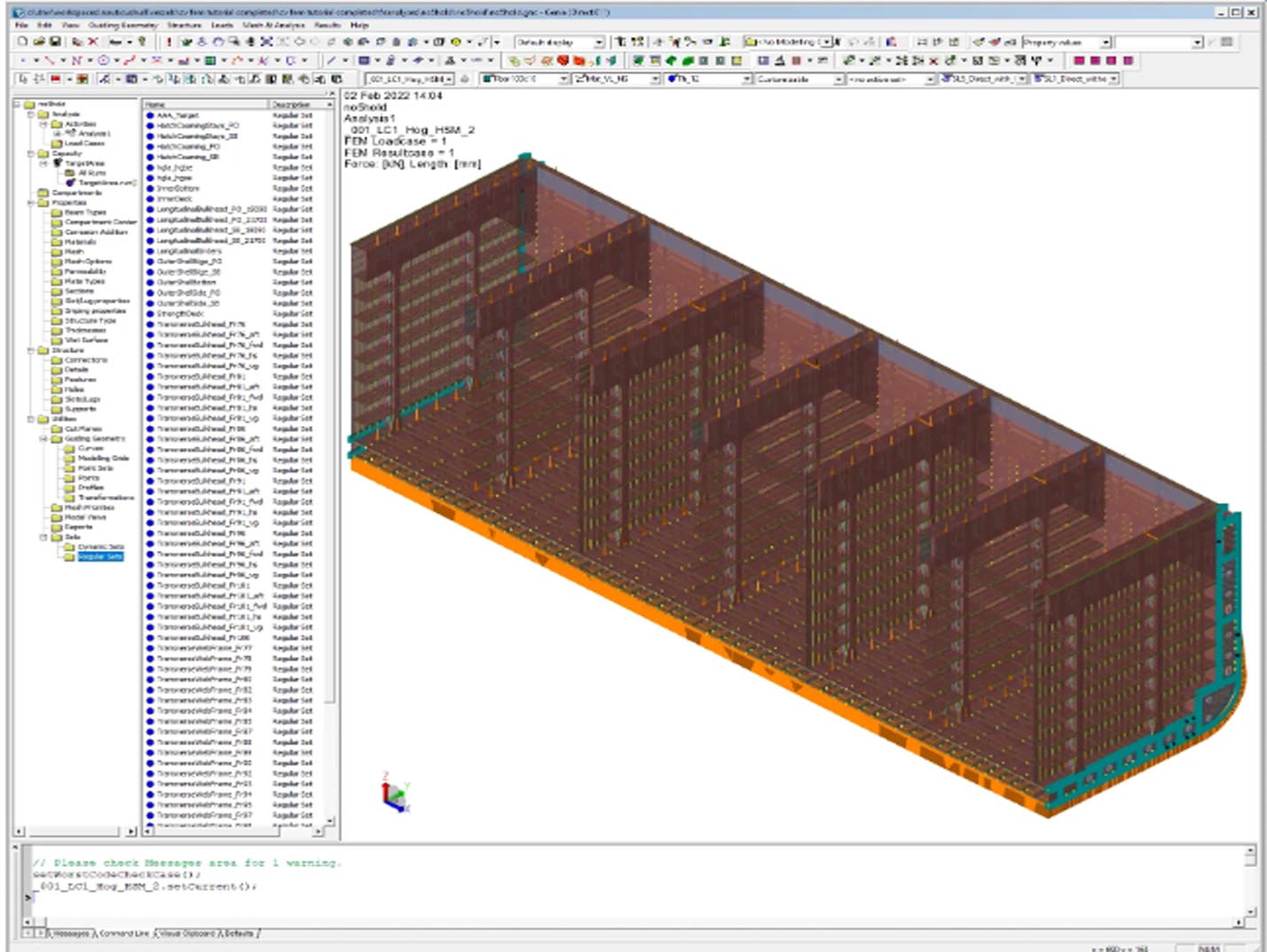
3D Parametric Structural Modeling
The software empowers engineers with advanced 3D parametric modeling tools for creating intelligent structural components. This includes precise definition of plates, stiffeners, and brackets, enabling designs that can be easily modified and managed throughout the project lifecycle.
Automatic Meshing and AI-Driven Optimization
DNV Nauticus Hull automates the finite element mesh generation process, a critical step for accurate structural analysis. The latest version introduces AI-powered mesh optimization, utilizing machine learning algorithms to intelligently refine mesh density based on stress gradients. This significantly reduces the time spent on manual mesh cleanup, leading to more accurate simulation results and improved engineering productivity.
Load Generation and Advanced Analysis
This tool supports the generation of various critical load types encountered in marine environments. It performs static and nonlinear finite element analysis (FEA), providing capabilities for thorough evaluations including buckling analysis and contact analysis, which are essential for ensuring structural stability under operational and extreme conditions.
Compliance with Classification Rules and Fatigue Assessment
Integration of DNV and IACS Common Structural Rules
A key differentiator of DNV Nauticus Hull is its deep integration with DNV’s classification rules and the International Association of Classification Societies (IACS) Common Structural Rules (CSR), particularly for tankers and bulk carriers. The software facilitates real-time rule checking, ensuring designs comply with the latest regulatory requirements and updates, including specific criteria for offshore units and emerging vessel types.
Fatigue and Yield Evaluations
The software enables comprehensive fatigue assessment, evaluating the long-term effects of cyclic loading on structural integrity. Alongside fatigue, it conducts essential buckling and yield evaluations to confirm that structural components can withstand operational stresses without permanent deformation or failure.
Enhanced Features in Version 20.36
Version 20.36 of DNV Nauticus Hull introduces significant enhancements aimed at expanding its analytical scope and efficiency. Key updates include the integration of springing and whipping hydroelasticity assessments, which are crucial for understanding dynamic structural responses in waves. Additionally, it features improved analysis tools for composite materials like fiber-reinforced plastics (FRP) and sandwich panels, alongside support for the latest 2025 DNV Rules, encompassing new green ship notations and cybersecurity structural considerations relevant for advanced vessel designs such as those for ammonia-fueled ships.
Workflow Efficiency and Integration with Marine Engineering Ecosystems
Automation and Reporting Tools
DNV Nauticus Hull streamlines the documentation process by automating the generation of reports required for classification society submissions. This capability significantly reduces the manual effort involved in preparing compliance documentation, accelerating the overall design approval cycle.
CAD and Cloud Integration
Reflecting modern engineering practices, the software offers seamless integration with leading CAD systems, including CADDS 5, NX, CATIA, and FORAN. It also supports cloud computation capabilities, allowing for distributed processing of complex analyses and facilitating collaboration across engineering teams regardless of their geographical location.
Collaboration within DNV Ecosystem
Leveraging its connection within the DNV ecosystem, Nauticus Hull facilitates project sharing and collaborative review features. This enables smoother project execution and ensures that all stakeholders are working with consistent, up-to-date design information.
Real-World Use Cases and Industry Impact
DNV Nauticus Hull is instrumental in the design and analysis of various marine and offshore structures. Its applications range from the structural design of conventional vessels like tankers and bulk carriers to complex offshore units such as platforms and specialized vessels. Educational institutions also utilize the software for training future naval architects and structural engineers on industry-standard design and analysis practices.
Frequently Asked Questions
What classification rules does DNV Nauticus Hull support for ship structural design?
DNV Nauticus Hull supports the latest DNV classification rules for ships and offshore units, as well as the IACS Common Structural Rules (CSR) for tankers and bulk carriers. It also integrates offshore standards such as DNV-OS-C101 and supports emerging rules for ammonia-fueled vessels and green ship notations.
How does DNV Nauticus Hull utilize AI technology in structural analysis?
The software features AI-powered mesh optimization that uses machine learning algorithms to predict optimal finite element mesh density based on stress gradients. This reduces manual cleanup of mesh models by around 40%, enhancing analysis accuracy and productivity.
Can DNV Nauticus Hull handle composite and advanced material analyses?
Yes, version 20.36 includes enhanced capabilities for analyzing fiber-reinforced plastics (FRP) and sandwich panels, which are increasingly used in offshore and specialized marine vessels.



Reviews
There are no reviews yet.