
Download DNV HydroD 2026 – Advanced Hydrodynamic Analysis Software for Marine and Offshore Structures
DNV HydroD 2026 is a specialized hydrodynamic analysis software developed by DNV, a global leader in risk management and quality assurance for maritime and energy sectors. Integrated within the broader Sesam framework, it is designed for sophisticated simulation of wave-induced motions, stability, and loads on marine vessels and offshore structures. This software is critical for professionals in naval architecture, offshore oil and gas, and the rapidly growing field of offshore renewable energy, particularly floating wind turbines.
Comprehensive Hydrodynamic Modeling for Offshore Engineering
DNV HydroD serves as a cornerstone for hydrodynamic analysis within the Sesam environment, catering to the demanding requirements of naval architecture, offshore oil and gas platform design, and the burgeoning offshore renewable energy sector. Its capabilities extend to floating structures, providing essential tools for predicting the behavior of marine assets under various sea conditions. The software is engineered to support the entire lifecycle of these structures, from initial design and analysis through to operational safety and regulatory certification.
Advanced Simulation Capabilities and Solver Technologies
HydroD leverages sophisticated numerical methods and distinct solver technologies to provide comprehensive hydrodynamic insights. These advanced capabilities enable engineers to accurately predict complex phenomena relevant to marine and offshore structure performance.
Frequency Domain Analysis with WADAM Solver
The WADAM solver within DNV HydroD specializes in three-dimensional diffraction and radiation wave modeling. This functionality is crucial for calculating the steady-state interactions between waves and structures, allowing for the precise prediction of wave loads and motions under regular wave conditions. It forms a basis for understanding a structure’s response to harmonic wave excitations.
Time Domain Simulation with SIMA Solver
For realistic operational scenarios, the SIMA solver facilitates detailed time-domain simulations. This capability allows for the coupled dynamic analysis of vessel motions, mooring systems, and riser dynamics under dynamic and irregular sea states. It provides a robust framework for assessing transient responses, fatigue, and extreme behavior over extended periods.
Multi-Body and Interaction Analysis
DNV HydroD excels in modeling scenarios involving multiple interacting marine bodies. This includes simulating complex operational situations such as vessel-to-vessel offloading operations, offshore lifting procedures, and the combined dynamic behavior of multiple floating units. Such analysis is vital for ensuring safety and efficiency in intricate marine operations.
Specialized Modules and New Features in Version 2026 v9.0
Version 2026 of DNV HydroD introduces significant advancements, particularly focused on enhancing simulation accuracy, expanding capabilities for emerging energy technologies, and streamlining engineering workflows. These updates reflect the evolving demands of the marine and offshore industries.
Floating Offshore Wind Turbine Analysis Enhancements
The latest version incorporates substantial improvements for analyzing Floating Offshore Wind Turbines (FOWT). Notably, it introduces nonlinear tendon modeling, a critical feature for tension leg platform analysis, and provides enhanced coupled dynamic simulations. These advancements enable more accurate and reliable assessments of FOWT performance and stability under diverse environmental conditions.
Machine Learning-Accelerated Time-Domain Simulations
DNV HydroD now features machine learning acceleration for its time-domain simulations. This innovative approach significantly speeds up the analysis process, particularly for large parameter studies in irregular sea conditions, by leveraging ML models to predict responses more efficiently without compromising accuracy.
Wave Energy Converter Workflow Improvements
Dedicated templates and advanced post-processing tools tailored for Wave Energy Converters (WECs) have been integrated. These enhancements streamline the workflow for assessing the performance and viability of WEC devices, providing engineers with more focused and efficient analytical capabilities for this specialized renewable energy sector.
Updated Regulatory Compliance and User Interface Upgrades
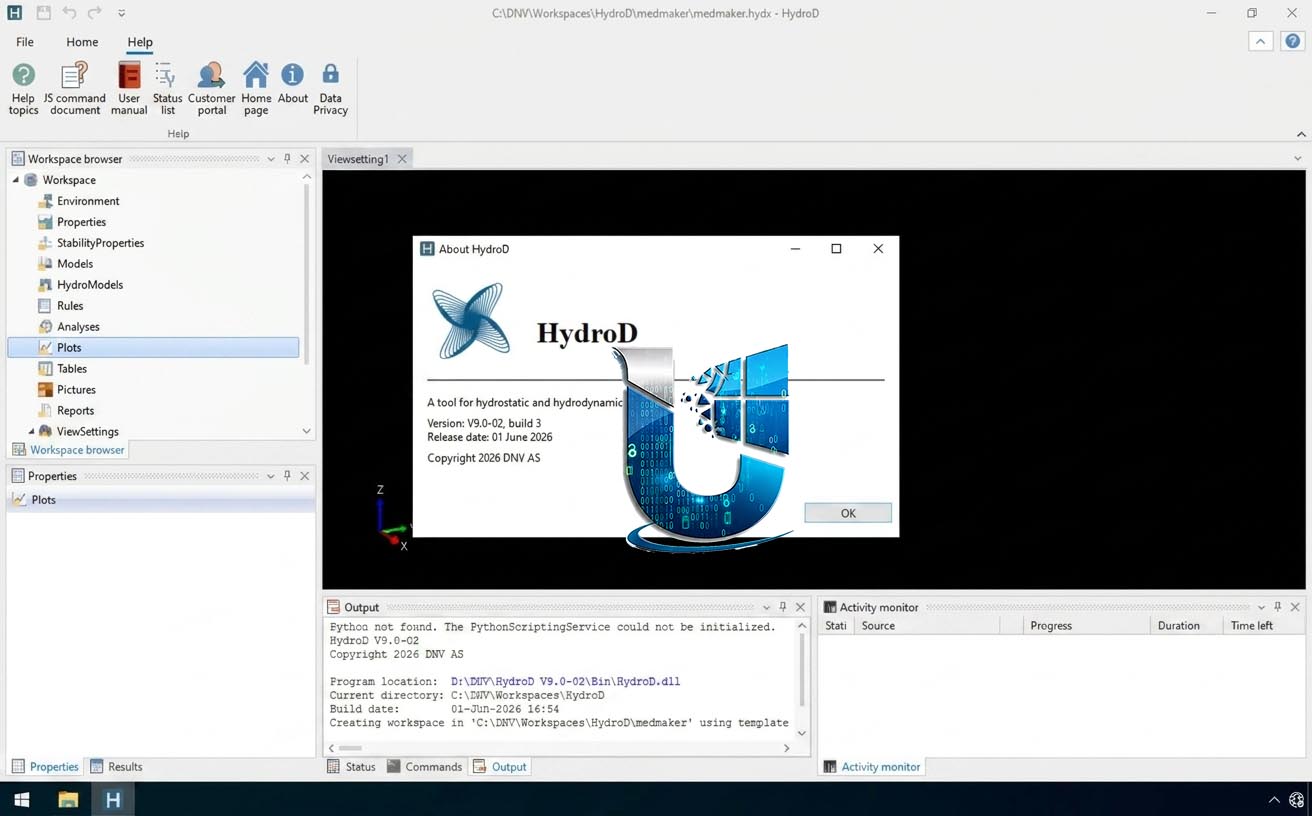
HydroD 2026 integrates the latest guidelines from international bodies such as IMO, DNV, and ISO, ensuring that analyses for stability and load calculations are compliant with current industry standards. The software also features a modernized user interface and improved meshing tools, enhancing overall usability and the efficiency of pre-analysis model preparation.
Industry Applications and Real-World Use Cases
DNV HydroD is a pivotal tool employed across various critical sectors of the marine and offshore industries, enabling both design innovation and rigorous safety verification.
Naval Architects and Marine Engineers
Naval architects and marine engineers utilize DNV HydroD extensively in the design of ships and offshore platforms. Projects often involve detailed seakeeping analyses to ensure vessel comfort and safety, as well as precise load prediction for structural design and verification.
Offshore Wind Engineering and Floating Substructure Analysis
In the offshore wind sector, HydroD is fundamental for the design and assessment of floating substructures for wind turbines. Analysis includes ensuring the stability and dynamic integrity of these complex floating platforms, with a particular focus on the performance of their mooring systems.
Mooring, Riser System, and Marine Warranty Engineering
The software is extensively used for detailed analysis of mooring line tensions and riser dynamics in offshore operations. Marine warranty surveyors and engineers rely on HydroD for validating designs and operational plans against regulatory requirements and safety standards.
Software Integration and Compatibility within Marine Engineering Workflows
DNV HydroD is designed for seamless integration into broader marine engineering workflows, enhancing productivity and data consistency across different disciplines. Its compatibility with the Sesam suite and adherence to industry standards facilitate robust project execution.
As an integral part of the DNV Sesam platform, HydroD benefits from and contributes to a unified engineering environment. It supports efficient data exchange with other Sesam modules, such as structural analysis and naval architecture tools, ensuring continuity from hydrodynamic load calculation to structural response assessment. The software supports common industry file formats for model import and export, further enhancing interoperability. While specific proprietary formats may be used internally, standard data exchange mechanisms ensure that HydroD findings can be readily utilized by complementary software and analysis tools, supporting comprehensive design and certification processes.
Frequently Asked Questions
What types of hydrodynamic analyses can DNV HydroD perform?
DNV HydroD performs frequency domain wave diffraction and radiation analysis, time-domain coupled simulations of vessel motions with mooring and riser systems, multi-body interaction modeling, and advanced stability assessments including damage cases. This comprehensive scope allows for detailed evaluation of marine structures under various operational and environmental conditions.
How does the new floating wind module in HydroD v9.1 improve offshore wind turbine analysis?
The updated floating wind module introduces nonlinear tendon modeling for tension leg platforms and enhanced coupled dynamic simulations, enabling more accurate and comprehensive evaluation of Floating Offshore Wind Turbine (FOWT) behavior under real sea and wind conditions. These improvements are critical for accurately assessing the performance and safety of next-generation offshore wind energy systems.
Can DNV HydroD integrate with other marine engineering software and standards compliance tools?
Yes, HydroD is fully integrated within the Sesam suite used widely in marine engineering, supports data exchange for structural and stability modules, and includes direct compliance checks aligned with IMO, DNV, and ISO regulations for safety and certification. This integration ensures that engineering workflows are streamlined and that designs meet stringent international maritime and offshore standards.





Reviews
There are no reviews yet.