
Download Caligola 4 – Specialized Footwear CAD Software for Design and Production
Caligola 4 is a specialized CAD/CAM software engineered exclusively for the footwear industry. Developed to streamline the entire design-to-manufacturing workflow, it offers dedicated tools for footwear pattern engineering, grading, 3D design, and production optimization. This software is essential for professionals in athletic footwear design, orthopedic shoe development, fashion footwear creation, and academic institutions focusing on footwear technology and manufacturing.
Innovations in Footwear Design with Caligola 4
Caligola 4 ushers in a new era of footwear creation, moving beyond generic CAD solutions to offer a suite of tools specifically for the unique demands of shoe design. It supports the development of diverse footwear categories, including high-performance athletic shoes, medically precise orthopedic footwear, and trend-setting fashion footwear. By integrating advanced design and engineering capabilities, Caligola 4 empowers designers to conceptualize, develop, and refine footwear models with unparalleled precision and efficiency.
Precision Pattern Engineering and Grading Tools
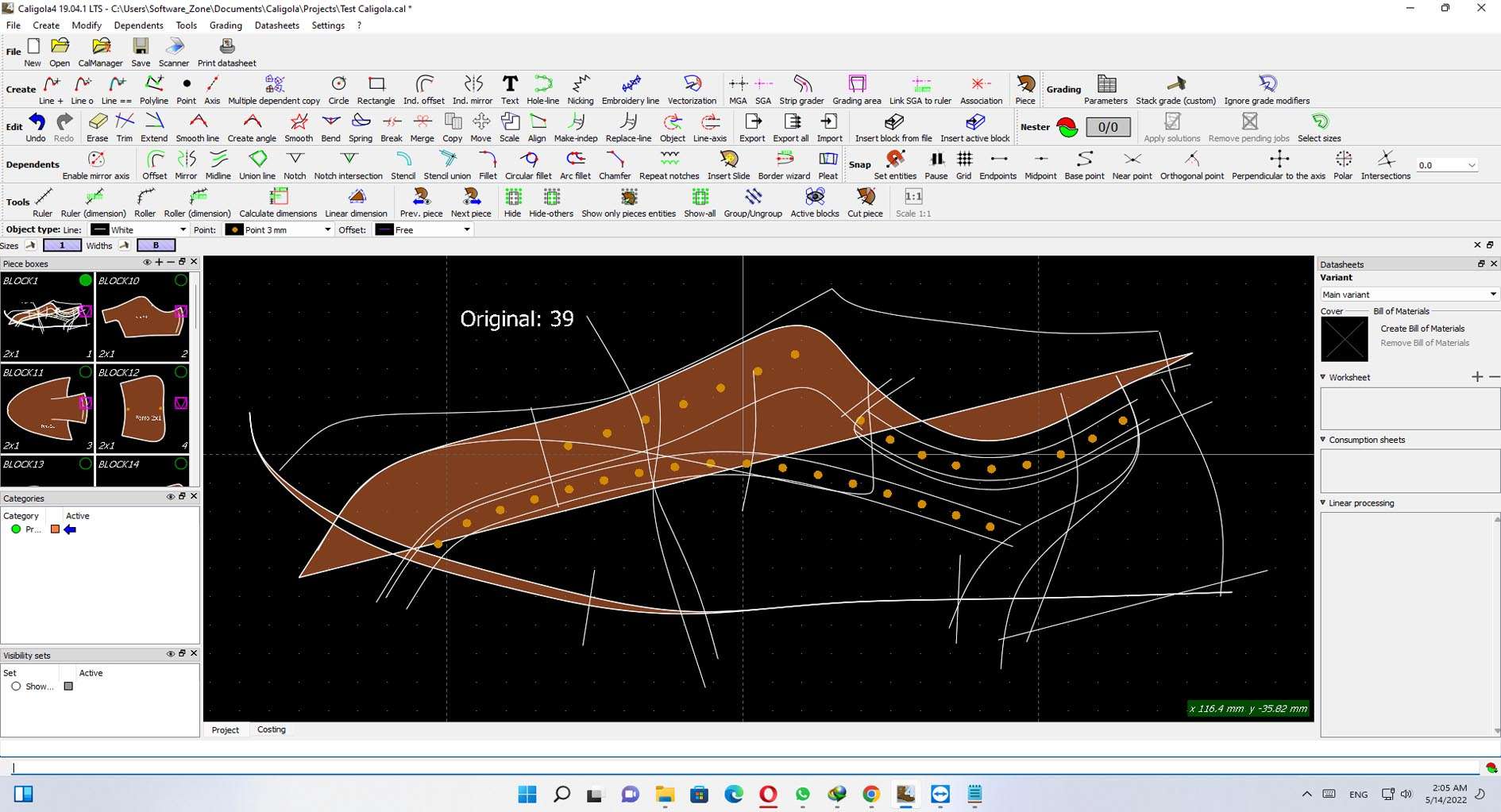
At the core of Caligola 4 are its robust tools for 2D pattern creation and automatic grading. Designers can meticulously craft master patterns, confident that the software’s algorithms will then execute precise grading across extensive size ranges. A critical capability is the real-time synchronization between 2D pattern drafts and their corresponding 3D models. This ensures that any adjustments made in one environment are instantly reflected in the other, significantly reducing errors, saving time, and maintaining design integrity throughout the development cycle.
Advanced 3D Capabilities and Virtual Fit Simulation
Caligola 4 excels in its advanced 3D design functionalities, beginning with sophisticated last design modules. Users can create or modify digitized lasts with high accuracy, forming the fundamental basis of shoe design. The software enables photorealistic rendering for design visualization and virtual prototyping, allowing stakeholders to assess aesthetics before physical samples are produced. Furthermore, its virtual fit simulation tools offer insights into how a shoe will perform on the foot, including motion analysis, which aids in optimizing comfort, performance, and biomechanics for various footwear types.
AI-Driven Enhancements for Efficient Footwear Development
Leveraging artificial intelligence, Caligola 4 introduces several features designed to accelerate and improve the footwear development process. The AI Pattern Assistant can optimize pattern shapes and seam placements, suggesting efficiencies that enhance both design and manufacturability. Smart Last Generation offers intelligent modifications to existing last designs based on specific criteria, while AI-powered error detection proactively identifies potential issues in patterns or designs before they progress further into production. These AI tools contribute to faster innovation cycles and more robust product development.
Optimizing Production with Material Nesting, Costing, and Collaboration
Beyond design, Caligola 4 provides critical functionalities for manufacturing optimization. The software includes advanced automatic and manual material nesting tools, designed to maximize fabric or material utilization and minimize waste. Integrated costing features calculate material expenses and production estimates, aiding in budget management. For team-based projects, Caligola 4 supports cloud collaboration, enabling seamless sharing and feedback loops among designers, engineers, and production teams. Its integration capabilities extend to enterprise resource planning (ERP) systems, facilitating a connected and efficient overall production workflow.
Sustainability and Environmental Impact Features
Recognizing the growing importance of sustainable practices, Caligola 4 incorporates several features aimed at reducing environmental impact. Its advanced material nesting significantly optimizes fabric usage, directly contributing to waste reduction. The software can assist in calculating the carbon footprint of different design choices and material selections, empowering informed decisions. Additionally, it may feature databases of sustainable materials and tools to help designers meet environmental targets, supporting responsible manufacturing within the footwear sector.
Use Cases in Footwear Manufacturing and Academic Training
Caligola 4 is extensively applied across various sectors of the footwear industry. In sports shoe production, it facilitates the design of performance-enhancing features and precise fit for athletes. For orthopedic footwear development, its specialized modules enable the creation of custom, anatomically accurate, and functional orthotic devices. Factories employ Caligola 4 to improve material yield, reduce production lead times, and enhance overall manufacturing efficiency. Furthermore, academic institutions utilize Caligola 4 to train the next generation of footwear designers and pattern engineers, equipping them with industry-standard software and methodologies.
Frequently Asked Questions
How does Caligola 4 improve the accuracy of footwear pattern grading?
Caligola 4 automates the grading process using advanced algorithms, ensuring precise size range development from the master patterns. The real-time 3D/2D synchronization further minimizes errors by keeping models and patterns consistently updated.
What AI features does Caligola 4 offer for footwear design?
Caligola 4 integrates AI-driven tools such as the AI Pattern Assistant for pattern optimization, Smart Last Generation for customized last modifications, and automated error detection to identify issues pre-production. These features enhance design efficiency and innovation.
Can Caligola 4 be used for orthopedic and safety footwear design?
Yes, Caligola 4 includes specialized modules tailored for orthopedic and safety footwear, providing tools to design complex custom lasts, ensure compliance with safety standards, and optimize functional features specific to these segments.






Reviews
There are no reviews yet.