

Download APF WoodJoint 5.4.4 – Timber Connection Analysis and Design Software
APF WoodJoint 5.4.4 is specialized engineering software for the analysis and design of timber connections. Developed for professionals in timber engineering, structural engineering, and civil construction, this application focuses on ensuring the integrity and compliance of connections within wood structures. Practitioners in architectural design and those involved in truss and frame design utilize APF WoodJoint to perform critical load capacity calculations and fastener strength evaluations.
Overview of Timber Joint Design and APF WoodJoint Applications
The stability and load-bearing capacity of any timber structure heavily depend on the performance of its connections. APF WoodJoint addresses this critical aspect by providing engineers and designers with a robust tool for analyzing and designing these joints. The software is instrumental in handling connections within timber frames, complex trusses, and individual structural joints, ensuring that each component functions safely and efficiently under applied loads. Its primary application lies within the structural engineering and timber construction fields, though it also supports architects involved in wood structure design.
Advanced Analysis Capabilities for Timber Connections
APF WoodJoint offers comprehensive modeling for a wide array of timber connection types, enabling detailed analysis and design. The software supports connections such as those using bolted, nailed, and screwed fasteners, as well as doweled joints and steel plate connections. Its advanced fastener analysis capabilities allow engineers to specify parameters like diameter, grade, wood species, and critical orientation angles. This detailed input supports the evaluation of various failure modes and ensures that fastener capacities are accurately determined under different load conditions, including axial forces, shear stresses, and bending moments, in accordance with established design standards.
Compliance with International Timber Design Codes
Ensuring structural integrity through adherence to governing standards is paramount in engineering. APF WoodJoint facilitates this by integrating support for major international timber design codes. This includes comprehensive compliance with Eurocode 5, the National Design Specification (NDS) for Wood Construction in the USA, and AS1720 standards from Australia. The software employs recognized methodologies like the European Yield Model (EYM) for dowel-type fasteners, alongside other relevant design principles applicable to various fastener types. APF WoodJoint is updated to reflect the latest code amendments and national annexes, helping users maintain full compliance.
Integration and Reporting Features Supporting Engineering Workflow
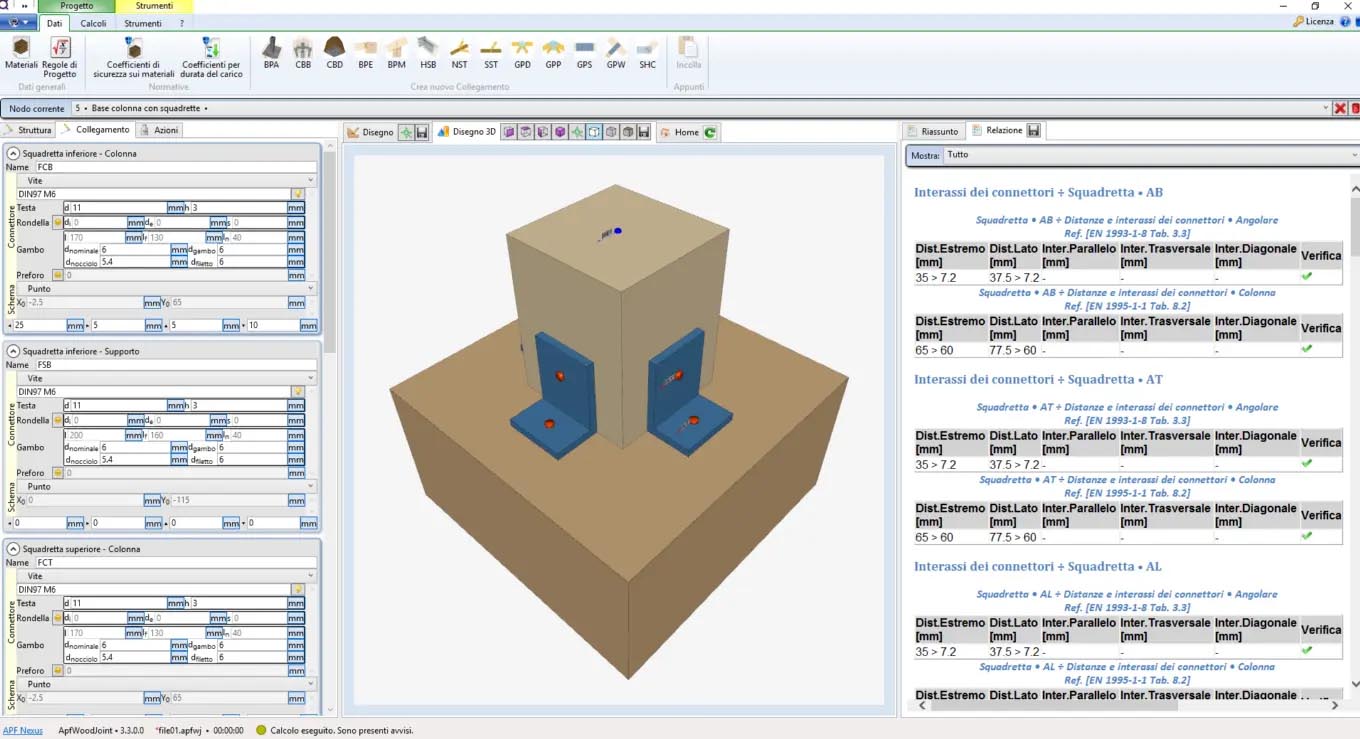
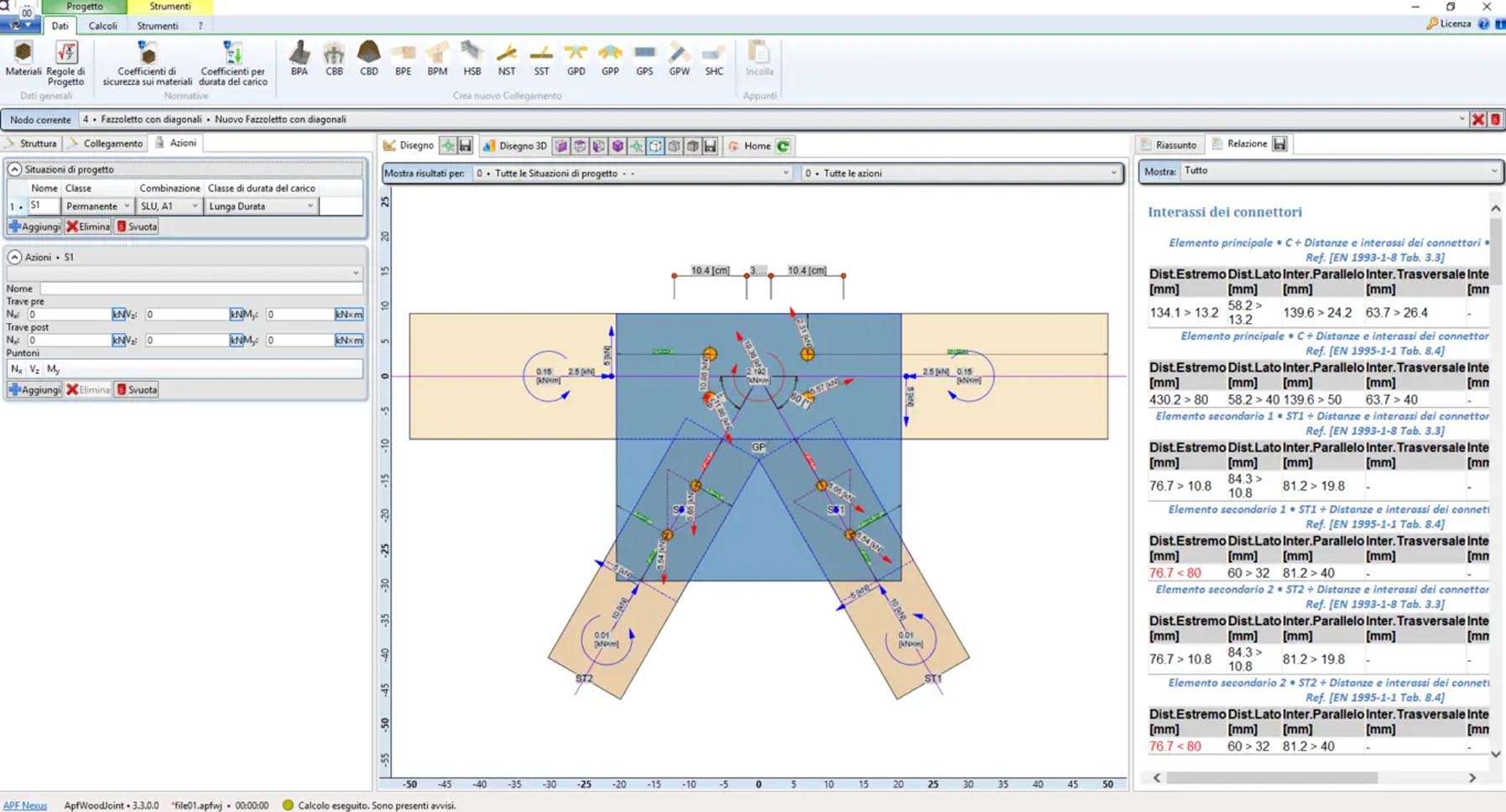
To optimize the structural design process, APF WoodJoint integrates with other engineering tools, notably APF WoodTruss, which is used for member design. This integration allows for a more holistic approach to timber structure design. The software features a refined graphical user interface for clear visualization of joint geometry and the application of forces. Critically, it generates customizable and detailed calculation reports that document assumptions, intermediate results, and final checks. Version 5.4.4 introduces enhanced reporting templates and export formats, streamlining the documentation process for engineering submissions, peer review, and regulatory approval.
Real-World Use Cases and Practical Benefits for Engineers
APF WoodJoint is applied in numerous practical engineering scenarios. Example use cases include designing robust beam-to-column connections, detailing moment-resisting frames for seismic or wind load resistance, and creating secure splice joints for extending timber members. The software’s precise calculations lead to increased design accuracy and the creation of safe, efficient timber connections, ultimately improving structural reliability. Furthermore, the updated fastener libraries in version 5.4.4 offer engineers a broader selection of connectors, enhancing design flexibility and optimising material usage for greater productivity.
Frequently Asked Questions
What types of timber connections can APF WoodJoint analyze and design?
APF WoodJoint supports a wide variety of timber joint types, including those with bolted, nailed, and screwed fasteners, as well as doweled connections, slotted-in steel plates, and specialized hardware like split rings and shear plates. Its adaptability extends to custom configurations, making it suitable for complex timber structures.
How does APF WoodJoint ensure compliance with international timber design standards?
The software integrates recognized engineering models, such as the European Yield Model, and applies up-to-date versions and national annexes of key standards including Eurocode 5, NDS (USA), and AS1720 (Australia). This ensures that engineered timber connections meet all relevant code requirements for safety and performance.
Can APF WoodJoint generate detailed reports for engineering submissions?
Yes, APF WoodJoint produces comprehensive, step-by-step calculation reports. These reports clearly document critical assumptions, intermediate results, and final checks, which are essential for project documentation, facilitating peer review processes, and obtaining compliance certification.








Reviews
There are no reviews yet.