

Download Dynamita SUMO v24.0.1 – Advanced Wastewater Treatment Process Simulator
Dynamita SUMO v24.0.1 is a sophisticated, kinetics-based process simulation software designed for wastewater treatment, developed by Dynamita SAS, a company founded by recognized environmental engineer Imre Takács. This specialized application is crucial for professionals in environmental engineering, process engineering, and water treatment plant operations within both municipal and industrial sectors. It provides advanced capabilities for designing new wastewater treatment plants, optimizing existing ones, troubleshooting operational issues, and forecasting compliance with environmental regulations through detailed process modeling.
In-Depth Overview of Dynamita SUMO and Its Role in Wastewater Engineering
Dynamita SUMO stands as a third-generation software dedicated to the rigorous modeling and simulation of wastewater treatment processes. Developed under the expertise of Imre Takács, a prominent figure in wastewater treatment modeling, the software provides a powerful platform for simulating the complex biological and physico-chemical transformations occurring in treatment facilities. Its primary applications span the entire lifecycle of wastewater plants, from initial conceptual design and capacity planning to ongoing operational optimization, troubleshooting of performance issues, and ensuring steadfast regulatory compliance. The software enables engineers to gain deep insights into process behavior through detailed kinetic simulations.
Kinetic Modeling Capabilities and Supported Biological Models
The core strength of Dynamita SUMO lies in its comprehensive implementation of internationally validated biological and chemical wastewater treatment models. It fully supports the widely adopted International Water Association (IWA) activated sludge models, including ASM1, ASM2d, and ASM3, as well as the Anaerobic Digestion Model ADM1. These models allow for precise simulation of critical removal processes such as carbonaceous organic matter, nitrogen, and phosphorus, alongside the complex biochemical reactions involved in anaerobic digestion. Professionals can utilize both dynamic and steady-state simulation modes, offering flexibility for different analytical needs, from long-term plant design to short-term operational variability analysis.
Flexible Plant Layout Construction and Simulation Features
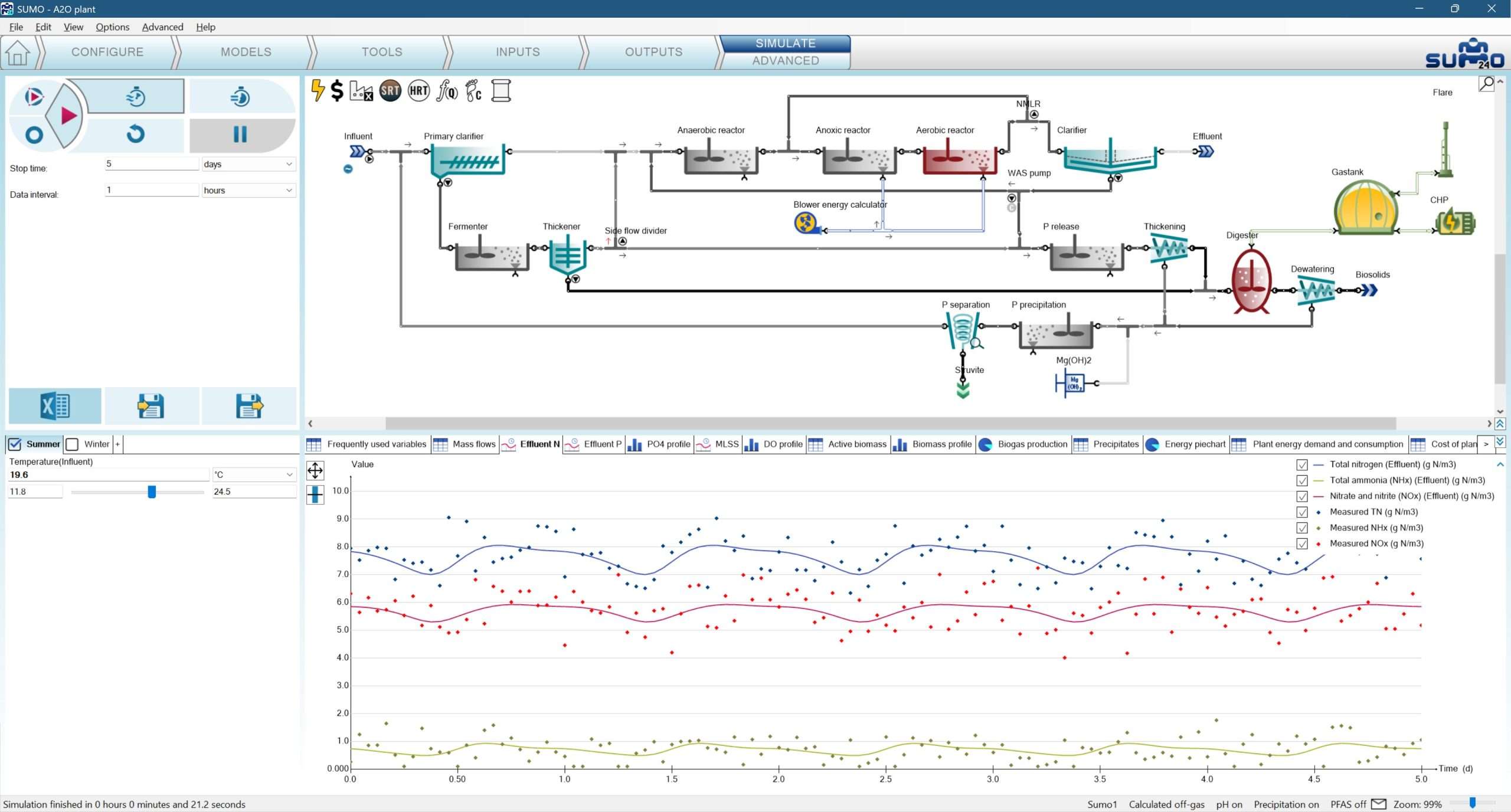
Dynamita SUMO features a user-friendly, drag-and-drop interface for constructing diverse plant layouts. This builder includes an extensive library populated with typical unit processes found in wastewater treatment plants, such as various types of reactors, clarifiers, sludge treatment units, and digesters. Engineers can virtually assemble these components to represent specific plant configurations or explore different design arrangements. The software’s capability to integrate influent and weather data allows for highly realistic simulations, enabling users to test plant responses under variable and challenging real-world conditions.
New Advances in Version 24: Digital Twin Readiness and Enhanced Modeling
Version 24 of Dynamita SUMO introduces significant advancements, notably enhancing its digital twin capabilities and extending its modeling repertoire. The addition of advanced biological model extensions, collectively termed SUMObio, includes support for emerging and specialized technologies like mainstream deammonification (ANAMMOX) processes. Crucially, v24 integrates improved digital twin connectivity, allowing seamless real-time data exchange with SCADA systems and IoT sensors from the plant floor. This facilitates live monitoring and predictive analysis, transforming the software into a powerful operational tool. Further enhancements include an intuitive calibration wizard and upgraded statistical tools for more robust effluent risk analysis.
Practical Uses: Optimization, Scenario Analysis, and Risk-Based Design
Environmental and process engineers leverage Dynamita SUMO extensively for practical applications within wastewater treatment. Its simulation capabilities are vital for optimizing plant performance, focusing on critical areas such as energy consumption reduction, sludge production management, and efficient chemical dosing. The software facilitates comprehensive scenario analysis, enabling operators to test the impact of different operational strategies or proposed modifications without disrupting actual plant operations. Furthermore, advanced tools for effluent probability and risk analysis empower engineers to design plants that reliably meet compliance targets, even under uncertain conditions, through a risk-based approach.
Data Calibration, Validation, and Visualization Tools
Ensuring the accuracy of simulation models is paramount, and Dynamita SUMO provides robust tools for model calibration and validation. Users can employ historical operational data or real-time plant measurements to fine-tune model parameters, improving predictive accuracy. The software offers comprehensive reporting features that cover essential aspects of plant performance, including detailed mass balance calculations, energy audits, and cost analyses. For clear communication and analysis, SUMO presents simulation results through various visualization options, such as dynamic graphs, animated flow diagrams, and customizable dashboards, making complex data readily interpretable.
Frequently Asked Questions
What wastewater treatment models does Dynamita SUMO support?
Dynamita SUMO supports the International Water Association’s activated sludge models ASM1, ASM2d, ASM3, and the Anaerobic Digestion Model ADM1. These models enable detailed simulation of carbon, nitrogen, phosphorus removal, and anaerobic digestion processes in wastewater plants.
How does the digital twin feature in Dynamita SUMO improve wastewater plant operation?
The digital twin capability in SUMO v24 enables real-time integration with SCADA and IoT sensor data, facilitating live simulation and operational decision support. This allows plant operators to analyze and optimize processes proactively, improving performance and compliance.
Can Dynamita SUMO simulate both steady-state and dynamic conditions?
Yes, Dynamita SUMO allows both steady-state simulations for design and planning, as well as dynamic simulations to capture diurnal, storm, and seasonal variations in plant performance. This versatility supports comprehensive analysis under variable conditions.








Reviews
There are no reviews yet.