

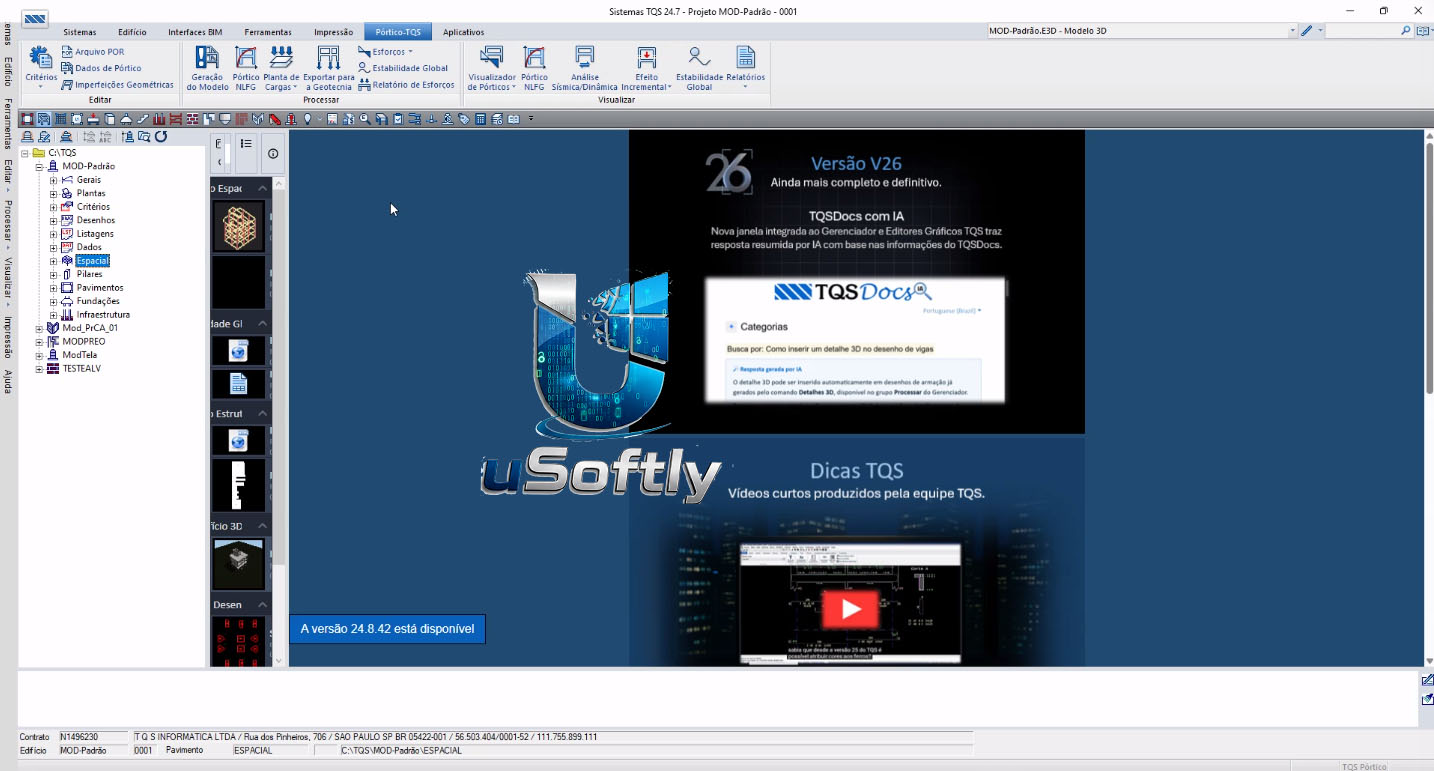
Download TQS Informatica Systemas TQS – Integrated Structural Engineering Software for Reinforced and Prestressed Concrete
TQS Informatica Systemas TQS is a comprehensive structural engineering platform developed by TQS Informatica Systemas, a Brazilian company. This software is designed for professionals in civil engineering and construction, specializing in the structural design and analysis of reinforced and prestressed concrete buildings. Its integrated approach aims to streamline the entire workflow, from initial 3D modeling through detailed analysis to final construction documentation, with a strong emphasis on compliance with Brazilian ABNT NBR standards.
Comprehensive Structural Design Tailored to Brazilian and International Standards
TQS Informatica Systemas has developed TQS as a complete structural engineering solution focused on building structures. The software is particularly adept at handling projects involving reinforced and prestressed concrete. A key differentiator is its deep integration with Brazilian design codes, primarily the ABNT NBR standards, making it an indispensable tool for engineers and firms operating within Brazil. While prioritizing local regulations, TQS 2026 also incorporates support for various international design codes, broadening its applicability for global projects. The platform’s history is rooted in providing a unified environment for complex structural engineering tasks.
Advanced 3D Modeling and Load Analysis Capabilities
The TQS software features an advanced 3D modeling environment that allows engineers to create precise digital representations of building structures. This model serves as the foundation for subsequent load application and structural analysis. Users can define various types of loads, including dead loads, live loads, wind loads (using specialized modules), and seismic loads, as specified by relevant design codes. The integrated structural analysis modules then process this information to determine the behavior of the structure under different conditions, providing critical data for design optimization and safety validation.
Automated Reinforcement Detailing and Construction Documentation
A significant aspect of the TQS structural engineering software workflow is its capability for automated reinforcement detailing. TQS generates intelligent reinforcement layouts, adhering to code requirements for concrete structures. This automation extends to the production of essential construction documents. The software can automatically generate bar bending schedules, detailed workshop drawings for rebar fabrication, and comprehensive material lists, significantly reducing manual effort and minimizing errors in the transition from design to the construction phase.
Specialized Modules Enhancing Structural Engineering Functions
Beyond its core capabilities, TQS includes a suite of specialized modules designed to address complex structural engineering challenges. These modules offer in-depth analysis and design tools for specific structural elements and conditions. For instance, dedicated functionalities exist for the design of retaining walls (CONTEN), the strengthening of structures using carbon fiber reinforced polymers (PREF), and detailed wind load analysis (HFPIBR). These specialized tools enhance the software’s versatility, allowing engineers to tackle a wider array of project requirements with precision.
BIM Interoperability and Collaboration Features
TQS emphasizes seamless integration within Building Information Modeling (BIM) workflows. The software supports industry-standard IFC (Industry Foundation Classes) formats, offering robust import and export capabilities for IFC 4.x versions. This allows structural models created in TQS to be easily shared and coordinated with architectural and MEP (Mechanical, Electrical, and Plumbing) models from other software. Additionally, TQS includes features for clash detection, which are vital for identifying potential interferences between different building systems early in the design process, thereby improving multidisciplinary project collaboration and reducing costly on-site conflicts.
Practical Applications and User Profiles
The TQS structural engineering software is utilized by a range of professionals in the building sector. Structural engineers, BIM managers, and project managers within civil engineering firms and construction companies rely on TQS for designing and documenting their projects accurately, especially those involving concrete structures. Students and academics in structural engineering also use TQS to learn and apply design principles, particularly those related to Brazilian standards. Typical use cases include the design of residential and commercial buildings, specialized infrastructure like reservoirs and retaining walls, and projects where advanced BIM coordination is essential.
Frequently Asked Questions
What types of structures can be designed using TQS 2026 software?
TQS primarily supports the structural design of reinforced and prestressed concrete buildings, including complex infrastructure such as reservoirs, retaining walls, and post-tensioned concrete elements. It ensures code compliance and detailed analysis tailored for such structures.
How does TQS support Building Information Modeling (BIM) workflows?
TQS offers enhanced BIM interoperability through IFC 4.x import/export and clash detection features, allowing seamless coordination between structural models and architectural or MEP systems, which improves multidisciplinary project collaboration.
Does TQS comply with international structural design codes?
While primarily focused on Brazilian ABNT NBR standards, TQS also supports several international design codes, enabling engineers to apply the software in diverse regulatory environments with confidence.





Reviews
There are no reviews yet.