

Download Wolfram SystemModeler 15.0.14 – Comprehensive Engineering and Life-Science Simulation Software
Wolfram SystemModeler 15.0.14 is a sophisticated engineering and life-science modeling software developed by Wolfram Research, Inc. Building upon its origins as MathModelica, this platform provides a powerful yet user-friendly graphical environment for multi-domain system modeling and simulation. It is designed for engineers and life scientists working on complex projects, offering extensive libraries and seamless integration with Mathematica.
Introduction to Wolfram SystemModeler
Overview and Historical Context
Wolfram SystemModeler evolved from MathModelica, a tool initially developed by MathCore Engineering before its acquisition by Wolfram Research. This transition integrated the software into Wolfram’s broader ecosystem, enhancing its capabilities and reach. The platform is specifically engineered for designing, simulating, and analyzing dynamic systems across various disciplines, leveraging the standardized Modelica language.
Modeling and Simulation Capabilities
Multi-Domain Modeling
A core strength of Wolfram SystemModeler lies in its capacity for multi-domain modeling. The software allows users to construct models that represent interactions between different physical domains, such as:
- Mechanical systems (rotational and translational)
- Electrical and electronic circuits
- Thermal and fluid systems
- Biological and physiological processes
- Cyber-physical systems
This comprehensive approach facilitates the holistic analysis of complex systems, where components from different fields interact and influence each other’s behavior.
Graphical User Interface and Tools
Interactive Modeling with Model Center
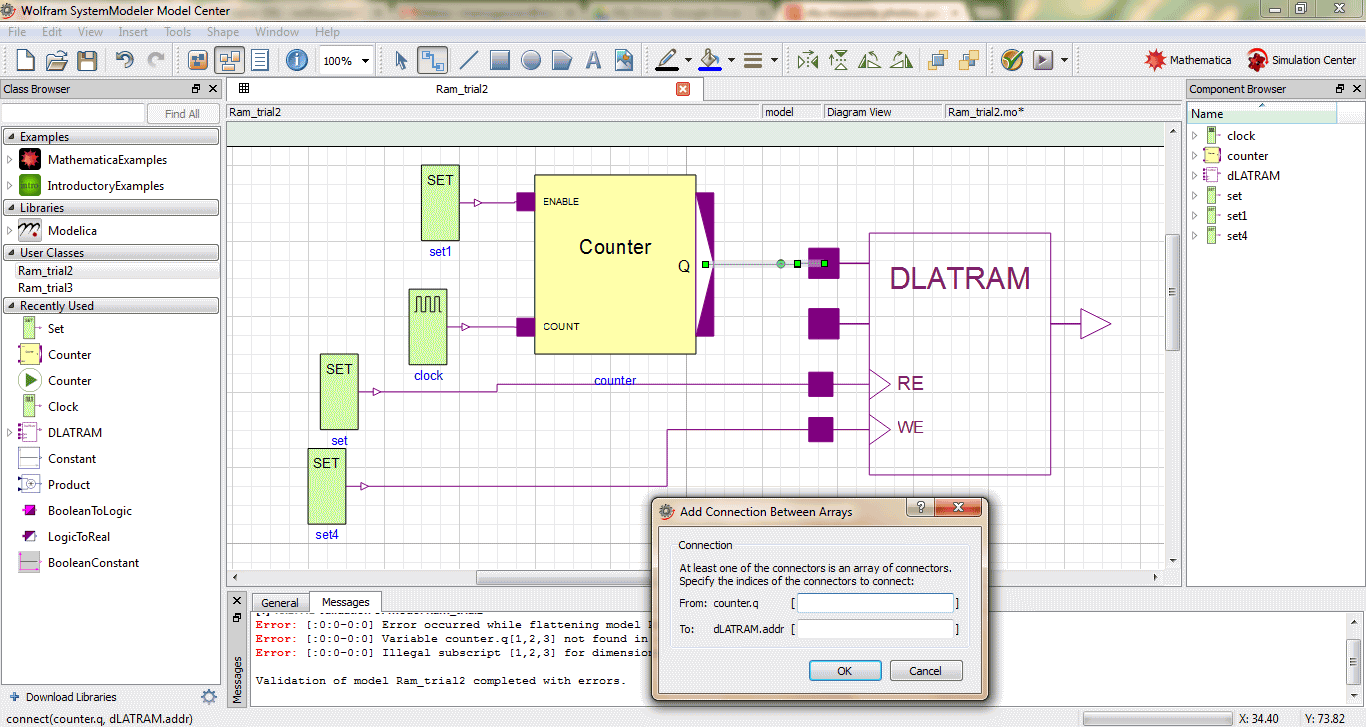
Wolfram SystemModeler features an intuitive Graphical User Interface (GUI) centered around the Model Center. This environment enables engineers and scientists to:
- Graphically build models by dragging and dropping pre-built components.
- Customize components from extensive, interactive libraries to match specific project requirements.
- Visually connect components to represent system relationships.
- Configure simulation parameters and analyze results through the Simulation Center.
The drag-and-drop functionality and a rich database of customizable libraries significantly enhance productivity and facilitate collaborative model development.
Integration with Mathematica
A key differentiator for Wolfram SystemModeler is its tight integration with Mathematica. This synergy allows users to seamlessly leverage Mathematica’s computational abilities for:
- Advanced model analysis and visualization.
- Automated documentation of models and simulation results within Mathematica notebooks.
- Symbolic manipulation and parameter optimization.
- Developing comprehensive reports and further research workflows.
This integration streamlines the entire process from initial model design to final analysis and reporting.
Applications Across Industries
Case Studies and Real-World Applications
Wolfram SystemModeler finds application in a wide array of industries and scientific fields. Its versatility supports the modeling and simulation of:
- Complex mechatronic systems in automotive and aerospace engineering.
- Physiological models for drug development and biomedical research.
- Thermal management systems for electronics and machinery.
- Control systems for industrial automation and robotics.
- Electrochemical processes for battery and fuel cell design.
These real-world applications demonstrate the software’s utility in tackling challenging engineering and life science problems.
Conclusion and Future Developments
Wolfram SystemModeler offers a robust platform for multi-domain modeling and simulation, distinguished by its intuitive GUI, extensive libraries, and profound integration with Mathematica. Its ability to model complex systems across engineering and life sciences makes it an invaluable tool for professionals seeking in-depth analysis and efficient workflow management. Future developments are likely to continue enhancing its modeling capabilities and expanding its integration within the Wolfram ecosystem.
Frequently Asked Questions
What is Wolfram SystemModeler used for?
Wolfram SystemModeler is used for modeling and simulating complex engineering and life-science systems using the Modelica language. It supports various applications in areas like mechanics, biology, and electrochemistry, allowing users to design and analyze multi-domain models.
How does Wolfram SystemModeler integrate with Mathematica?
Wolfram SystemModeler offers tight integration with Mathematica, allowing users to develop, simulate, and document their models within Mathematica notebooks. This integration enhances analytical capabilities and facilitates better workflow management.
What modeling language does Wolfram SystemModeler use?
Wolfram SystemModeler utilizes the Modelica modeling language, which is specifically designed for modeling physical systems through acausal modeling and mathematical equations. This supports a wide range of libraries and model exchanges.






Reviews
There are no reviews yet.