

Download AnyBody Modelling System v8.1.4 – Advanced Musculoskeletal Simulation Software
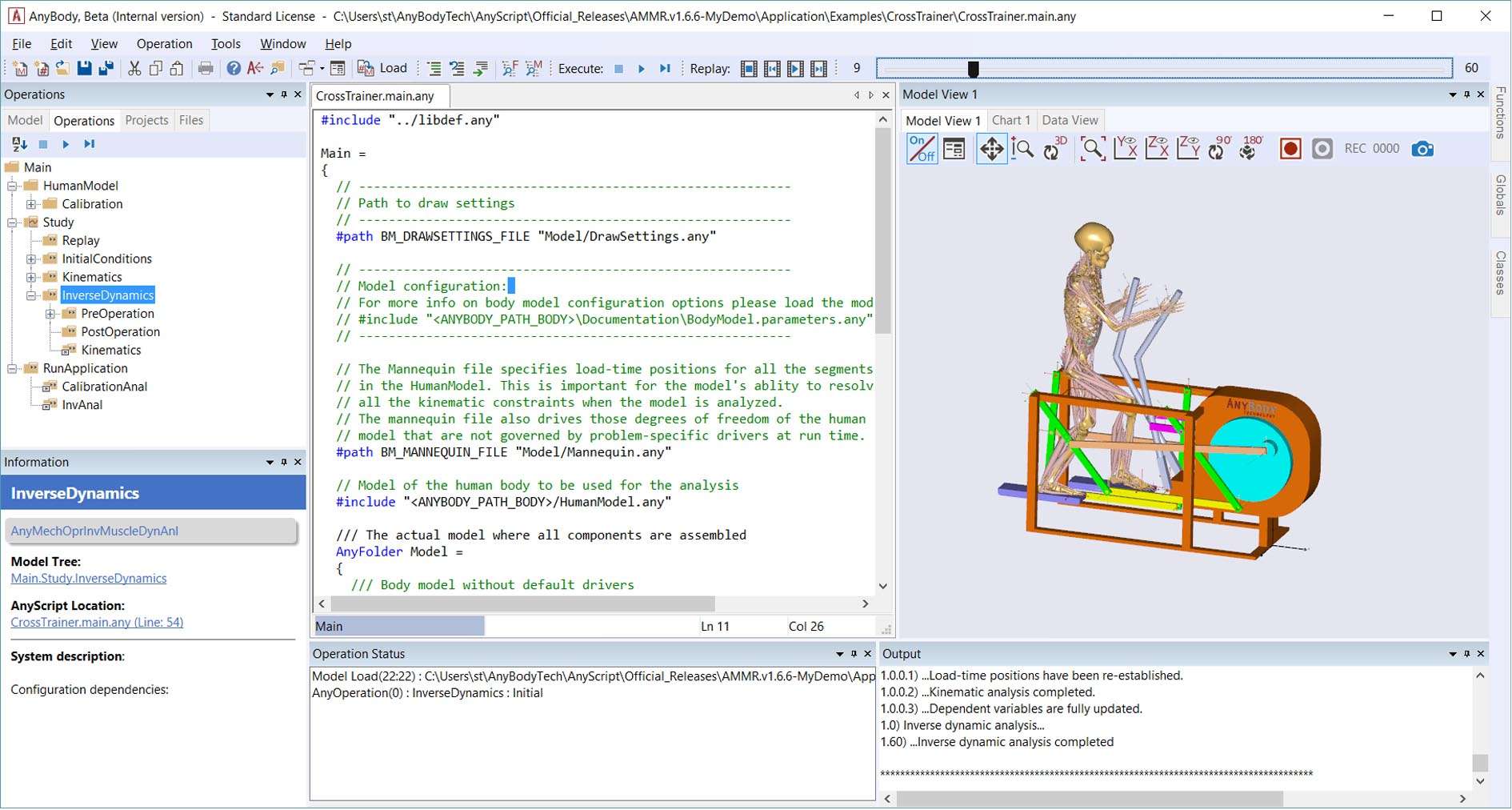
The AnyBody Modelling System developed by the Danish company AnyBody Technology, is a specialized biomechanical simulation tool designed for in-depth musculoskeletal analysis. This platform is crucial for researchers and engineers working in fields such as biomechanics, orthopedic implant design, ergonomics, and sports science. It enables the creation of detailed 3D models of the human body and other biomechanical systems to simulate complex forces and movements that are challenging to measure directly.
Overview of AnyBody Modelling System and Its Role in Biomechanics
AnyBody Modelling System stands out as a leading platform for inverse dynamics musculoskeletal simulations. It allows users to build and analyze complex biomechanical models, encompassing bones, joints, and muscles, providing insights into human or animal movement. The software is instrumental in both academic research and industrial product development, particularly where precise human-body interaction is a critical factor. Its capabilities extend to simulating internal forces and metabolic parameters, offering a comprehensive approach to understanding biomechanical responses.
Inverse Dynamics Muscle Recruitment and Anatomical Model Library
A core strength of the AnyBody Modelling System lies in its advanced inverse dynamics solver. This technology addresses the muscle force distribution problem by employing optimization techniques to accurately estimate muscle forces, joint contact forces, and ligament tensions. Users can leverage a comprehensive anatomical model library, which includes full-body models and specialized segmental models, providing a robust foundation for various simulation needs. This allows for the detailed analysis of how muscles operate under different conditions and how tissues respond to loads.
Integrated Motion Data and Simulation Outputs
The software facilitates the integration of experimental motion data to drive realistic biomechanical simulations. Users can import motion capture data, such as marker trajectories, and force plate data, enabling the system to replicate and analyze specific human movements. Key simulation outputs provided by AnyBody Modelling System include detailed joint reaction forces, muscle activations, ligament tensions, metabolic energy expenditure calculations, and tissue stresses. These comprehensive outputs are essential for validating designs, understanding injury mechanisms, and planning interventions.
Model Customization, Scaling, and Scripting with AnyScript
AnyBody Modelling System offers powerful tools for customizing and adapting anatomical models to specific individuals or scenarios. The anthropometry scaling feature allows models to be adjusted to match an individual’s body dimensions, ensuring personalized analysis. For advanced model development, modification, and automation, the integrated AnyScript language provides extensive scripting capabilities. This scripting functionality enables users to create custom muscle pathways, define novel anatomical structures, and automate complex workflows, including batch processing of simulation studies.
Enhancements in Version 8.1.4 Focused on Solver Performance and Implant Design
Version 8.1.4 of the AnyBody Modelling System introduces significant technical improvements focused on enhancing solver performance and expanding analytical capabilities. The updated solver algorithms deliver faster and more robust simulation results, which is crucial for complexculoskeletal models. This version also features an expanded model repository, including pathology-specific models that aid in clinical research and surgical planning. Furthermore, orthopedic implant analysis tools have been improved, offering better visualization and more precise evaluation of implant interactions within the musculoskeletal system.
Applications Across Research, Ergonomics, and Orthopedic Design
The AnyBody Modelling System finds application in a diverse range of scientific and engineering disciplines. In sports science, it is used to analyze athletic performance and injury prevention strategies. For ergonomic assessments, it helps in designing safer and more efficient workspaces by simulating human interaction with tools and environments. In rehabilitation, the software aids in developing personalized treatment plans and evaluating assistive devices. The orthopedic implant design field benefits from its ability to simulate the biomechanical load on implants and surrounding tissues, informing better design and placement decisions.
Frequently Asked Questions
What makes AnyBody Modelling System unique for musculoskeletal simulations?
AnyBody Modelling System uniquely solves the muscle force distribution problem using inverse dynamics combined with optimization techniques, providing detailed estimations of internal forces that are difficult to measure experimentally. Its comprehensive anatomical model library and scripting capabilities further enhance its usability for complex biomechanical studies.
Can AnyBody Modelling System integrate with motion capture data for simulations?
Yes, the software supports importing experimental motion capture data in formats such as C3D and TRC, along with force plate data, to drive dynamic and realistic musculoskeletal simulations, enabling accurate analysis of human movement under various conditions.
What improvements does version v8.1.4 bring to AnyBody Modelling System?
Version 8.0.4 offers enhanced solver performance and robustness for faster and more stable simulations, an expanded model repository including pathology-specific models, improved user interface and visualization, and extended implant design analysis tools, making it more efficient and versatile for orthopedic and biomechanical researchers.






Reviews
There are no reviews yet.