

Download APF WoodBeam 5.2.1 – Specialized Timber Beam and Column Design Software
APF WoodBeam 5.2.1 is a specialized structural engineering software designed for the comprehensive analysis and design of timber beams and columns. Developed for professionals in the structural timber design field, this tool ensures compliance with major international design codes across various construction sectors, including residential, commercial, and industrial applications.
Overview of APF WoodBeam and Its Industrial Applications
APF WoodBeam provides engineers and designers with a dedicated platform for evaluating the performance of timber structural elements. The software facilitates precise design calculations necessary for safe and efficient wood frame construction. Its primary users include structural engineers, timber designers, architects, and construction engineers who require robust tools to ensure their timber structures meet stringent safety and serviceability standards.
Advanced Analysis Capabilities for Timber Members
Bending and Shear Strength Checks
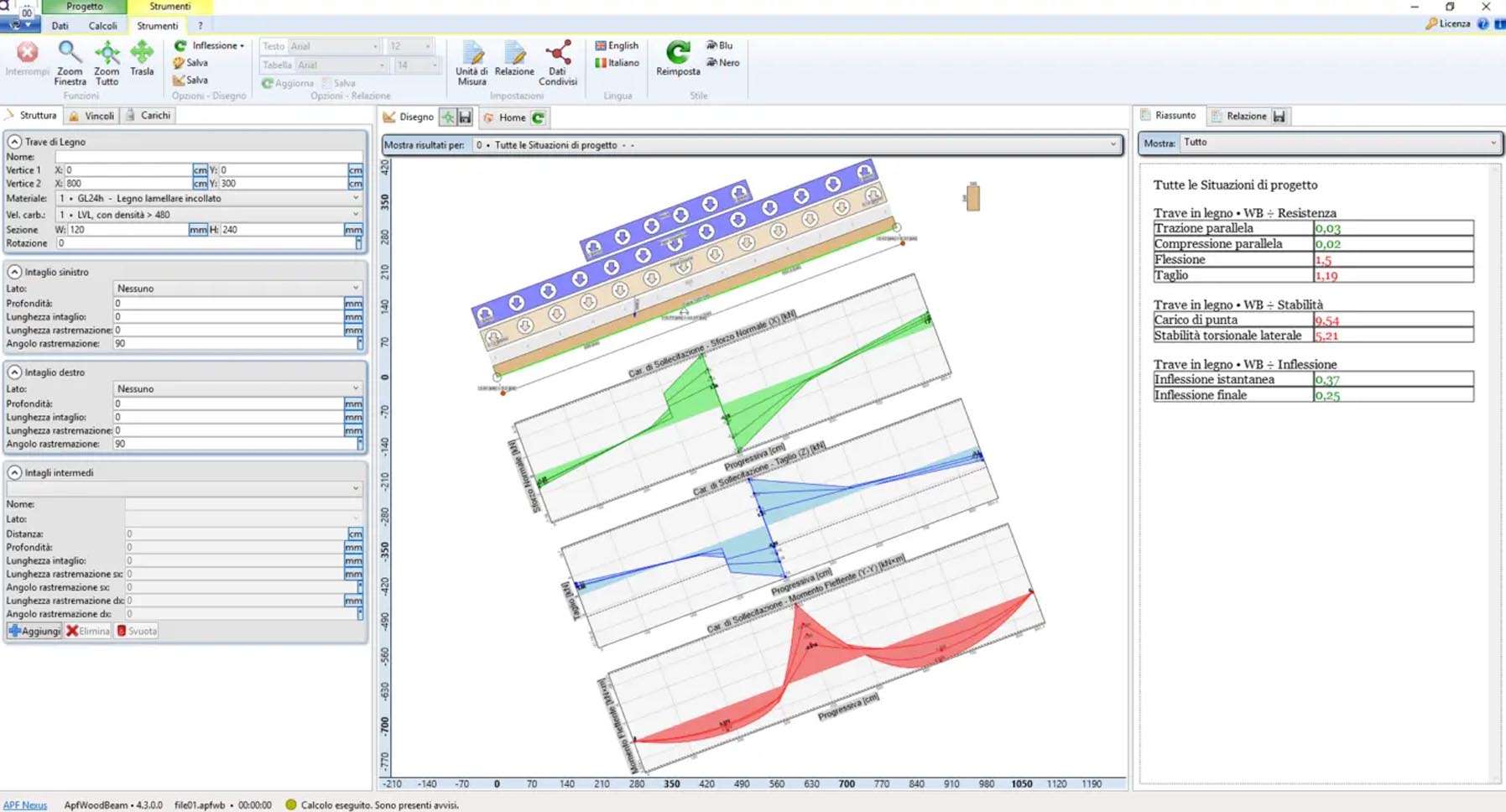
The software performs detailed checks on timber members to verify their capacity for bending and shear stresses. It accounts for various load types, including dead, live, snow, and wind loads, applying appropriate load duration factors specific to wood materials. Analysis considers factors such as beam size effects and the inherent strength properties of different wood species to ensure designs are both safe and economical.
Deflection and Vibration Serviceability Evaluations
Beyond strength, APF WoodBeam evaluates the serviceability of timber members, focusing on deflection criteria. It calculates immediate and long-term deflections, incorporating considerations for creep in wood under sustained loads. Furthermore, the software includes specialized analysis for floor vibration, a crucial aspect in residential and commercial timber floor system design, to ensure occupant comfort and structural performance.
Column Buckling and Axial Capacity Verification
For timber columns and posts, APF WoodBeam conducts thorough axial load capacity checks. It analyzes stability against buckling along both principal axes, calculating slenderness ratios and applying appropriate stability factors as defined by design codes. This ensures that columns can safely support vertical loads without succumbing to instability under compression.
Integration of Timber Design Codes and Material Libraries
A core functionality of APF WoodBeam is its adherence to leading timber design codes. The software integrates standards such as the National Design Specification (NDS) for Wood Structures, supporting both Allowable Strength Design (ASD) and Load and Resistance Factor Design (LRFD) methods, as well as Eurocode 5. It accurately implements load combinations and applies essential adjustment factors for temperature, moisture, and load duration. The software features comprehensive internal databases of various wood species, including sawn lumber, glued laminated timber (glulam), laminated veneer lumber (LVL), and cross-laminated timber (CLT), enabling precise material selection.
User Interface Improvements and Reporting Features in Version 5.2.1
Version 5.2.1 of APF WoodBeam introduces significant enhancements to its user interface, aiming for greater ease of input and improved visualization of analysis results. Report generation capabilities have been refined, offering customizable output formats suitable for project documentation and client submission. These updates improve the overall user experience and the clarity of design documentation, contributing to greater efficiency in the timber design workflow.
Practical Applications and Design Case Studies
APF WoodBeam finds extensive application in various real-world engineering scenarios. Professionals utilize it for designing residential floor joists and beams, ensuring adequate strength and minimal deflection. It is also employed for the buckling analysis of larger timber posts in commercial structures and for selecting appropriate engineered wood products like glulam and LVL for beams and headers. The software aids in producing compliant designs for custom timber framing projects and contributes to the efficient integration of wood elements in modern construction.
Frequently Asked Questions
What types of timber members can APF WoodBeam analyze and design?
APF WoodBeam supports the design and analysis of a variety of timber structural members including sawn lumber beams, glulam beams, laminated veneer lumber (LVL), posts, joists, rafters, and headers under multiple load conditions.
Does APF WoodBeam comply with international timber design codes?
Yes, APF WoodBeam integrates major timber design standards such as the National Design Specification (NDS) for Wood Structures (including ASD and LRFD methods) and Eurocode 5 with applicable National Annexes, ensuring that designs meet code requirements.
How does APF WoodBeam handle long-term deflection and floor vibration analysis?
The software calculates immediate and long-term deflections accounting for creep effects, and performs floor vibration analysis based on guidelines such as those from the American Wood Council (AWC) to ensure serviceability and comfort for timber floor designs.






Reviews
There are no reviews yet.