

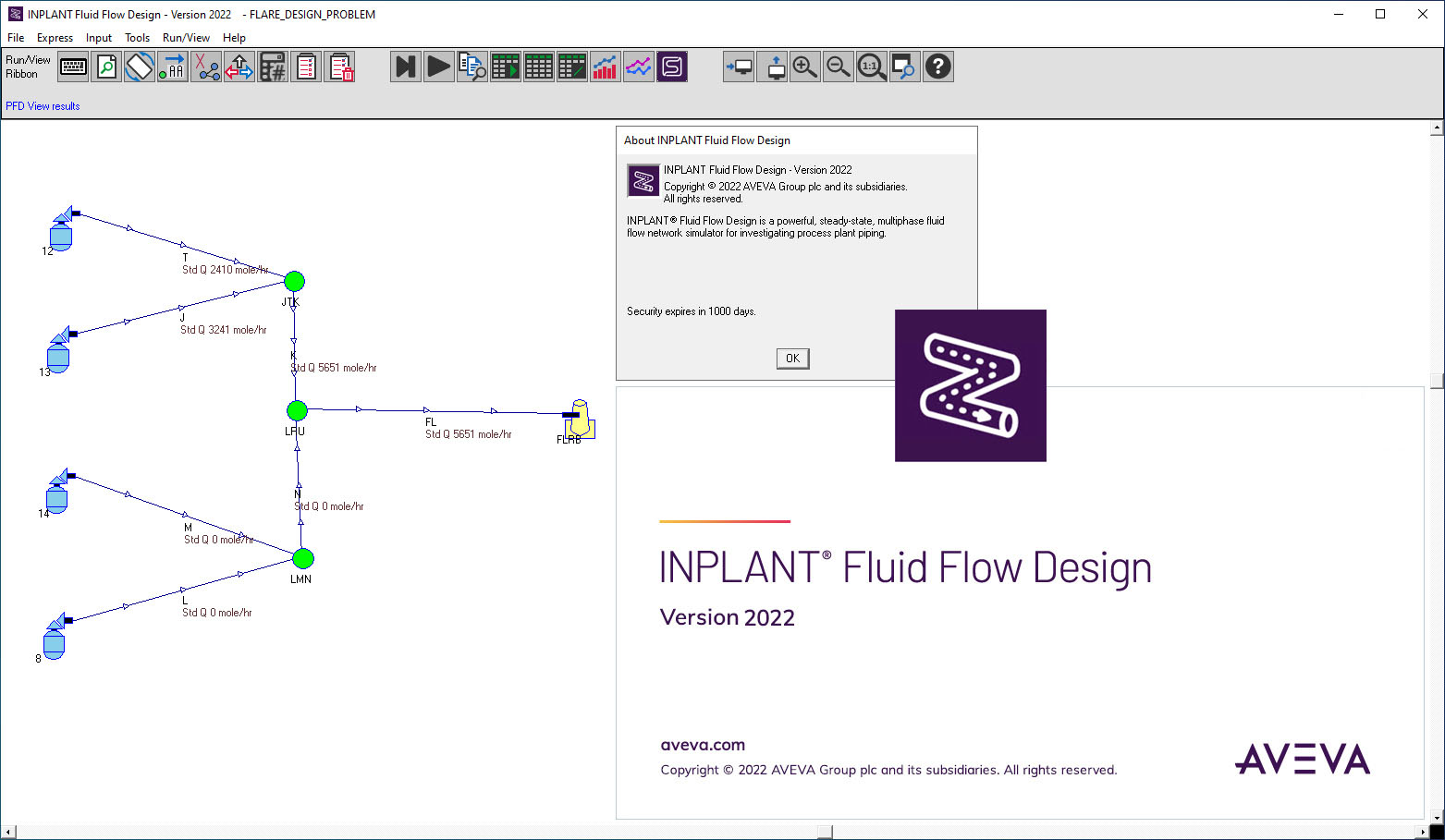
Download AVEVA INPLANT Fluid Flow Design 2022 – The Leading Fluid Flow Simulation Solution
AVEVA INPLANT Fluid Flow Design 2022 is a specialized process engineering application developed by AVEVA Group plc, designed for the detailed simulation, design, and analysis of plant piping systems. It is particularly critical for professionals in the oil, gas, and energy sectors, enabling comprehensive evaluation of both single and multiphase fluid flow scenarios to ensure operational safety and efficiency.
Overview of AVEVA INPLANT Fluid Flow Design 2022
AVEVA INPLANT Fluid Flow Design 2022 is a pivotal software tool within the process engineering domain, specifically tailored for the demanding requirements of the oil and gas industry. Originating from AVEVA’s extensive background in CAD technologies, this application facilitates robust fluid flow simulations and plant piping system design. Its core function lies in empowering engineers to assess and optimize the performance and safety of fluid networks under various operational conditions, playing an essential role in the lifecycle of industrial facilities.
Key Capabilities for Fluid Flow Analysis
This software provides engineers with advanced tools for conducting precise fluid flow simulations. It specializes in steady-state simulation, offering detailed analysis for both single-phase and multiphase fluid dynamics within complex piping networks. These capabilities are fundamental for evaluating system performance, identifying potential hazards, and ensuring compliance with industry standards.
- Steady-State Simulation: Enables the analysis of fluid flow under constant operating conditions, providing a stable platform for design evaluation.
- Single-Phase Flow Analysis: Allows for the detailed modeling of fluid behavior in systems carrying a single type of fluid, such as water or oil.
- Multiphase Flow Analysis: Critically assesses scenarios involving interactions between multiple phases (e.g., gas, liquid, and solid), which is common in oil and gas processing.
- Pipeline Pressure and Temperature Profiling: Calculates variations in pressure and temperature along the length of piping systems.
- Surge Analysis: Assesses the impact of transient pressure changes, often caused by rapid valve closures or pump startups.
Design Tools for Plant Piping Systems
AVEVA INPLANT Fluid Flow Design 2022 equips engineers with a suite of specialized design tools to meticulously construct, manage, and evaluate intricate piping systems. The software’s capabilities extend to handling complex topologies and geometries, ensuring that designs are not only functional but also safe and cost-effective.
- 3D Piping Design: Facilitates the creation of detailed three-dimensional models of plant piping layouts.
- Component Database: Includes extensive libraries of pipes, fittings, valves, and other components with associated fluid dynamic properties.
- Topology Management: Supports the design of complex network structures, including branches, loops, and intricate interconnections.
- Data Management: Offers robust tools for organizing and managing all aspects of piping design data throughout a project.
Applications Across Industries
The primary application of AVEVA INPLANT Fluid Flow Design 2022 is within the oil, gas, and energy sectors, where the integrity and efficiency of fluid processing and transport are paramount. Its rigorous simulation capabilities are vital for upstream, midstream, and downstream operations, as well as in related industrial process facilities.
- Oil and Gas Exploration & Production: Used for designing and analyzing pipelines for crude oil, natural gas, and associated fluids.
- Refinery Operations: Essential for simulating fluid flow in complex piping networks within petrochemical and refining plants.
- Power Generation: Applied in the design of steam and cooling water systems in conventional and renewable energy facilities.
- Chemical Processing: Supports the design of piping systems for a wide range of chemical manufacturing processes.
Benefits of Using AVEVA INPLANT Fluid Flow Design
Employing AVEVA INPLANT Fluid Flow Design 2022 offers significant advantages over traditional manual calculations or less specialized software. Its advanced simulation tools provide rapid assessment capabilities, enabling engineers to make informed decisions swiftly and minimize project risks.
- Enhanced Safety: Rigorous analysis of fluid dynamics helps identify and mitigate potential hazards, ensuring safer plant operations.
- Improved Efficiency: Optimized piping designs lead to better fluid transport, reduced energy consumption, and improved process yields.
- Cost Reduction: Minimizing design errors, avoiding rework, and optimizing material usage contribute to overall project cost savings.
- Regulatory Compliance: Facilitates adherence to stringent industry standards and safety regulations through comprehensive simulation data.
- Faster Design Iterations: The ability to quickly evaluate design changes and their impact on fluid flow accelerates the engineering process.
Integration with Other Engineering Tools
AVEVA INPLANT Fluid Flow Design 2022 is designed to integrate seamlessly within broader engineering workflows. Its compatibility with other AVEVA products and third-party applications ensures a cohesive and efficient digital environment for process design and plant management.
This integration allows for the transfer of design data between different phases of a project, from initial concept and detailed design to operations and maintenance. For example, piping models can be shared with structural and equipment design modules, ensuring consistency across disciplines and reducing the risk of incompatible designs. The software can often exchange data with P&ID (Piping and Instrumentation Diagram) tools and 3D plant design software, forming a connected data ecosystem.
Real-World Use Cases and Success Stories
AVEVA INPLANT Fluid Flow Design 2022 has been instrumental in numerous engineering projects, ensuring the reliable and safe operation of complex industrial facilities. While specific detailed case studies are proprietary, the general application profiles highlight its value in critical infrastructure projects.
For instance, in the development of new offshore oil platforms, INPLANT is used to model the intricate piping systems that transport oil and gas from wells to processing facilities. Engineers utilize its multiphase flow analysis to predict and manage the behavior of mixed fluid streams under varying pressures and temperatures. Similarly, in large-scale refinery expansions, the software aids in redesigning or validating existing piping networks to accommodate new processing units or to increase throughput, ensuring that pressure drops and flow rates meet operational requirements safely and efficiently.
Frequently Asked Questions
What type of analysis can AVEVA INPLANT conduct?
AVEVA INPLANT can perform steady-state simulations, allowing for detailed analysis of single-phase and multiphase fluid flows in plant piping systems. This includes essential safety assessments and performance evaluations crucial for industrial applications.
Who should use AVEVA INPLANT Fluid Flow Design?
Engineers and technical professionals, particularly in the oil, gas, and energy sectors, tasked with designing, evaluating, and analyzing piping systems for various complex industrial applications can greatly benefit from using AVEVA INPLANT.
What is the significance of steady-state simulation in fluid dynamics?
Steady-state simulation enables engineers to analyze fluid flow under consistent, unchanging operating conditions. This is critical for safely designing and optimizing piping systems in industrial settings by providing predictable performance data.


Reviews
There are no reviews yet.