
Download Blender For Dental 4.2 – Advanced 3D Modeling Software for Dental Applications
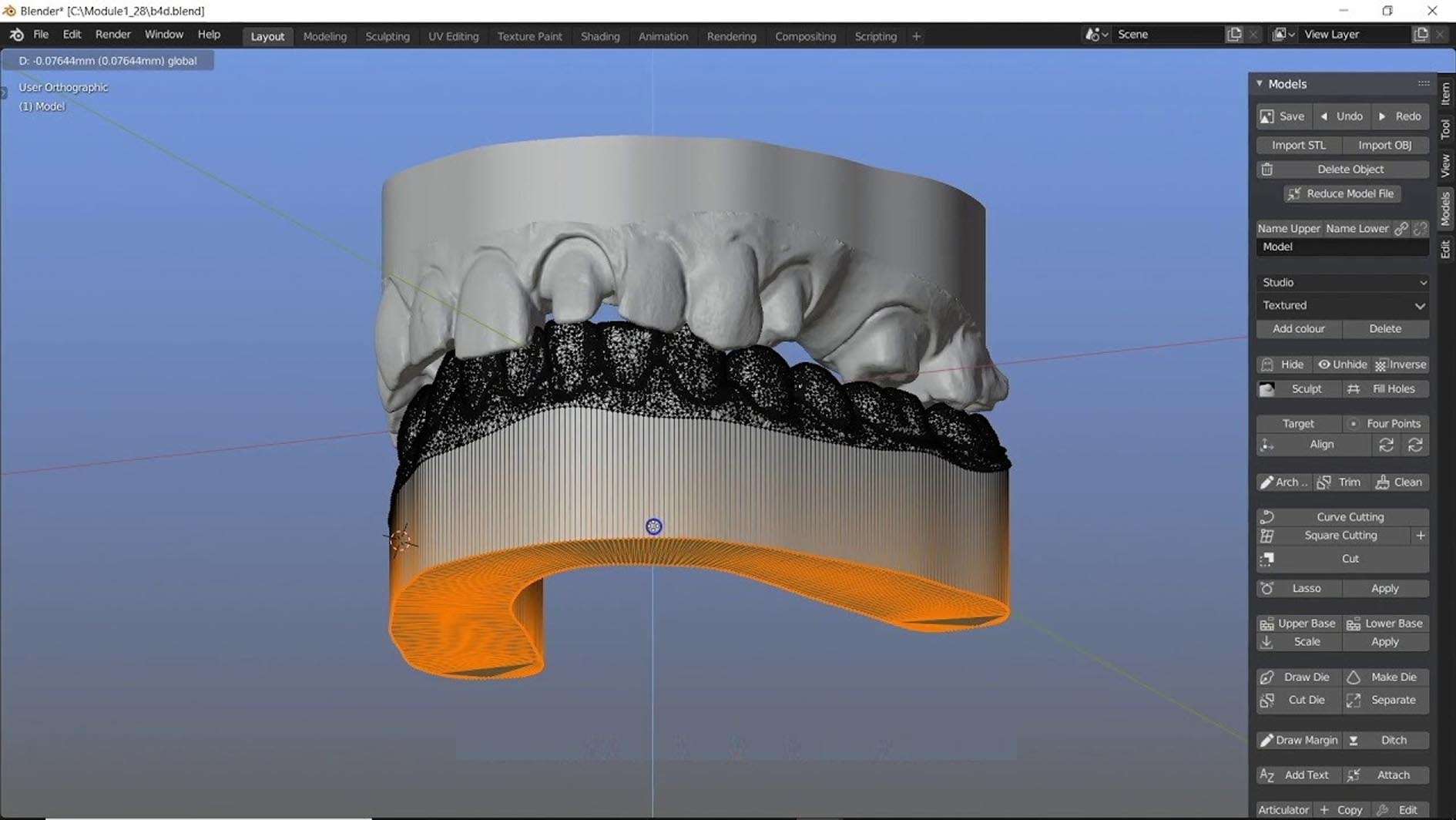
Blender For Dental 4.2 is a specialized 3D modeling application tailored for dental professionals, enabling advanced digital design and manufacturing workflows. By leveraging the robust capabilities of the open-source Blender platform, this version offers custom tools and features specifically designed for dentists, dental technicians, and orthodontists. It bridges the gap between general 3D design and the precise requirements of dental restoration, implantology, and orthodontic treatment planning.
Overview of Blender For Dental in Dental Practice
Blender For Dental 4.2 integrates powerful 3D modeling and rendering capabilities into the daily operations of dental practices and laboratories. Its application extends across various dental disciplines, facilitating the creation of highly accurate digital models for complex cases. This software allows professionals to visualize, design, and refine dental prosthetics, orthodontic appliances, and surgical guides with digital precision, enhancing both clinical outcomes and patient communication.
Specialized Dental Design Tools and Features
This version incorporates a suite of dental-specific tools built upon the versatile Blender framework. Key features include:
- Customizable dental anatomy libraries for accurate tooth and gum modeling.
- Advanced tools for designing dental restorations such as crowns, bridges, and veneers with precise anatomical detail.
- Features tailored for implantology, including implant placement planning and abutment design.
- Specialized modules for orthodontic applications, such as clear aligner design and bracket modeling.
- Tools for working with digital impressions, ensuring accurate model preparation for prosthodontic and orthodontic work.
Compatibility with Dental 3D Printing and File Formats
Blender For Dental 4.2 is engineered for seamless integration into modern digital dentistry workflows, particularly with additive and subtractive manufacturing technologies. It supports a range of industry-standard file formats essential for dental CAD/CAM processes, including:
- STL (Stereolithography): Widely used for 3D printing dental models, surgical guides, and prosthetics.
- OBJ (Object File): Common for 3D models, textures, and UV mapping.
- PLY (Polygon File Format): Often used for scanned data and 3D models.
This compatibility ensures that designs created in Blender For Dental 4.2 can be directly sent to dental 3D printers and milling machines, streamlining the production of custom dental devices.
Workflow Integration and Customization for Dental Labs
The software is designed to enhance the efficiency of dental laboratory operations. Its customizable nature allows for adaptation to specific lab workflows and integration with existing dental software ecosystems. Potential integration points include:
- Customizable plugins and scripts to automate repetitive tasks or add unique functionalities.
- Interoperability with other dental CAD software for data exchange and collaborative design processes.
- Options for tailoring the user interface and toolsets to optimize for specific types of dental work, such as prosthodontics or orthodontics.
This flexibility makes Blender For Dental 4.2 a valuable asset for labs seeking to refine their digital manufacturing processes.
Use Cases and Industry Applications
Blender For Dental 4.2 finds application in numerous areas within the dental industry, empowering professionals to tackle complex digital design challenges. Specific use cases include:
- Dental Prosthetics Design: Creating precise digital models for crowns, bridges, dentures, and veneers based on patient scans or impressions.
- Orthodontic Treatment Planning: Designing custom orthodontic appliances, including clear aligners, retainers, and bracket systems, and simulating treatment progression.
- Implantology: Planning implant placement with accurate digital models and designing patient-specific surgical guides for precise execution in the clinic.
- Patient Communication Models: Generating detailed 3D models for patient consultations, helping to explain treatment plans and proposed outcomes visually.
- Restoration Design: Tailoring the shape, fit, and occlusion of dental restorations to match patient anatomy and functional requirements.
Frequently Asked Questions
What is Blender For Dental 4.2 used for in dental practices?
Blender For Dental 4.2 is a specialized software that uses 3D modeling tools from Blender customized for dental applications such as designing crowns, implants, orthodontic devices, and surgical guides. It facilitates precise digital dental restoration and treatment planning.
Does Blender For Dental 4.2 support 3D printing for dental models?
Yes, it supports exporting models in standard dental 3D printing formats like STL and OBJ, enabling seamless integration with dental 3D printers and milling machines.
Can Blender For Dental 4.2 be integrated with other dental software?
Blender For Dental 4.2 offers customization and compatibility options that allow it to work alongside other dental CAD/CAM and practice management software, improving workflow efficiency in dental labs and clinics.






Reviews
There are no reviews yet.