

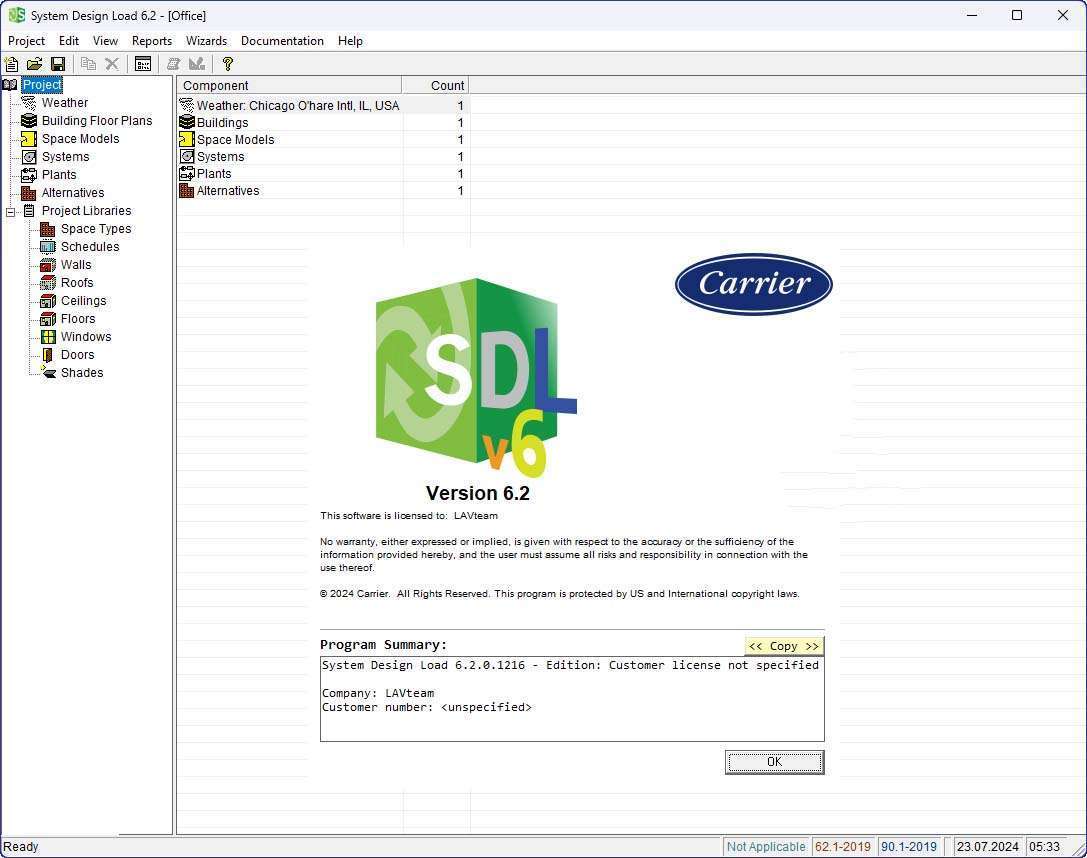
Download Carrier SDL 6.3.1 – Advanced HVAC Load Calculation Software
Carrier SDL 6.3.1 is a specialized HVAC load calculation software developed by Carrier Corporation, designed for HVAC engineers and designers focusing on commercial building systems. It distinguishes itself through a system-based design philosophy, which calculates heating and cooling loads by considering the specific characteristics of the HVAC system itself, rather than relying solely on traditional room-by-room load estimations. This approach ensures more precise system sizing for various commercial HVAC applications.
Overview of Carrier SDL 6.3.1 and HVAC Load Estimation
Carrier SDL 6.3.1 functions as a robust tool for estimating the heating and cooling demands of commercial buildings. Its core methodology centers on a system-based approach to HVAC load calculation. This contrasts with conventional methods that may focus primarily on individual room loads and airflow rates. By analyzing the overall HVAC system design, including its components and control strategies, Carrier SDL provides a more integrated and accurate representation of a building’s thermal performance requirements. This makes it an invaluable asset for professionals engaged in detailed HVAC system design and analysis.
System-Based Design Approach and HVAC System Types Supported
The system-based design approach employed by Carrier SDL 6.3.1 is fundamental to its accuracy. Instead of aggregating individual zone loads, the software models the performance of the HVAC system as a whole. This detailed consideration allows for better selection and sizing of equipment integral to commercial HVAC operations. Carrier SDL 6.3.1 specifically supports calculations for several common commercial HVAC system types:
- Single Zone Constant Air Volume (CAV) systems: The software accurately calculates loads for simple CAV systems where the airflow rate is constant.
- Variable Air Volume (VAV) systems: It provides detailed load calculations for VAV systems, accounting for varying airflow rates and zone control requirements.
- Fan Powered Mixing Box systems: Carrier SDL also handles the complexities of fan-powered VAV boxes, including mixing box airflow and terminal unit coil loads.
This system-specific calculation capability ensures that the HVAC system sizing is optimized for the operational performance and efficiency of the installed configuration.
Input Parameters: Building Construction and Weather Data Integration
Achieving precise HVAC load calculations with Carrier SDL 6.3 hinges on the detailed input of building physical characteristics and meteorological data. Users can define specific construction elements, including various types of walls, roofs, and windows, along with their thermal properties. Furthermore, the software integrates design weather data for thousands of cities worldwide. This allows engineers to tailor calculations to the precise climatic conditions of the building’s location, ensuring that both peak heating and cooling loads are accurately estimated based on localized environmental factors.
Output Capabilities: Load Results and Airflow Sizing Details
Upon completing the input of building and system parameters, Carrier SDL 6.3.1 generates comprehensive output reports crucial for effective HVAC system design. These outputs include detailed room and zone loads, calculated airflow rates for each space, and specific coil loads for heating and cooling. The software also provides essential details on system coil loads and fan airflow rates, enabling engineers to make informed decisions about equipment selection and system configuration. These detailed results support the validation of system requirements and the selection of appropriate controls.
Practical Applications and Industry Use Cases for Carrier SDL 6.3.1
In the field of HVAC engineering, Carrier SDL 6.3.1 serves as a critical tool for commercial building projects. HVAC designers and engineers utilize the software for accurate HVAC system sizing, from initial project conceptualization through to final design documentation. It is particularly valuable for evaluating different HVAC system configurations and selecting optimal equipment to meet project specifications and energy efficiency goals. The software’s ability to handle detailed building inputs and system-specific load calculations makes it indispensable for ensuring that commercial HVAC systems are appropriately sized and function as intended, meeting the climate control needs of diverse building types.
Frequently Asked Questions
How does Carrier SDL 6.3.1 improve HVAC load calculations compared to traditional methods?
Carrier SDL 6.3.1 applies a system-based design method which considers specific HVAC system characteristics such as system types and controls, rather than just calculating room loads. This results in more accurate sizing of airflow and coils tailored for each system type. This advanced methodology provides a more realistic simulation of building performance under varying conditions.
What types of HVAC systems can be modeled with Carrier SDL 6.3.1?
The software supports a range of system types including Single Zone Constant Air Volume (CAV), Variable Air Volume (VAV), and Fan Powered Mixing Box systems, accommodating their unique operational and component details in load calculations. This broad compatibility allows engineers to utilize the software for a wide array of commercial HVAC designs.
Can Carrier SDL 6.3.1 incorporate local weather data for load estimation?
Yes, Carrier SDL 6.3.1 integrates design weather data for thousands of cities, allowing precise calculations based on local climate conditions relevant to heating and cooling load estimations. By leveraging this localized data, engineers can ensure their HVAC system designs are optimized for the specific environmental challenges of the building’s location.




Reviews
There are no reviews yet.