

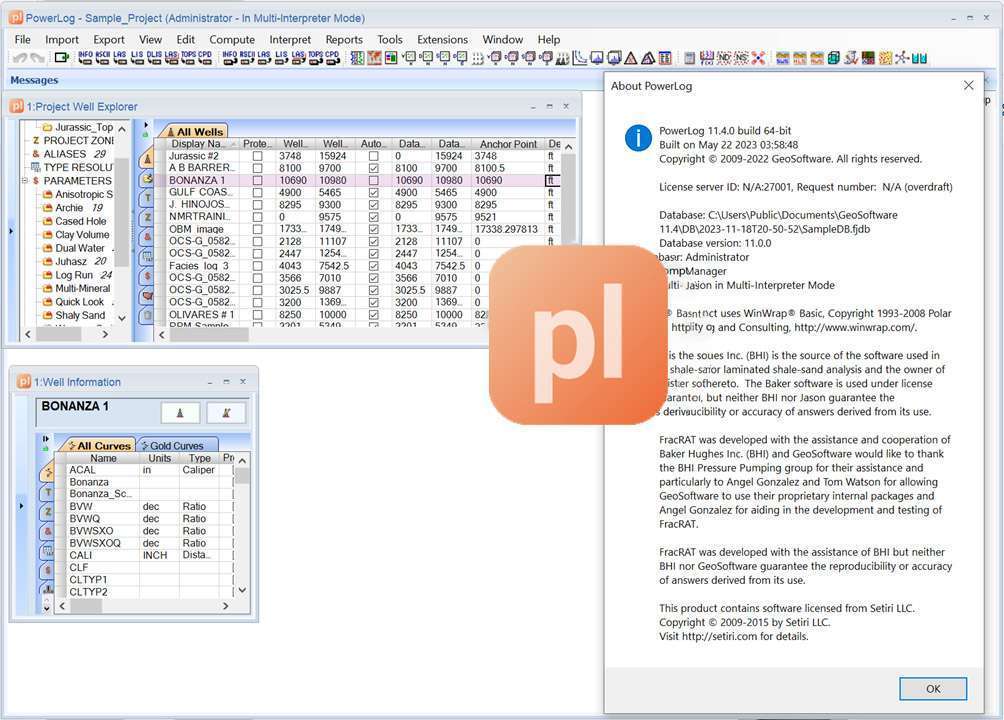
Download CGG Powerlog 2026.0 – Advanced Petrophysical Analysis Software
CGG Powerlog 2026.0 is an advanced petrophysical analysis software developed by CGG, a global technology company with a rich history dating back to 1931. This powerful application is designed specifically for the oil and gas exploration and production industry, offering sophisticated tools for data integration and analysis. Its sophisticated capabilities assist geoscientists and engineers in making critical, informed decisions throughout the drilling and completion lifecycle, serving as a vital component of modern subsurface exploration workflows.
Overview of CGG Powerlog
Understanding the Software
CGG Powerlog 2026.0 represents a significant advancement in petrophysical analysis software, building upon CGG’s long-standing expertise in subsurface data solutions. It is engineered to tackle the complex challenges faced in oil and gas exploration, providing a robust platform for evaluating well log data. The software is built to support detailed investigative workflows, enabling users to extract maximum value from geological and engineering data for accurate reservoir characterization and effective resource management.
Key Features and Capabilities
Multi-User Collaboration for Enhanced Productivity
This release places a strong emphasis on collaborative workflows through its advanced multi-user functionality. Professionals in the oil and gas sector can work concurrently on the same datasets, facilitating seamless teamwork. This capability is crucial for large-scale projects where input from various specialists, such as petrophysicists, geologists, and reservoir engineers, is required to reach optimal conclusions and accelerate project timelines.
Machine Learning Integration in Petrophysical Analysis
CGG Powerlog 2026.0 integrates cutting-edge machine learning algorithms to refine petrophysical analysis. These advanced features are particularly effective for automated facies classification and complex data processing tasks. By leveraging machine learning, the software can identify patterns and provide insights that might be difficult or time-consuming to derive through traditional methods, leading to enhanced accuracy in reservoir interpretation.
Rock Physics Module: Bridging Theory and Practice
The integrated Rock Physics Module (RPM) within CGG Powerlog acts as a critical link between petrophysical findings and fundamental rock physics principles. Users can develop detailed rock models and predict elastic properties, which are essential for seismic interpretation and reservoir characterization. This powerful integration allows for a more holistic understanding of subsurface formations by connecting well log data with geophysical measurements.
Applications in Oil and Gas Exploration
Real-World Use Cases
CGG Powerlog 2026.0 is applied across numerous stages of oil and gas exploration and production. Engineers utilize its capabilities to analyze well logs for identifying potential hydrocarbon zones, estimating reservoir properties like porosity and permeability, and determining fluid saturation. Furthermore, its advanced modeling features support the evaluation of seismic data and the optimization of drilling parameters, thereby minimizing risks and enhancing operational efficiency.
Industry Impact and Benefits
The adoption of CGG Powerlog 2026.0 in the industry leads to substantial improvements in exploration success rates and operational efficiency. By providing more accurate subsurface insights and facilitating collaborative decision-making, the software helps reduce drilling uncertainties and associated costs. Its advanced analytical capabilities enable operators to better characterize reservoirs, leading to more effective field development and production strategies.
Comparison with Other Software in the Field
How CGG Powerlog Stands Out
CGG Powerlog 2026.0 differentiates itself through its robust integration of advanced technologies. While many oil and gas software solutions offer petrophysical analysis, Powerlog’s unique combination of extensive multi-user collaboration features and sophisticated machine learning for data processing and facies classification sets it apart. The seamless integration of the Rock Physics Module further enhances its utility, providing a comprehensive platform that bridges petrophysical interpretation with broader geological modeling and seismic analysis.
Conclusion
Final Thoughts and Recommendations
CGG Powerlog 2026.0 stands as a powerful and comprehensive solution for petrophysical analysis within the oil and gas sector. Its advanced features, including enhanced collaborative workflows, integrated machine learning, and the Rock Physics Module, equip geoscientists and engineers with the tools necessary for precise subsurface characterization and informed decision-making. Professionals seeking to optimize exploration and production activities will find CGG Powerlog an invaluable asset for achieving greater efficiency and accuracy in their projects.
Frequently Asked Questions
What is CGG Powerlog used for?
CGG Powerlog is a petrophysical analysis software designed for the oil and gas industry. It aids in characterizing subsurface rock and fluid properties to optimize drilling and completion decisions, providing essential data for reservoir evaluation and management.
How does CGG Powerlog integrate machine learning in its analysis?
CGG Powerlog includes machine learning capabilities to classify facies and enhance data processing in petrophysical analysis, allowing for more accurate interpretations and decisions by identifying complex patterns within well log data more efficiently.
What are the benefits of using the Rock Physics Module in CGG Powerlog?
The Rock Physics Module enhances CGG Powerlog by enabling users to create detailed rock models and predict elastic properties, which supports improved petrophysical interpretation and reservoir characterization through a direct link between well data and geophysical properties.






Reviews
There are no reviews yet.