


Download Chaos Group V-Ray 5.20.01 for Nuke 13.0-13.1 – Advanced VFX Rendering Plugin
Chaos Group V-Ray 5.20.01 for Nuke is a specialized plugin that integrates the powerful V-Ray rendering engine into Foundry’s Nuke compositing software. Developed by Chaos Group, this tool is designed for visual effects artists and technical directors in the film, television, and broadcast industries, enabling photorealistic 3D rendering directly within the node-based compositing environment. It bridges the gap between rendering and compositing, streamlining workflows for complex visual effects production.
Integrating V-Ray Rendering Directly into Nuke Compositing
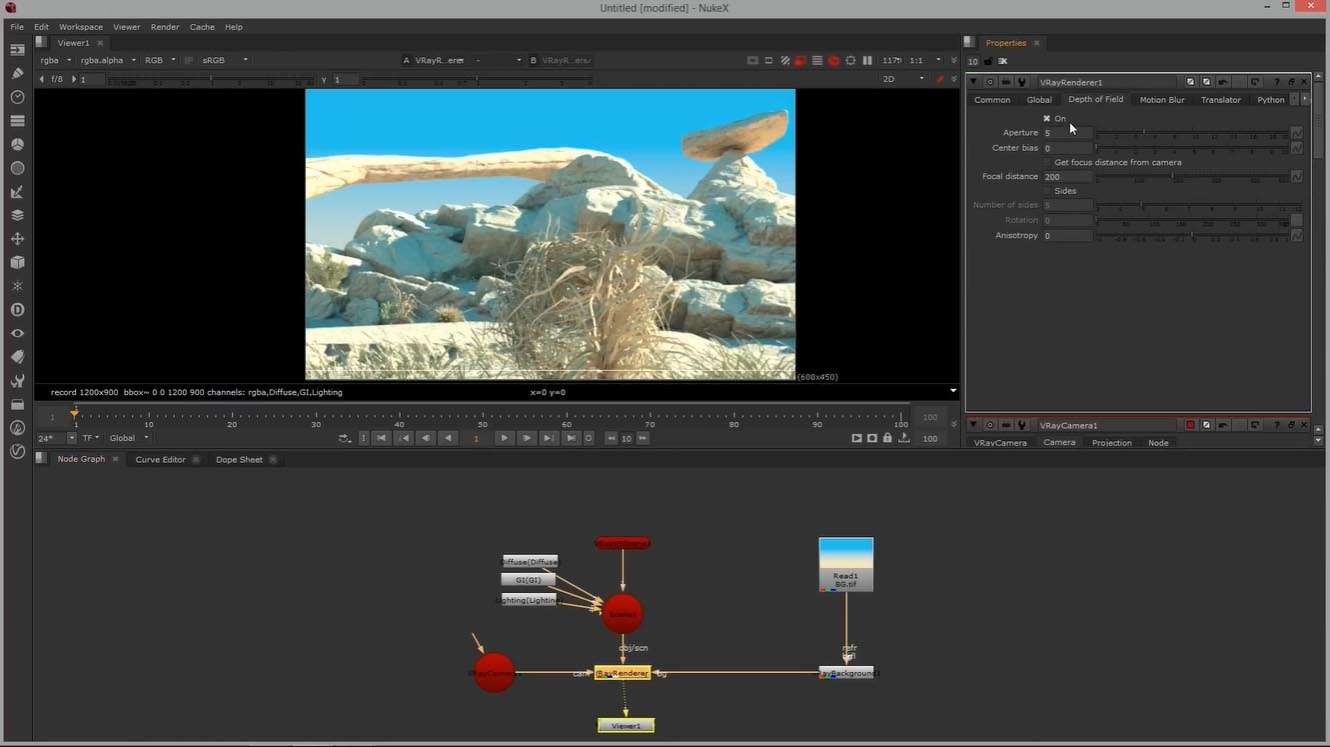
The V-Ray for Nuke plugin allows users to leverage V-Ray’s industry-leading rendering capabilities without leaving the familiar Nuke interface. This direct integration is crucial for visual effects pipelines, enabling compositors to efficiently render and manipulate 3D computer-generated elements alongside live-action footage. V-Ray’s photorealistic image synthesis capabilities ensure that CG elements integrate seamlessly, providing a more cohesive and believable final image for film and video post-production. The plugin facilitates look development and lighting adjustments directly within the compositing context.
Advanced Rendering Features and Real-Time Interactive Viewport
Chaos Group V-Ray for Nuke offers a robust rendering engine that supports both CPU and GPU computation, allowing artists to choose the most efficient method for their scene. Version 5.20.01 features enhancements to its hybrid rendering engine, optimizing performance, particularly for GPU rendering. A critical component is the Interactive Production Rendering (IPR) viewport, which provides live, real-time updates as artists adjust lighting, materials, and camera parameters. This interactive feedback dramatically speeds up the iteration process for lighting and look development within Nuke.
Deep Compositing and Render Passes for Complex Visual Effects
V-Ray for Nuke is engineered to handle the demands of complex visual effects production, including support for deep compositing workflows. Deep compositing allows for the storage and manipulation of multiple layers of depth information within a single pixel, enabling more sophisticated layering and blending of CG elements. The plugin’s Arbitrary Output Variables (AOV) system is comprehensive, providing granular control over various render passes such as diffuse, reflections, refractions, and lighting contributions. This extensive render pass management is essential for professional compositing workflows, offering VFX artists the flexibility needed for detailed adjustments.
Seamless Workflow Integration and Nuke Node Compatibility
This V-Ray Nuke plugin offers exceptional integration with Nuke’s node-based architecture. It supports the import of .vrscene files, allowing for efficient transfer of complex scenes. Workflow efficiency is further enhanced by native integration with key Nuke nodes, including support for Cryptomatte, an industry-standard for automatic matte generation. This compatibility streamlines the process for technical directors and artists, simplifying the setup and management of render elements within the Nuke graph and accelerating the overall post-production pipeline.
Practical Applications in Post-Production and Visual Effects Studios
Visual effects professionals, including VFX compositors, lighting artists, look development specialists, and environment artists, frequently employ V-Ray for Nuke in their daily work. The plugin is instrumental in projects requiring the precise integration of CGI into live-action plates, such as adding realistic vehicles, characters, or complex environments. Artists use it to fine-tune lighting scenarios, adjust material properties interactively, and render high-quality passes that can be seamlessly composited to create photorealistic final shots for feature films, episodic television, and commercials.
Updates and Enhancements in V-Ray 5.20.01 for Nuke
V-Ray 5.20.01 for Nuke introduces several key updates and performance improvements tailored for modern VFX pipelines and compatibility with Nuke 13.0-13.1. These enhancements include optimizations for GPU rendering, making complex scene rendering faster and more responsive. The version also offers improved handling of Arbitrary Output Variables (AOV) and expanded material library support. These advancements contribute to a more efficient and powerful VFX rendering solution directly within the Nuke compositing environment, aiding professionals in handling increasingly complex project demands.
Frequently Asked Questions
What are the main benefits of using V-Ray for Nuke in VFX compositing?
V-Ray for Nuke combines powerful rendering directly within the compositing environment, allowing artists to adjust lighting, materials, and shadows interactively without leaving Nuke. This integration streamlines workflows and enables photorealistic CGI to seamlessly blend with live-action footage.
How does V-Ray for Nuke support real-time rendering adjustments?
The plugin features an Interactive Production Rendering (IPR) viewport that leverages hybrid CPU and GPU rendering to provide live updates on lighting and material changes. This real-time feedback helps compositors fine-tune scenes quickly during the compositing process.
Can V-Ray for Nuke handle complex multi-layer composite projects with deep data?
Yes, V-Ray for Nuke fully supports deep compositing by rendering and outputting native deep data. Its advanced Arbitrary Output Variable (AOV) system allows comprehensive management of multiple render passes, essential for sophisticated VFX scenes requiring detailed layer control.






Reviews
There are no reviews yet.