

Download DEEPSOIL 7.1 – Powerful Geotechnical Software for Earthquake Analysis
DEEPSOIL 7.1 is a specialized geotechnical software designed for engineers and researchers focusing on earthquake engineering. Developed to analyze the complex behavior of soil under seismic conditions, this application provides critical insights into soil response, helping professionals mitigate risks in earthquake-prone regions. Its capabilities are essential for accurate seismic simulations and robust civil engineering projects.
Overview of DEEPSOIL 7.1
What is DEEPSOIL?
DEEPSOIL 7.1 is a geotechnical software application engineered to perform advanced one-dimensional seismic site response analyses. It quantifies how soil layers respond to earthquake ground motions, considering factors such as soil stiffness degradation and pore water pressure generation. This makes it an indispensable tool for geotechnical engineers assessing seismic risks and designing resilient infrastructure.
History and Development
While specific development history for DEEPSOIL 7.1 is not detailed, its significance lies in advancing the field of earthquake engineering through sophisticated soil behavior modeling. Software like DEEPSOIL has evolved to address the increasing need for precise seismic risk assessment in civil engineering, enabling more informed design decisions and safer construction practices in seismically active zones.
Core Features and Capabilities
Analysis of Soil Response
DEEPSOIL 7.1 excels in analyzing the one-dimensional response of soil sites to seismic loads. It simulates how different soil layers will deform and transmit seismic waves, providing a detailed understanding of ground motion amplification. This capability is crucial for predicting seismic hazards at a specific site.
Graphical Communication Tools
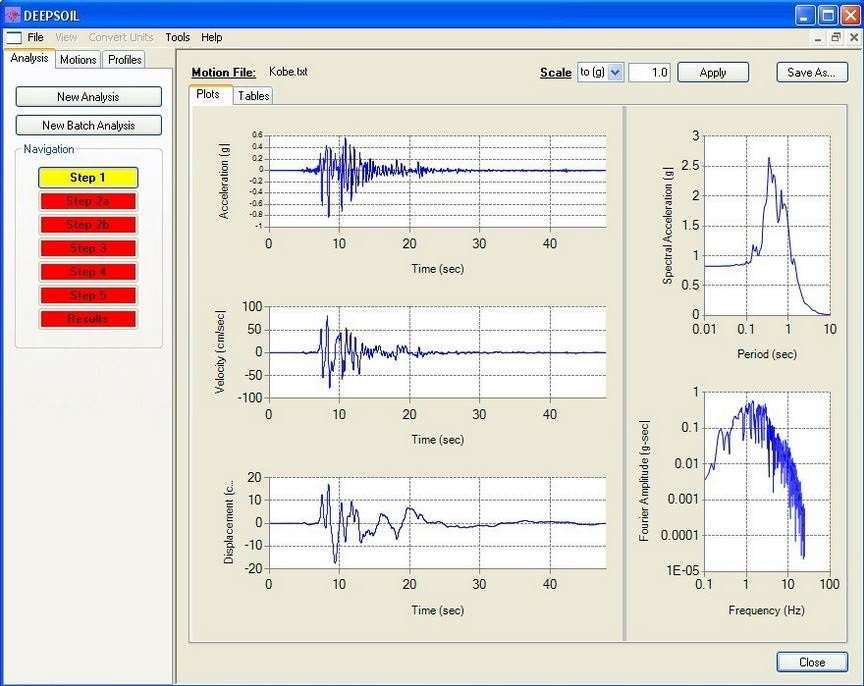
The software includes robust graphical output capabilities, presenting analysis results through clear and informative graphs. These visualizations allow engineers to effectively communicate complex soil response data, such as accelerations, displacements, and shear stresses, aiding in design interpretation and stakeholder reporting.
Pore Water Pressure Models
A key feature of DEEPSOIL 7.1 is its ability to incorporate and model the effects of pore water pressure on soil stability during seismic events. By simulating the buildup and dissipation of pore water pressure, the software helps assess the potential for liquefaction and its impact on the soil’s mechanical properties and overall site response.
High-Performance Computing
DEEPSOIL 7.1 leverages high-performance computing principles, including parallel processing capabilities. This allows for the efficient execution of complex simulations, even with large datasets and detailed soil models, significantly reducing computation time and enabling engineers to tackle more demanding projects.
Applications in Geotechnical Engineering
Real-World Use Cases
DEEPSOIL 7.1 is vital for various geotechnical projects, including seismic hazard assessments for critical infrastructure like bridges, dams, and buildings. Its application in evaluating ground motion characteristics in urban areas helps in developing effective seismic retrofitting strategies and guiding new construction in seismically active regions.
Integration with Other Tools
While specific integration details vary, geotechnical software often works within a larger engineering workflow. DEEPSOIL’s outputs can inform the design processes of other specialized engineering applications, such as structural analysis software, contributing to a comprehensive approach to seismic resilience in civil engineering projects.
Comparison with Similar Software
DEEPSOIL vs. Competitors
DEEPSOIL 7.1 distinguishes itself through its focused implementation of one-dimensional seismic site response analysis and its advanced pore water pressure modeling capabilities. While other geotechnical software may offer broader functionalities, DEEPSOIL provides a specialized and efficient solution for detailed earthquake analysis, emphasizing accurate simulation of soil dynamic behavior under seismic loads.
Conclusion
Choosing DEEPSOIL for Your Projects
For geotechnical engineers and researchers focused on earthquake analysis, DEEPSOIL 7.1 offers a powerful and specialized tool. Its advanced features for soil response analysis, pore water pressure modeling, and efficient simulation processing make it a valuable asset for ensuring the seismic safety and resilience of infrastructure projects.
Frequently Asked Questions
What type of analyses can I perform using DEEPSOIL 7.1?
DEEPSOIL 7.1 allows users to conduct analyses of soil’s one-dimensional seismic response, including independent frequency vibrations and pore water pressure effects, making it essential for earthquake geotechnical projects.
How does DEEPSOIL handle parallel processing?
DEEPSOIL 7.1 includes functionalities for parallel processing, which allows it to efficiently analyze complex models and large datasets, optimizing performance during simulations.
What industries use DEEPSOIL software?
DEEPSOIL is primarily used in civil engineering and geotechnical sectors, particularly for projects involving seismic risk assessment and earthquake engineering applications.




Reviews
There are no reviews yet.