

Download Geocentrix ReWaRD 2.8 Professional – Leading Embedded Retaining Wall Design Software
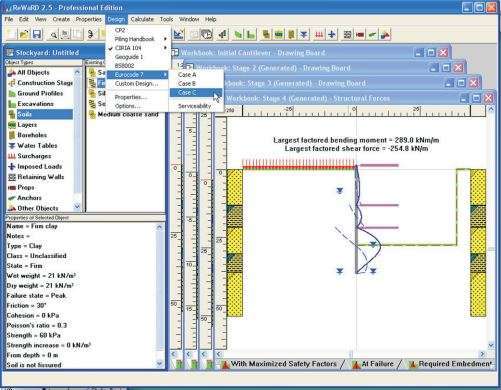
Geocentrix ReWaRD 2.8 Professional is a specialized civil engineering software designed for the comprehensive analysis and design of embedded retaining walls. Developed by Geocentrix, this tool caters specifically to civil and geotechnical engineers who require robust solutions for retaining wall projects. Its primary function is to facilitate efficient and compliant design processes, ensuring structural integrity and adherence to international engineering standards.
Overview of Geocentrix ReWaRD
Geocentrix ReWaRD is an advanced engineering application focused on the detailed design of embedded retaining structures. It offers engineers a powerful platform to undertake complex geotechnical analyses. The software is built with a user-centric approach, featuring an intuitive interface that simplifies the process of designing retaining walls for various applications.
Key Features and Functionalities
The software’s capabilities are geared towards providing precise and reliable results for retaining wall design. Key features include:
- Comprehensive analysis of embedded retaining walls against multiple failure modes.
- A user-friendly graphical interface for defining wall geometry and soil layers.
- Tools to support the generation of design reports and drawings.
- Adherence to various international codes and standards for safe and compliant designs.
- Extensive soil modeling options to accurately represent ground conditions.
Design Standards and Compliance
Ensuring that engineered structures meet regulatory and safety requirements is paramount. Geocentrix ReWaRD achieves this by strictly adhering to recognized industry standards. This compliance ensures that designs are not only practical but also legally sound and safe for public infrastructure.
The software supports compliance with critical design codes, including:
- BS 8002: The British Standard Code of Practice for Earth Retaining Structures.
- Eurocode 7: The harmonized European standard for geotechnical design, providing a framework for safe and reliable geotechnical engineering.
- CIRIA Report 104: Guidance on the design of cantilever retaining walls.
Technical Tools for Retaining Wall Design
Geocentrix ReWaRD is equipped with specific technical tools that enable detailed geotechnical analysis and design. These tools are crucial for accurately modeling soil behavior and structural response.
The application features include:
- A sophisticated soil classification system that allows for the detailed categorization of different soil types.
- An extensive database containing properties for over 250 soil types, facilitating accurate material property assignment.
- Advanced analysis methods to evaluate wall stability, deformation, and bending moments.
- Support for various retaining wall types, including cantilever sheet pile walls, propped embedded walls, and diaphragm walls.
Applications in Civil Engineering
The primary users of Geocentrix ReWaRD are civil and geotechnical engineers who are involved in designing and constructing earth-retaining structures. The software’s specialized nature makes it ideal for projects where precise control over soil-structure interaction is necessary.
Real-world applications include:
- Infrastructure development, such as bridge abutments and highway cuttings.
- Urban development projects requiring excavation support in confined spaces.
- Retaining wall retrofitting and strengthening in existing structures.
- Coastal protection and marine engineering projects.
Integration with Other Engineering Practices
In the complex workflow of civil engineering, software tools often need to interact with other applications. Geocentrix ReWaRD is designed to complement other engineering practices and software, facilitating a more integrated design process.
The software can be used in conjunction with:
- General CAD software for integrating design drawings into larger project plans.
- Other geotechnical software for more in-depth soil investigation and analysis.
- Project management tools to track design progress and deliverables.
Getting Support and Resources
Users of Geocentrix ReWaRD have access to resources designed to assist them in effectively using the software. The developer provides support to ensure engineers can achieve accurate and efficient designs.
Available resources may include:
- In-software help documentation that explains features and functionalities.
- Technical support channels for addressing user queries and issues.
- Guides and examples that demonstrate best practices for retaining wall design using the software.
Conclusion and User Guidance
Geocentrix ReWaRD 2.8 Professional stands out as a specialized and powerful tool for the design of embedded retaining walls. Its adherence to international standards, extensive soil database, and user-friendly interface make it an invaluable asset for civil engineering and geotechnical analysis projects. By leveraging ReWaRD, engineers can confidently design safe, compliant, and efficient retaining structures for a wide range of infrastructure challenges.
Frequently Asked Questions
What is Geocentrix ReWaRD used for?
Geocentrix ReWaRD is used for the design of embedded retaining walls, providing tools that comply with various international and UK engineering standards. It’s particularly valuable for civil engineers dealing with geotechnical challenges. The software enables detailed analysis of wall stability, deformation, and load-bearing capacities.
What design standards does ReWaRD comply with?
ReWaRD adheres to several key engineering standards, including BS 8002, Eurocode 7, and CIRIA 104, ensuring that designs are reliable and compliant with legislative requirements. This compliance is critical for ensuring the safety and structural integrity of the designed retaining walls.
How is the soil classified in Geocentrix ReWaRD?
The software uses a soil classification system based on standards like BS5930 and ASTM D2487, along with an extensive database for over 250 soil types assisting in accurate geotechnical analysis. This detailed approach allows engineers to accurately represent the ground conditions relevant to their specific project site.


Reviews
There are no reviews yet.