

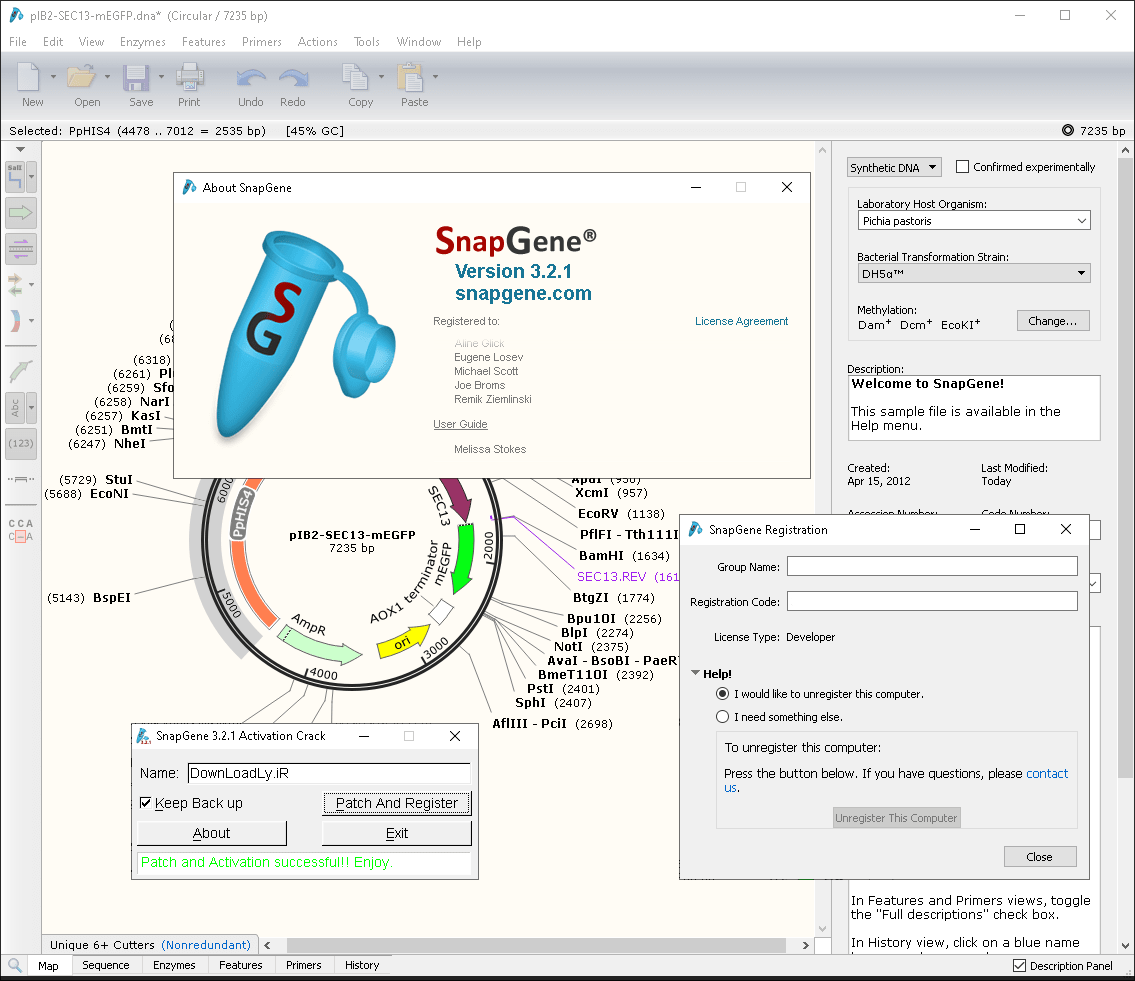
Download SnapGene – Advanced Molecular Biology Software
SnapGene is a comprehensive molecular biology software application developed by GSL Biotech, now part of Dotmatics. Designed for researchers in molecular biology, genetic research, and biotechnology, SnapGene significantly enhances the efficiency of planning, visualizing, and documenting DNA manipulations. Its intuitive interface and advanced simulation capabilities make it an invaluable tool for scientists engaged in complex genetic research and experimentation.
Overview of SnapGene and Its Applications
SnapGene serves as a powerful platform for scientists to design, simulate, and analyze molecular biology experiments. It streamlines intricate processes like DNA cloning and gene editing, offering a visual and interactive environment. The software is particularly beneficial for academic institutions and biotechnology companies that require precise control and clear documentation of their genetic research workflows.
Core Features of SnapGene
SnapGene distinguishes itself through a suite of specialized features designed to simplify complex molecular biology tasks. These capabilities allow researchers to perform sophisticated genetic manipulations with greater ease and confidence.
- In-Fusion® Cloning and Gibson Assembly® Support: The software provides dedicated tools and simulations for these popular and efficient DNA assembly techniques, enabling users to design and plan multi-part cloning strategies.
- User-Friendly Interface: SnapGene offers an intuitive graphical user interface that simplifies the design and visualization of DNA sequences and experimental steps.
- DNA Sequence Alignment: Advanced algorithms facilitate accurate alignment of DNA sequences, crucial for comparative genomics and variant analysis.
- Primer Design and Analysis: Tools are available for designing PCR primers, checking for potential specificity issues, and analyzing primer binding sites on DNA templates.
Visualizing and Documenting DNA Manipulations
A key strength of SnapGene lies in its ability to provide detailed visualizations and automated documentation of all experimental steps. This feature is critical for reproducibility and record-keeping in scientific research.
The software automatically records every manipulation performed on a DNA sequence, creating a clear, graphical history. This visual log includes details such as restriction enzyme digests, ligations, PCR product generation, and sequence modifications. This automated documentation feature ensures that researchers have a precise, step-by-step record of their experimental procedures, which can be easily shared or revisited.
Supported Techniques and Analysis
SnapGene supports a wide array of molecular biology techniques, offering simulations that mimic laboratory processes. This allows for virtual experimentation, helping to optimize experimental design and troubleshoot potential issues before starting physical work.
- PCR Simulation: Users can simulate Polymerase Chain Reaction (PCR) experiments, visualizing primer binding, amplification products, and predicted fragment sizes.
- Agarose Gel Electrophoresis Simulation: The software can simulate the results of agarose gel electrophoresis, helping researchers predict band patterns based on simulated DNA fragments.
- Restriction Enzyme Digestion Visualization: SnapGene clearly maps restriction sites on DNA sequences and visualizes the resulting fragments after simulated digestion.
- Sequence Editing and Analysis: Standard molecular biology operations such as sequence cutting, pasting, insertion, and deletion are supported with real-time visual feedback.
Case Studies: SnapGene in the Lab
SnapGene is widely adopted in molecular biology labs for a variety of applications, enhancing the speed and accuracy of research projects. While specific scientific publications referencing SnapGene directly were not detailed in the initial research, its features are consistently applied in genetic engineering and synthetic biology workflows.
Researchers commonly use SnapGene for designing complex cloning strategies, such as multi-gene constructs for protein expression or pathway engineering. Its simulation capabilities are instrumental in troubleshooting failed cloning attempts by allowing scientists to review each step of their planned procedure. The automated documentation also aids in lab collaborations and the training of new researchers by providing clear, visual experimental protocols.
Comparisons with Other Molecular Biology Software
Compared to other molecular biology software, SnapGene offers a distinctive combination of user-friendliness, advanced simulation capabilities, and robust automated documentation. While many tools offer sequence editing and basic visualization, SnapGene excels in its ability to simulate complex cloning methods like In-Fusion® Cloning and Gibson Assembly®.
Its key differentiators include the ease with which users can plan and visualize multi-step cloning procedures, along with the automatic generation of a step-by-step experimental history. This focus on enhancing the planning and documentation phases of molecular biology workflows sets SnapGene apart from generic sequence editors or more specialized, less intuitive analysis platforms.
Conclusion and Future Updates
SnapGene software download provides molecular biologists with a powerful, integrated solution for designing, simulating, and documenting DNA manipulations. Its advanced features, including support for modern cloning techniques and accurate visualization tools, significantly contribute to research efficiency and reproducibility in biotechnology and genetic research.
SnapGene continues to be updated by Dotmatics, aiming to incorporate the latest advancements in molecular biology and bioinformatics. Users can expect ongoing improvements to existing features and potential additions that further streamline genetic research processes.
Frequently Asked Questions
What is SnapGene used for in molecular biology?
SnapGene is used for simulating and visualizing DNA manipulations, making it easier for researchers to plan and document experiments related to gene cloning and analysis. Its capabilities streamline complex processes, enhancing overall research efficiency and accuracy in genetic studies.
How does SnapGene facilitate DNA cloning techniques?
SnapGene supports various DNA cloning techniques like In-Fusion® Cloning and Gibson Assembly®, allowing users to design and simulate cloning experiments efficiently. The software visually guides users through the design process, offering confirmation of successful strategy implementation before laboratory work begins.
Can SnapGene generate protocols for experiments?
Yes, SnapGene automatically documents all steps in a simulation project, generating a graphical history that can serve as an experimental protocol for future reference. This feature provides a clear, step-by-step record of the manipulations performed, ensuring reproducibility and aiding in scientific communication.





Reviews
There are no reviews yet.