

Download HOMER Grid – Advanced Energy Management and Optimization Software
HOMER Grid is an advanced energy management and optimization software developed by HOMER Energy. This powerful tool is designed to facilitate the modeling, simulation, and economic analysis of microgrids and complex energy systems, particularly those integrating renewable energy sources. It aims to help businesses and utilities in the renewable energy sector minimize operational costs, enhance system resilience, and effectively manage energy production and consumption.
Overview of HOMER Grid
Introduction to the Software and Its Purpose
HOMER Grid is a specialized energy optimization software engineered to assist professionals in the renewable energy sector. Its primary purpose is to enable users to design and optimize various energy systems, from standalone microgrids to those connected to larger utility networks. By simulating different energy configurations, HOMER Grid provides critical insights for decision-making, focusing on economic viability and operational efficiency.
Key Features and Capabilities
Efficient Energy Cost Analysis
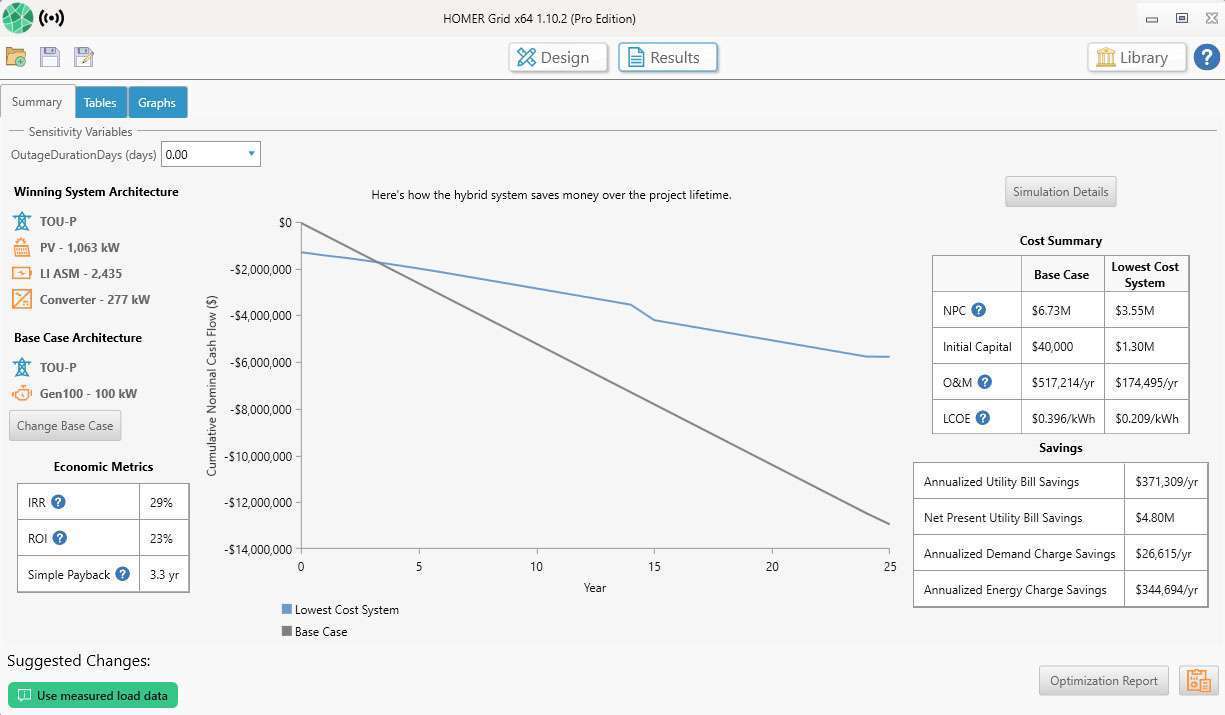
HOMER Grid offers robust economic analysis tools that allow users to thoroughly evaluate the financial performance of proposed energy systems. This feature enables the assessment of total system costs, including initial capital expenses, replacement costs, operations, and maintenance over the project’s lifespan.
- Detailed economic metrics such as Net Present Cost (NPC), Internal Rate of Return (IRR), and payback period are calculated.
- Analysis of various financing options and their impact on project economics.
- Support for different currency types and inflation rates to reflect real-world financial conditions.
Modeling Renewable Energy Systems
The software excels at modeling diverse renewable energy sources, allowing for sophisticated integration into a comprehensive energy system design. Users can simulate the performance of solar photovoltaics, wind turbines, and hydroelectric power, among others, to determine the optimal energy mix.
- Accurate simulation of hourly resource availability for solar, wind, and other renewables.
- Capacity shortage calculations to understand system reliability under various conditions.
- Optimization algorithms that identify the ideal sizing and composition of renewable generation assets.
Electric Vehicle Charging and Demand Response
HOMER Grid incorporates advanced features for managing the impact of electric vehicle (EV) charging loads and implementing demand response strategies. These capabilities are crucial for modern energy systems aiming to balance supply with fluctuating demand.
- Modeling of multiple EV charging strategies to understand their effect on the grid.
- Simulation of demand response programs to shed load during peak periods.
- Analysis of grid-tied systems that can leverage smart charging to optimize energy usage and costs.
Adaptive Tariff Management
A key differentiator of HOMER Grid is its adaptive tariff management capability. The software can model complex electricity rate structures, including time-of-use rates, seasonal tariffs, and fixed charges, which adapt to different regional markets and consumption patterns.
- Customizable tariff inputs to match specific utility rate schedules.
- Evaluation of how different tariff structures influence the economic feasibility of integrating renewables and storage.
- Scenario planning to assess the impact of future tariff changes on system costs.
Industry Applications of HOMER Grid
HOMER Grid serves a wide array of industries and applications within the energy sector, providing essential tools for planning and optimizing energy systems. Its flexibility makes it suitable for utilities, commercial enterprises, and project developers focused on efficiency and sustainability.
- Renewable Energy Sector: Designing and optimizing microgrids, off-grid systems, and grid-tied renewable projects.
- Commercial and Industrial Facilities: Reducing energy expenditures for businesses, manufacturing plants, and agricultural operations by integrating on-site generation and smart management.
- Utilities: Planning grid modernization, assessing the impact of distributed energy resources, and managing peak demand.
- Remote Communities: Developing reliable and cost-effective power solutions for areas with limited or no access to traditional grid infrastructure.
Comparison with Other Energy Management Tools
HOMER Grid distinguishes itself through its comprehensive approach to microgrid and renewable energy system design and optimization. While other energy management tools may focus on specific aspects like load forecasting or grid stability, HOMER Grid integrates detailed economic analysis, multi-resource modeling, and adaptive tariff management into a single platform.
- HOMER Grid’s strength lies in its holistic simulation of system performance, encompassing technical and economic aspects.
- Its explicit modeling of detailed tariffs and multiple renewable energy sources provides greater financial and operational foresight compared to simpler energy calculators.
- The software is particularly adept at handling the complexities of hybrid systems, offering a more detailed optimization pathway than tools focused solely on single-resource performance.
Real-World Use Cases
The practical application of HOMER Grid spans numerous scenarios, demonstrating its value in diverse real-world energy projects. These use cases highlight the software’s ability to provide actionable insights for optimizing energy systems and achieving specific project goals.
- A commercial leasing company utilized HOMER Grid to design a rooftop solar and battery storage system, significantly reducing the overall energy costs for its tenants and improving the facility’s resilience.
- In the agricultural sector, HOMER Grid has been employed to optimize irrigation systems powered by renewable energy, leading to substantial savings on fuel and electricity expenses while ensuring consistent water supply.
- Manufacturers have leveraged the energy optimization software to assess the economic feasibility of integrating combined heat and power (CHP) systems alongside solar PV, aiming to lower operational costs and enhance energy security.
Frequently Asked Questions
What is HOMER Grid used for?
HOMER Grid is a software tool designed for modeling, optimizing, and managing energy systems that primarily incorporate renewable sources, offering insights into minimizing costs and maximizing efficiency. It helps professionals design microgrids and hybrid energy systems, evaluating the best mix of power-generating assets and storage solutions to meet specific energy needs.
How does HOMER Grid facilitate energy cost savings?
HOMER Grid performs complex economic analyses, allowing users to evaluate various combinations of energy sources and operational strategies. By simulating numerous system configurations, it identifies the most cost-effective solutions, providing actionable insights that directly contribute to reducing energy expenditure and improving financial returns on energy investments.
What types of renewable energy can be modeled with HOMER Grid?
The software supports the modeling of several key renewable energy sources, including solar photovoltaics, wind turbines, and hydroelectric power, enabling users to effectively design energy systems tailored to their specific geographical and resource needs. This versatility allows for the creation of hybrid systems that optimally combine different renewable inputs with conventional sources and storage.






Reviews
There are no reviews yet.