

Download IHS Piper 2018.1 – Optimizing Oil and Gas Gathering Systems
IHS Piper 2018.1, developed by IHS Markit, is a specialized engineering software designed for modeling and optimizing oil and gas gathering systems. Targeting professionals in the oil and gas industry, particularly those involved in gathering systems and pipeline engineering, this application provides advanced tools for planning, evaluating, and managing the flow of oil and gas from the reservoir to delivery points. Its core function is to enhance operational efficiency through sophisticated modeling and integration capabilities.
Overview of IHS Piper
Introduction to IHS Piper
IHS Piper is a comprehensive software solution crafted by IHS Markit for handling the complexities of oil and gas gathering systems. It enables engineers to accurately model and optimize the performance of both existing and proposed gas and liquid gathering networks. The software’s primary purpose is to provide a robust platform for analyzing flow dynamics, integrating reservoir data, and ensuring efficient system operation from the wellhead to the market.
Key Features of IHS Piper
Equation of State Modeling Capabilities
The software incorporates Equation of State (EOS) modeling, a critical thermodynamic method used to predict the physical properties of fluids. In IHS Piper, EOS modeling allows for highly accurate simulations of oil and gas behavior under various pressure and temperature conditions. This is essential for predicting phase behavior and fluid properties, which directly impact the design and operation of gathering systems.
Multiphase Flow Analysis
IHS Piper provides extensive capabilities for multiphase flow analysis, a fundamental requirement for managing the flow of liquids and gases simultaneously within pipelines. The software utilizes mechanistic models, such as the Petalas & Aziz model, to simulate and predict flow regimes, pressure drops, and potential issues like slugging. This analysis is crucial for ensuring safe and efficient transportation of hydrocarbons.
Integration with Harmony Reservoir Models
A significant feature of IHS Piper is its seamless integration with Harmony reservoir models, another product from IHS Markit. This integration allows engineers to connect surface gathering system conditions directly with reservoir performance data. By linking these systems, users can analyze the influence of gathering system constraints on reservoir production and optimize operations holistically, from the subsurface to the point of sale.
GIS Mapping Tool for Enhanced Visualization
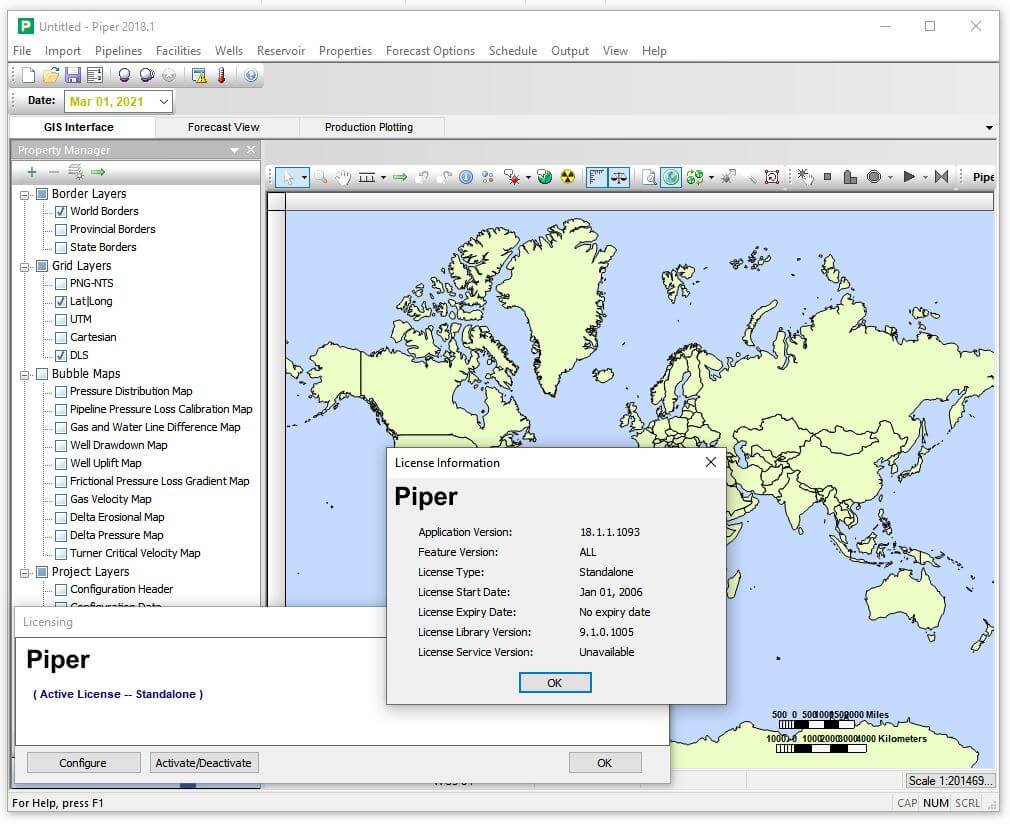
IHS Piper includes a sophisticated GIS (Geographic Information System) mapping tool that significantly enhances the visualization and analysis of gathering networks. This feature allows users to import and overlay geographical data, displaying pipeline routes, well locations, and other relevant infrastructure in a spatial context. This visualization aids in system planning, route analysis, and understanding the geographical impact on operational efficiency.
Applications of IHS Piper in the Industry
IHS Piper is extensively applied in the oil and gas industry for the planning, design, and optimization of gathering systems. Professionals leverage its capabilities in various scenarios:
- Gas Gathering System Design: Engineers use IHS Piper to design new gas gathering networks, optimizing pipe sizes, pressures, and configurations for maximum efficiency and minimum cost.
- Liquid Gathering System Analysis: The software is utilized for modeling and optimizing the flow of crude oil and produced water in liquid gathering systems, addressing challenges like pour point and wax deposition.
- System Performance Evaluation: Existing gathering systems can be modeled to identify bottlenecks, inefficiencies, or potential operational risks, enabling proactive maintenance and performance improvements.
- Economic Feasibility Studies: By accurately modeling flow and operational costs, IHS Piper supports economic assessments for new field developments and gathering system expansions.
- Regulatory Compliance: The detailed modeling and analysis provide data that can assist in demonstrating compliance with industry regulations and safety standards.
Comparison with Other Oil & Gas Software
While other software solutions exist for oil and gas pipeline engineering, IHS Piper differentiates itself through its specialized focus on gathering systems and its deep integration capabilities. Competitor tools might offer broader pipeline simulation features or focus more on transmission lines rather than the complex upstream gathering networks. IHS Piper’s strength lies in its sophisticated multiphase flow modeling tailored for these specific conditions and its seamless integration with reservoir simulation software like Harmony Reservoir, providing a more holistic approach to field development analysis.
Getting Started with IHS Piper
For new users of IHS Piper 2018.1, concentrating on its core strengths is key to effective utilization. Begin by familiarizing yourself with the software’s interface for creating and defining gathering system components, including wells, pipelines, and processing facilities. Experiment with importing data from various sources to understand the integration workflow. Focus on building basic gathering system models and utilizing the multiphase flow analysis tools to predict pressure drops and flow regimes. Gradually explore advanced features like Equation of State modeling and GIS mapping to refine your system designs and optimize operational parameters for efficiency and safety.
Frequently Asked Questions
What industries benefit from using IHS Piper?
IHS Piper is primarily used in the oil and gas industry, particularly by engineers and technologists involved in gas and liquid gathering systems. Its advanced modeling techniques are essential for optimizing pipeline operations from the wellhead to the delivery point.
How does IHS Piper address multiphase flow challenges?
IHS Piper employs the mechanistic Petalas & Aziz flow model to analyze and address issues related to multiphase flow, helping engineers identify optimal flow conditions and prevent slugging in pipelines.
Can IHS Piper integrate with existing reservoir models?
Yes, IHS Piper can seamlessly integrate with various reservoir models, including horizontal, vertical, and multifrac techniques, enhancing users’ ability to analyze the impact of surface systems on reservoir performance.






Reviews
There are no reviews yet.