

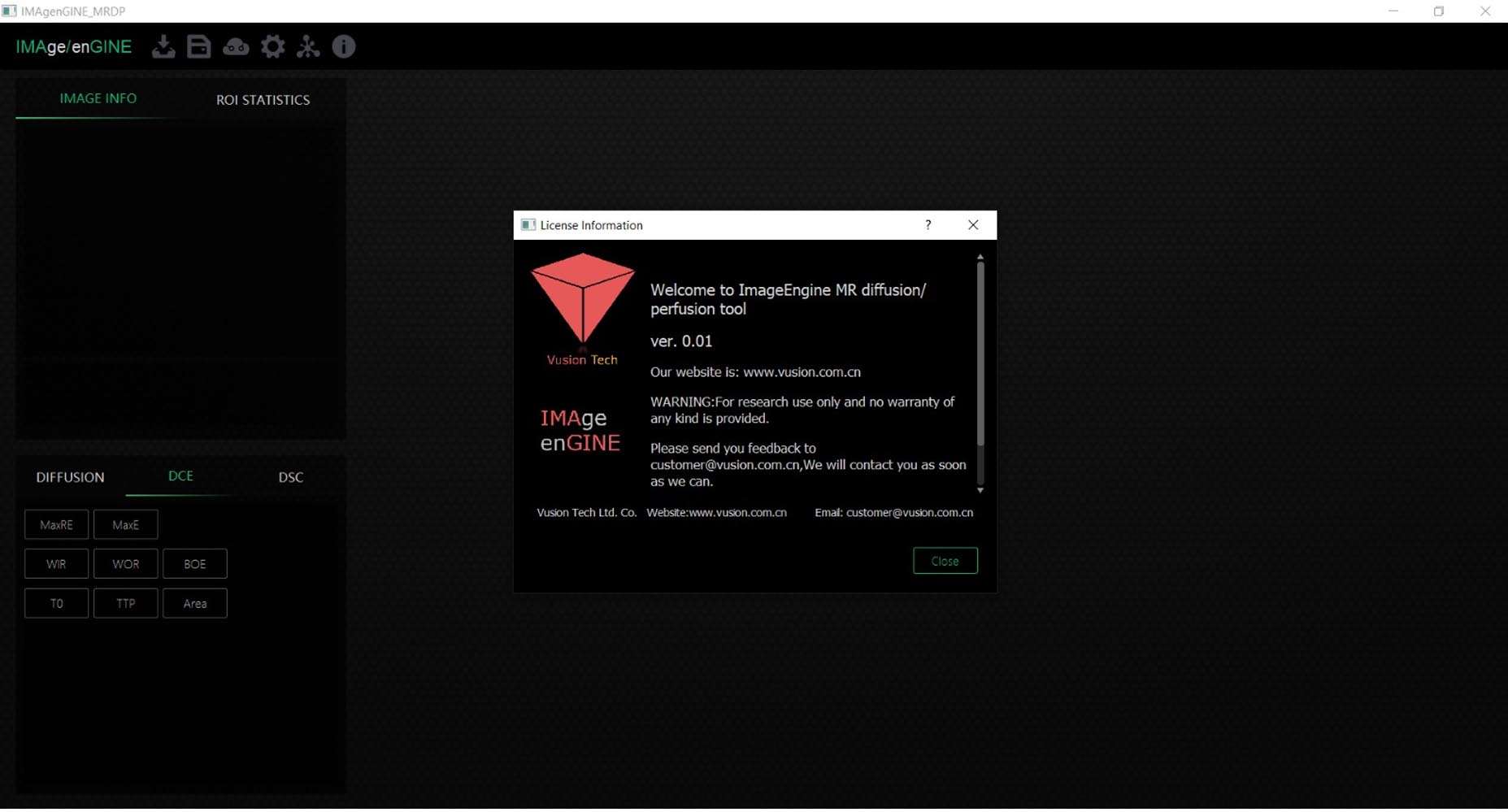
IMAgenGINE MRI 2026 – Advanced Clinical MRI Research and AI Imaging Platform
IMAgenGINE MRI 2026 is a specialized engineering application designed for advanced magnetic resonance imaging (MRI) clinical research and development. This platform serves radiologists, medical physicists, and clinical scientists, facilitating innovation in neuroimaging, cardiology, oncology, and musculoskeletal studies. It acts as an integrating, modeling, and analysis environment for generating novel experiments, with a particular focus on AI-driven enhancements and protocol validation for clinical deployment.
Next-Generation MRI Research Environment for Clinical and Academic Use
IMAgenGINE MRI 2026 provides a comprehensive environment tailored for clinical research and academic endeavors in MRI. Its user base consists of specialized medical researchers, physicists, and clinical scientists who require a robust platform for prototyping, validating, and deploying advanced MRI techniques. The software finds application across diverse medical imaging fields, including neuroimaging for tracking neurological conditions, cardiac imaging for assessing heart function, musculoskeletal imaging for joint and bone analysis, and oncology for tumor staging and response monitoring.
Design and Simulation of Custom MRI Pulse Sequences
The platform offers sophisticated tools for the design and simulation of personalized MRI pulse sequences. Users can meticulously develop custom imaging protocols tailored to specific clinical questions and research hypotheses. This simulation capability is crucial for optimizing parameters, predicting image outcomes, and ensuring protocol efficiency and safety before physical implementation on MRI scanners, thereby reducing experimental costs and time.
Artificial Intelligence Integration for Enhanced Diagnostic Imaging
IMAgenGINE MRI 2026 incorporates leading-edge artificial intelligence frameworks to revolutionize diagnostic imaging. It enables the development and implementation of AI-based reconstruction algorithms that significantly reduce MRI scan times while simultaneously improving image quality and signal-to-noise ratio. A key feature is its robust tools for clinical AI validation, ensuring that these advanced AI models adhere to stringent regulatory standards, such as FDA and CE certifications, thereby facilitating their safe and effective integration into clinical workflows.
Quantitative Biomarker Analysis and Advanced Imaging Protocols
This software empowers researchers with advanced capabilities for quantitative biomarker analysis, moving beyond traditional image interpretation. It supports the calculation of critical metrics including T1/T2 mapping, apparent diffusion coefficient (ADC), perfusion parameters, and fat fraction. Furthermore, it integrates newer, cutting-edge techniques like Magnetic Resonance Fingerprinting (MRF) and Quantitative Susceptibility Mapping (QSM), providing deeper insights into tissue characteristics and disease states essential for accurate disease assessment and management.
Multi-Center Clinical Trial Support and Data Harmonization
Facilitating large-scale multi-center clinical research is a core strength of IMAgenGINE MRI 2026. The platform includes sophisticated tools designed to harmonize MRI data acquired across various scanner models and different clinical sites. This ensures consistency and comparability, enabling researchers to conduct robust, large-scale studies. Workflows for region-of-interest (ROI) analysis, lesion tracking, and statistical comparison are streamlined to support comprehensive data analysis for multi-site investigations.
Integration with Clinical Systems and Visualization Enhancements
IMAgenGINE MRI 2026 ensures seamless integration with existing clinical infrastructure. It supports the export of validated MRI sequences to major clinical scanner platforms, including those from Siemens, GE, and Philips. Additionally, it interfaces effectively with Picture Archiving and Communication Systems (PACS), enabling efficient 2D and 3D visualization of imaging data for enhanced diagnostic review and reporting by clinical professionals.
Simulation Tools for Protocol Optimization and Patient-Specific Adjustments
The platform provides advanced bio-physical simulation tools allowing for the meticulous optimization of imaging protocols. These simulations can be tailored to specific clinical questions, patient populations, and anatomical regions. By enabling patient-specific adjustments and protocol fine-tuning in a simulated environment, IMAgenGINE MRI 2026 enhances the overall efficacy and safety of clinical studies, ensuring that imaging parameters are precisely aligned with research objectives.
Frequently Asked Questions
What are the main clinical applications supported by IMAgenGINE MRI 2026?
IMAgenGINE MRI 2026 supports clinical research across several key areas, including neuroimaging for conditions like Alzheimer’s disease, cardiology for assessing cardiac health, musculoskeletal studies for joint and bone analysis, and oncology for tumor detection and treatment monitoring. Its capabilities enable the development of advanced MRI protocols, AI reconstruction techniques, and quantitative biomarker extraction, all vital for these specialized medical fields.
How does IMAgenGINE MRI 2026 integrate artificial intelligence into MRI imaging?
The software provides comprehensive frameworks for implementing and validating AI-based reconstruction algorithms. These algorithms are designed to significantly reduce MRI scan times while preserving or even enhancing diagnostic image quality. Critically, IMAgenGINE MRI 2026 includes dedicated tools for clinical AI validation, ensuring that these AI models meet the rigorous standards required for safe and effective use in clinical practice.
Can IMAgenGINE MRI 2026 be used for multi-center clinical trials?
Yes, IMAgenGINE MRI 2026 is highly capable of supporting multi-center clinical trials. It offers advanced tools for standardizing MRI data acquisition and processing across different scanner models and diverse clinical sites. This harmonization is crucial for large-scale studies, ensuring consistent imaging protocols and reliable data workflows for comprehensive analysis.




Reviews
There are no reviews yet.