

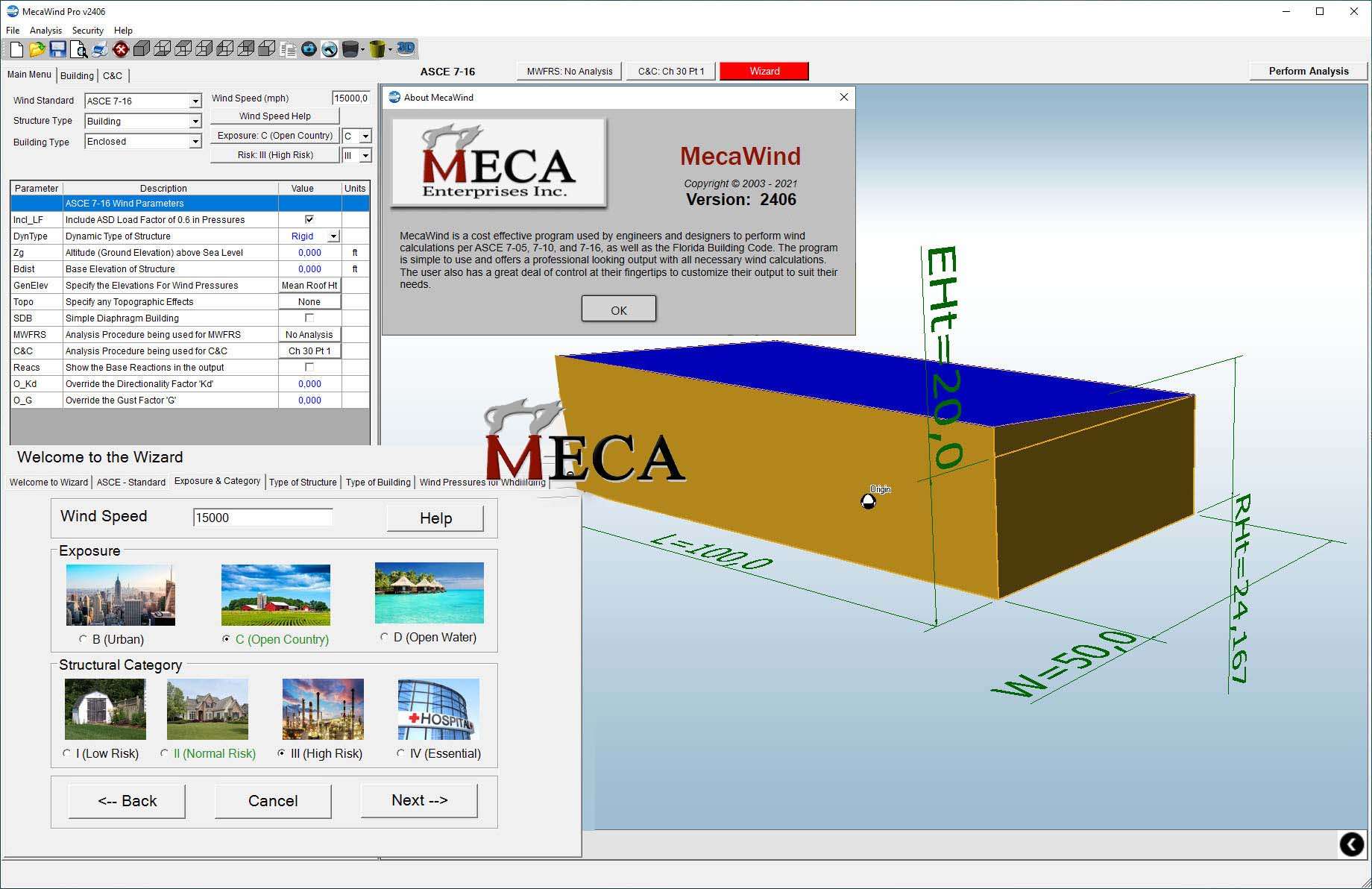
Download MecaWind 2543 – Advanced Wind Load Calculation Software
MecaWind 2543 is a specialized civil engineering tool designed for the precise calculation of wind loads on structures. Developed to aid structural engineers and construction professionals, this software leverages critical ASCE 7 standards to ensure building safety and compliance. Its focused application makes it an essential component in the design process for projects requiring accurate wind pressure assessments within the United States.
Understanding MecaWind and Its Applications in Civil Engineering
MecaWind 2543 serves as a dedicated wind load calculator, streamlining the complex process of determining wind forces according to established engineering guidelines. In civil engineering and structural design, accurately assessing wind loads is paramount for the integrity and safety of buildings and infrastructure. This software translates theoretical ASCE 7 requirements into practical, quantifiable data, directly supporting engineers in their design and verification efforts.
Key Features of MecaWind 2543: Calculating Wind Loads
The core functionality of MecaWind 2543 revolves around its comprehensive approach to wind load calculations, directly referencing various iterations of the ASCE 7 standard. This ensures that engineers can adhere to specific regional and temporal building code requirements.
- Supports multiple ASCE 7 standard versions: ASCE 7-05, ASCE 7-10, and ASCE 7-16, catering to different design codes and jurisdictional needs.
- Facilitates the calculation of wind pressures and forces for the Main Wind Force Resisting System (MWFRS) of buildings and other structures.
- Assists in identifying applicable design parameters based on geographic location, building height, and surrounding exposure, as dictated by the chosen ASCE 7 standard.
- Provides detailed outputs that engineers can integrate into their structural analysis and design documentation.
Building Classifications Supported by MecaWind
Categorizing Structures Using ASCE 7 Standards
MecaWind 2543 accurately interprets and applies building classifications as defined in the ASCE 7 standards, which is fundamental for correct wind load determination. The software differentiates between various types of structures, impacting the calculation methodology for wind pressures.
- Assists in classifying buildings as enclosed, partially enclosed, or open structures, each with distinct wind loading characteristics.
- Accounts for considerations relevant to non-categorized structures or specialized components that fall outside standard building definitions.
- Helps determine the appropriate design wind pressures based on whether a structure is classified as rigid or flexible, open or enclosed.
Roof Types and Design Methodology in MecaWind
Understanding the nuances of different roof types is critical in wind load analysis, and MecaWind 2543 incorporates ASCE 7 methodologies to address this complexity. The software can accommodate various roof geometries and their associated wind pressure distributions.
- Calculates wind loads for common roof forms, including hip, gable, and flat roofs, as well as monoslopes.
- Applies ASCE 7’s designated zones and coefficients for roof surfaces to determine localized pressures, such as uplift and suction forces.
- Integrates roof design parameters into the overall MWFRS calculation, ensuring a holistic approach to structural safety.
- Supports the analysis of parapets and other roof-edge elements that influence wind load distribution.
Real-World Applications of MecaWind in Structural Design
MecaWind 2543 is a practical tool used by structural engineers in the design of a wide range of construction projects. Its specialized nature ensures that wind load calculations are performed reliably and efficiently.
- Used in the design of commercial buildings and high-rise structures where wind forces are a significant design consideration.
- Applied to the analysis of roof structures, including residential buildings, warehouses, and industrial facilities, to assess uplift and other wind-induced stresses.
- Supports the structural design of non-building structures like towers, solar panel arrays, and temporary event structures, which require specific wind load assessments.
- Helps engineers meet code compliance for projects in regions prone to high winds or seismic activity where wind load is a critical factor.
Comparative Analysis: MecaWind and Other Wind Load Calculators
When evaluating wind load calculation tools, MecaWind 2543 offers specific advantages that distinguish it within the field of structural engineering software.
- Standard Versatility: MecaWind’s inclusion of multiple ASCE 7 versions (05, 10, 16) provides broader applicability than calculators limited to a single standard.
- Focused Functionality: Unlike general structural analysis suites, MecaWind is purpose-built for wind load calculations, offering a streamlined and intuitive user experience for this specific task.
- Ease of Use: The software is designed for efficient input of building parameters and direct calculation of wind pressures, simplifying a typically complex engineering workflow.
- Technical Accuracy: By adhering strictly to ASCE 7 requirements, it ensures a high degree of accuracy critical for safety-critical structural designs.
Conclusion: Why Choose MecaWind for Wind Load Calculations
MecaWind 2543 stands out as an essential civil engineering tool for professionals requiring accurate and compliant wind load calculations. Its specialized focus on ASCE 7 standards, support for multiple code versions, and user-friendly interface for building wind pressure calculations make it a reliable choice for structural design.
By employing MecaWind 2543, engineers can confidently design structures that meet rigorous safety requirements, mitigate risks associated with wind-induced forces, and ensure compliance with the latest building codes. This makes the MecaWind 2543 software an invaluable asset for any structural or civil engineering practice.
Frequently Asked Questions
What is MecaWind 2543 used for?
MecaWind 2543 is a wind load calculation software designed for civil engineers to accurately calculate wind pressures and loads on various structures according to the ASCE 7 standard. It helps engineers determine the forces exerted by wind on buildings and other constructions to ensure their structural integrity and safety.
Which ASCE 7 versions are included in MecaWind?
MecaWind 2543 includes multiple versions of the ASCE 7 standard, including ASCE 7-05, ASCE 7-10, and the latest ASCE 7-16, allowing users to comply with varying jurisdictional requirements. This broad support ensures compatibility with different design codes currently in effect across various regions.
What types of structures can MecaWind calculate wind loads for?
MecaWind can calculate wind loads for a variety of structures, including residential buildings, commercial buildings, towers, solar panels, and more, covering both categorized and non-categorized structures as per ASCE 7. It is versatile enough to handle both simple and complex geometric configurations in its wind pressure calculations.





Reviews
There are no reviews yet.