

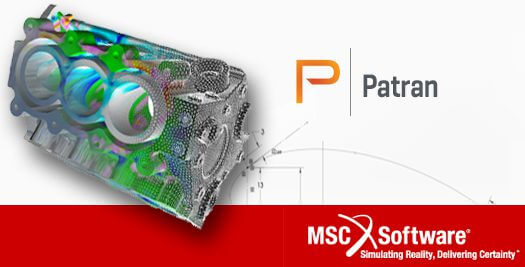
Download MSC Patran 2026.1.1 – Advanced Finite Element Analysis Tool for Engineers
MSC Patran is a sophisticated Computer-Aided Engineering (CAE) software developed by MSC Software Corporation, designed to facilitate comprehensive engineering design analysis. As a critical tool in mechanical and manufacturing engineering, it empowers professionals to create, analyze, and optimize designs through advanced modeling and finite element analysis. Developed by a company with a long history in simulation technology, MSC Patran is recognized for its ability to enhance simulation capabilities, reduce development costs, and streamline the design and manufacturing processes for engineers across various sectors.
Introduction to MSC Patran
MSC Patran serves as a powerful platform for engineering and manufacturing simulations, particularly within the realm of finite element analysis. Developed by MSC Software, a division of Hexagon’s Manufacturing Intelligence division, this CAE software provides engineers with a robust environment for preparing, solving, and interpreting analysis results. Its significance lies in its ability to handle complex engineering challenges, ensuring structural integrity, performance, and efficiency in designs before physical prototyping, thereby offering substantial cost and time savings.
Key Features and Capabilities
Advanced Modeling Tools
MSC Patran offers a suite of advanced modeling tools essential for creating precise and complex engineering designs. These capabilities allow users to build intricate geometries and prepare them for detailed analysis. The software supports the creation of various element types, enabling detailed representation of physical structures and their behaviors under different conditions.
Seamless Integration with CAD Systems
A key strength of MSC Patran is its robust integration with leading CAD software. This feature ensures that 3D models can be imported directly from various CAD formats without significant data conversion, preserving geometric integrity. This seamless data transfer streamlines the workflow from design to analysis, enhancing collaboration and reducing the time spent on model preparation. The ability to directly import and work with CAD data minimizes errors and complexity.
Finite Element Analysis (FEA) Excellence
MSC Patran possesses extensive finite element analysis functionalities crucial for simulating the performance of engineering designs. It provides tools for defining boundary conditions and load specifications, essential for accurate simulation setup. The software supports a wide range of analysis types, allowing engineers to evaluate structural response, thermal behavior, and other critical parameters. This makes it an indispensable tool for verifying design hypotheses and optimizing performance through detailed simulations.
Supported Applications in Engineering
MSC Patran is widely adopted across multiple engineering disciplines and industries. Its versatile capabilities make it suitable for an array of complex applications where simulation accuracy and efficiency are paramount. The software supports projects requiring detailed structural evaluation, performance optimization, and failure analysis.
- Aerospace Engineering: Used for analyzing aircraft structures, including airframes, wings, and engines, to ensure safety and performance under extreme conditions during flight.
- Automotive Industry: Applied in simulating vehicle dynamics, crashworthiness, and component stress analysis to enhance safety, fuel efficiency, and durability.
- Manufacturing: Employed for process simulation, including mold flow analysis and material forming, to optimize production efficiency and product quality.
- Consumer Goods: Utilized for product durability testing, drop analysis, and ergonomic assessments to improve product reliability and user experience.
Real-World Use Cases
The practical application of MSC Patran is evident in numerous real-life engineering scenarios, demonstrating its value in solving complex design and analysis challenges. These use cases highlight how the software contributes to product development and innovation.
- Automotive Crash Testing Simulation: Engineers use MSC Patran to simulate vehicle collisions, predicting structural deformation and occupant safety, thereby reducing the need for physical crash tests.
- Aerospace Structures Analysis: The software facilitates the rigorous analysis of aerospace components, such as missile casings or satellite structures, subjected to high stresses and thermal loads during operation.
- Optimization in Manufacturing Processes: Used to simulate sheet metal forming operations within the manufacturing sector, helping to optimize die design and predict potential defects, leading to improved yields and reduced material waste.
- Biomedical Device Design: Applied to analyze the biomechanical performance of medical implants and prosthetics, ensuring they meet stringent safety and efficacy standards for patient use.
Comparative Analysis with Other CAE Tools
MSC Patran distinguishes itself in the competitive CAE software landscape through several key attributes, particularly its integration capabilities and historical foundation in simulation technology. While other CAE tools offer robust analysis features, MSC Patran’s strength lies in its ability to seamlessly connect with various CAD platforms.
Compared to some other CAE solutions, MSC Patran provides a more streamlined workflow for engineers who are already utilizing specific CAD systems. Its direct data import feature minimizes manual translation efforts, preserving design intent and reducing the potential for errors. Furthermore, the software benefits from the extensive experience of MSC Software in developing simulation technologies, offering well-established and validated analysis methods that are crucial for achieving reliable results in critical engineering applications.
Conclusion: The Importance of MSC Patran in Modern Engineering
MSC Patran 2025.2 remains a cornerstone of modern engineering practice, particularly for professionals engaged in finite element analysis and complex simulations. Its advanced modeling tools, unparalleled CAD integration, and robust FEA capabilities empower engineers to innovate, optimize designs, and ensure product reliability and safety. By facilitating detailed virtual testing and analysis, MSC Patran significantly reduces the time and cost associated with physical prototyping, reinforcing its indispensable role in the development of cutting-edge products across industries like aerospace, automotive, and manufacturing.
Frequently Asked Questions
What industries commonly use MSC Patran?
MSC Patran is frequently utilized in various industries, including aerospace, automotive, and manufacturing, where advanced finite element analysis is crucial for design and structural integrity verification. Its versatile application extends to other sectors requiring high-fidelity simulations for performance assessment and validation.
How does MSC Patran facilitate integration with CAD software?
MSC Patran supports direct input from multiple CAD formats, ensuring that 3D models remain intact during import, thus enhancing workflow efficiency between design and analysis. This capability allows engineers to bypass complex model conversion processes, directly leveraging their existing design data for simulation.
What are the primary advantages of using finite element analysis in MSC Patran?
Finite element analysis in MSC Patran allows engineers to evaluate the response of structures under various conditions, thereby optimizing designs and reducing production costs through simulation before physical prototyping. It provides critical insights into stress distribution, thermal effects, and dynamic behavior, enabling informed design decisions and product improvements.






Reviews
There are no reviews yet.