
Download PIC C Compiler (CCS PCWHD) 5.112 – A Comprehensive C Compiler for PIC Microcontrollers
The PIC C Compiler (CCS PCWHD) version 5.112 is a specialized software development tool created by Custom Computer Services (CCS) for the explicit purpose of programming PIC microcontrollers. It falls within the embedded systems category, serving electrical and electronics engineers who need to develop applications for PIC® microcontroller architectures. This embedded systems compiler provides an integrated environment for efficient C programming, debugging, and code optimization.
Introduction to PIC C Compiler (CCS PCWHD)
Overview of its Purpose and Capabilities
The primary intention behind the PIC C Compiler (CCS PCWHD) is to provide a robust and efficient development platform for PIC microcontroller projects. It enables engineers to write, test, and refine embedded applications using the ANSI C programming language. The compiler is designed to leverage the specific architecture of PIC microcontrollers, offering tools that streamline the development workflow from code conception to final implementation.
Key Features and Development Tools
C-Aware Integrated Development Environment
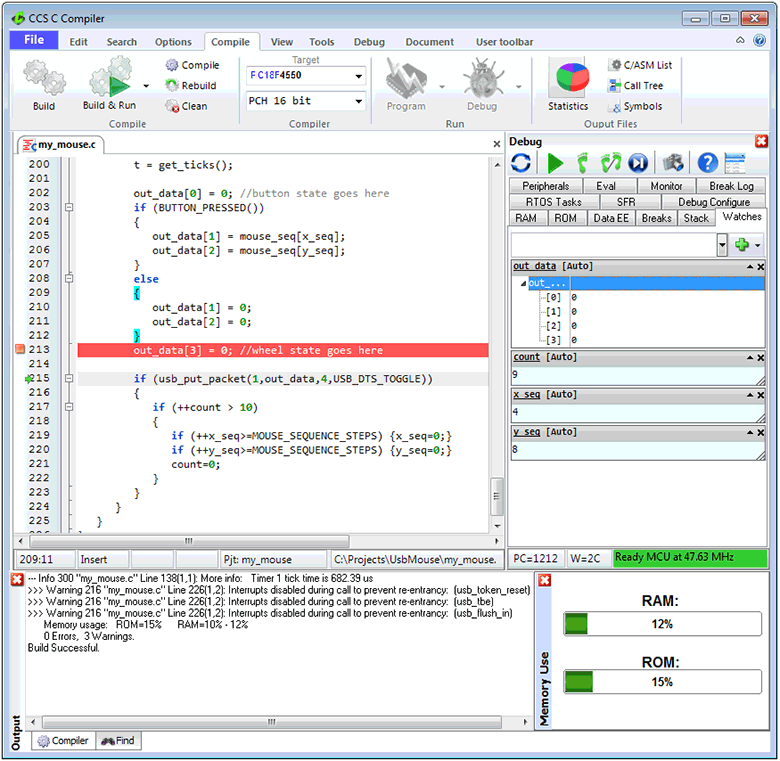
The C-Aware Integrated Development Environment (IDE) is a core component of the CCS PCWHD. This environment integrates essential development functionalities, offering a unified workspace for writing code, compiling, and debugging. It is designed to enhance programmer productivity through features that simplify the process of creating and troubleshooting embedded applications for PIC devices.
Supported Libraries and Hardware Interfaces
To facilitate rapid development, the PIC C Compiler (CCS PCWHD) comes equipped with an extensive suite of libraries. These libraries offer pre-written functions for common hardware interfaces and peripherals found on PIC microcontrollers, including but not limited to:
- Serial Peripheral Interface (SPI)
- Analog-to-Digital Converter (ADC)
- Inter-Integrated Circuit (I2C)
- Universal Asynchronous Receiver/Transmitter (UART)
- Timer and Interrupt Management
This comprehensive library support enables developers to integrate complex functionalities with greater ease and speed.
Code Optimization Techniques
Code optimization is a critical aspect of embedded systems development, directly impacting performance and resource usage. The CCS PCWHD incorporates advanced optimization techniques to ensure that the generated code is both efficient and compact. These optimizations can lead to improved execution speeds, reduced power consumption, and the ability to fit more complex applications within the memory constraints of PIC microcontrollers, ultimately lowering production costs.
Applications in Embedded Systems Development
Industry Use Cases
The PIC C Compiler (CCS PCWHD) finds extensive application across various embedded systems projects within the electrical and electronics industries. Its specialized nature makes it ideal for developing control systems, sensor interfaces, consumer electronics, and industrial automation solutions where PIC microcontrollers are a preferred hardware choice. For instance, it is instrumental in projects requiring precise control and real-time response.
Real-Time Data Handling and Monitoring
A significant capability of the CCS PCWHD, especially when paired with its development tools, is its support for real-time data handling and monitoring. This includes features that allow developers to visualize data streams, track variable values as code executes, and monitor system performance in real-time without interrupting the microcontroller’s operation. This is particularly beneficial for applications such as telemetry, industrial monitoring, and the development of complex sensor networks.
Advantages of Using CCS PCWHD
User-Friendly Features
The CCS PCWHD emphasizes user experience, incorporating several features designed to make the PIC microcontroller development process more accessible. These include sophisticated code completion, syntax highlighting for C programming, integrated debugging interfaces, and clear error reporting. Such user-friendly characteristics contribute to a reduced learning curve and faster development cycles for engineers.
Comparison with Other Compilers
Compared to more generic C compilers, the PIC C Compiler (CCS PCWHD) offers a highly specialized toolset optimized specifically for the PIC microcontroller architecture. While other compilers might support a broader range of processors, CCS PCWHD provides deeper integration with PIC-specific peripherals and development ecosystems. Its unique C-Aware environment and extensive libraries for direct hardware interaction offer distinct advantages for PIC development workflows, often resulting in more efficient code and streamlined debugging compared to broader-purpose compilers.
Conclusion and Download Information
The PIC C Compiler (CCS PCWHD) 5.112 stands out as a powerful and efficient embedded systems compiler tailored for PIC microcontroller development. Its integrated C-Aware IDE, extensive library support, advanced code optimization, and user-friendly features make it an invaluable tool for engineers in the electrical and electronics sectors. For developers seeking to enhance their PIC microcontroller programming efficiency and leverage specialized tools for real-time data handling, the CCS PCWHD provides a comprehensive solution.
Frequently Asked Questions
What is the primary use of PIC C Compiler (CCS PCWHD)?
The PIC C Compiler (CCS PCWHD) is primarily used for programming PIC microcontrollers using ANSI C. It provides a development environment that supports efficient code writing and debugging tailored towards embedded systems, making it a specialized tool for engineers working with this particular microcontroller architecture.
What debugging features are included in CCS PCWHD?
CCS PCWHD includes robust debugging tools, most notably its C-Aware IDE. This environment allows users to track the execution of their C code, monitor variables, inspect memory, and visualize data in real-time, significantly enhancing development accuracy and troubleshooting capabilities for embedded applications.
How does CCS PCWHD assist in code optimization?
The compiler includes features that enhance code optimization by generating efficient machine code. This includes analyzing function call times and providing live data visualization from running components, which helps in fine-tuning application performance, reducing memory footprint, and ultimately aiding in lowering production costs for embedded devices.



Reviews
There are no reviews yet.