

Download Polar Instruments Speedstack 2025 v25.01 – Advanced PCB Stackup Design and Analysis Software
Polar Instruments Speedstack 2025 v25.01 is a specialized PCB stackup design software tool developed by Polar Instruments, a company focused on PCB design and analysis solutions. This software is designed for electronics engineering professionals, including PCB design engineers, signal integrity engineers, and fabricators, who require precise control over multilayer PCB structures. In modern electronics, achieving controlled impedance and optimizing stackup configurations are critical for electrical performance, making tools like Speedstack indispensable for high-speed and high-reliability designs.
Overview of Polar Instruments Speedstack and Its Role in PCB Design
Polar Instruments Speedstack serves as a comprehensive solution for managing the complexities of printed circuit board (PCB) stackup design. It caters to a wide range of professionals involved in the electronics industry, from initial PCB design engineers to the final fabrication stages. The meticulous management of PCB stackups is paramount for ensuring desired electrical characteristics, such as controlled impedance, and for optimizing manufacturing processes. Speedstack addresses these needs by providing robust tools for defining, analyzing, and managing PCB layer arrangements and material properties.
Comprehensive PCB Stackup Configuration and Material Management
Visual Stackup Editor and Layer Arrangement
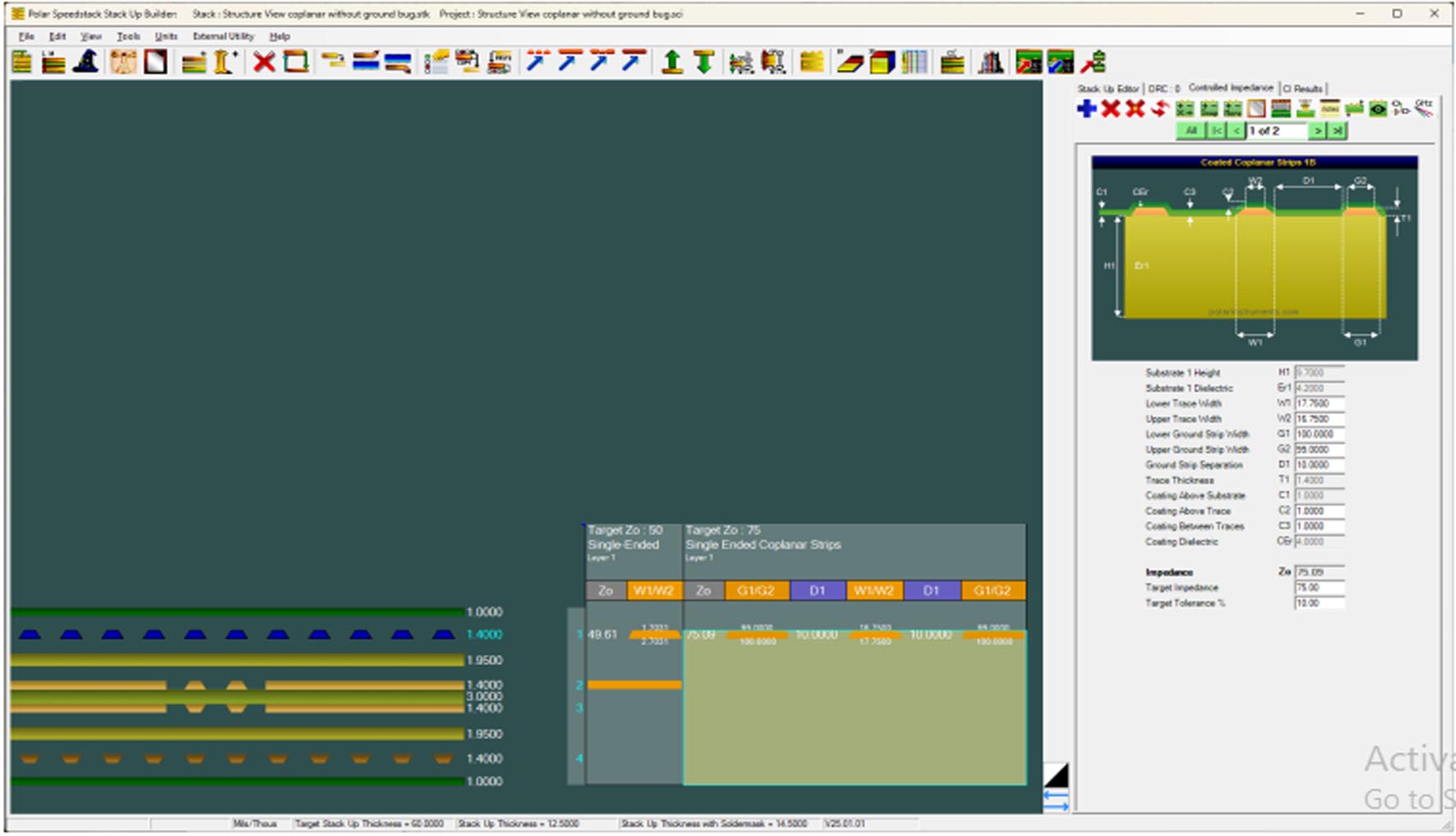
Speedstack features an intuitive visual editor that allows engineers to construct multilayer PCB designs through a drag-and-drop interface. This environment simplifies the process of arranging individual layers, defining their thicknesses, and visualizing the resulting stackup structure. The graphical approach aids in understanding complex multilayer layouts and ensures accuracy in defining the physical characteristics of the PCB.
Material Libraries and Electrical-Mechanical Properties
The software supports extensive databases of PCB materials, encompassing detailed electrical and mechanical properties essential for accurate design simulations. Users can select from a wide array of industry-standard and specialized materials, with their associated dielectric constants, loss tangents, and thermal expansion coefficients. This comprehensive material management ensures that designs can be accurately modeled and tailored to specific performance requirements and environmental conditions.
Design Rule Checks and Impedance Planning
Integrated design rule checks (DRC) and advanced impedance calculators are core components of Speedstack. The software enforces manufacturing constraints defined by the user or chosen material properties, preventing the creation of non-manufacturable stackups. Impedance planning tools allow engineers to precisely define and verify trace widths, spacing, and dielectric layers required to achieve target impedance values, a critical factor for signal integrity in high-speed applications.
Advanced AI-Powered Analysis and Simulation Features
AI-Based Stackup Optimization and Material Recommendation
A key differentiator for Speedstack is its AI-based optimization engine. This advanced capability leverages machine learning algorithms to suggest optimal layer sequences and material combinations that meet specific performance goals, such as impedance control, signal integrity enhancement, and thermal management. The AI can also recommend materials that balance performance with manufacturing cost and availability.
3D Electromagnetic and Power Integrity Analysis
Speedstack integrates preliminary 3D electromagnetic (EM) analysis capabilities, enabling engineers to perform quick checks on critical signal paths within the stackup. This feature complements traditional 2D impedance calculations by providing a more realistic assessment of signal behavior. Furthermore, it facilitates combined power and signal integrity analysis, allowing for a holistic view of the electrical performance of the PCB design.
Thermal Management and Reliability Predictions
The software extends its analysis beyond electrical performance to include thermal management and reliability predictions. Speedstack can perform thermal co-design simulations to forecast how the proposed stackup will dissipate heat under various operating conditions. Its AI capabilities also extend to predicting the long-term reliability of the PCB under environmental stresses, providing crucial insights for product longevity.
Workflow Integration and Collaborative Platform Enhancements
EDA Tool Integration and Smart Import/Export
To ensure seamless integration into existing engineering workflows, Speedstack offers direct import and export functionalities with leading Electronic Design Automation (EDA) tools. This includes robust connections with platforms such as Cadence Allegro, Mentor Xpedition, and Altium Designer, allowing for efficient transfer of stackup data and reducing manual data entry errors.
Cloud-Native Collaboration and Fabricator Portal
Speedstack operates on a cloud-native platform that supports real-time co-design among multiple users, enhancing team collaboration. It also features a dedicated portal for fabricators, allowing them to provide feedback on stackup designs, review manufacturing constraints, and collaborate directly with designers. This streamlines communication and accelerates the design-to-manufacturing cycle, incorporating version control for managing design revisions.
Performance Improvements and Mobile Accessibility
The 2025 version of Speedstack incorporates significant performance enhancements. GPU acceleration is utilized for demanding simulation tasks, leading to faster analysis times on modern hardware. Additionally, the software can generate AI-driven documentation and offers mobile review applications, enabling engineers and stakeholders to access and review stackup designs from any device.
Practical Applications and Industry Use Cases
Polar Instruments Speedstack finds application across a broad spectrum of electronic design challenges. Its capabilities are particularly valuable in areas requiring precise electrical performance and robust manufacturing processes.
- High-Speed Digital Design: Essential for defining stackups that maintain signal integrity and controlled impedance for complex digital interfaces operating at high frequencies.
- RF/Microwave PCB Stackups: Crucial for engineers designing radio frequency and microwave circuits, where precise control over transmission line characteristics is vital for performance.
- Cost-Optimized Manufacturing: Enables engineers to balance performance requirements with material costs and manufacturability, leading to more economical PCB production without compromising quality.
- Academic Teaching Environments: Serves as an educational tool for teaching the principles of PCB stackup design, impedance control, and signal integrity analysis to the next generation of engineers.
- PCB Library Management: Facilitates the creation and management of standardized PCB stackup definitions within an organization, ensuring consistency across multiple design projects.
- Technical Manager Oversight: Provides managers with tools to review, approve, and oversee stackup designs, ensuring compliance with company standards and project requirements.
Frequently Asked Questions
What are the main benefits of using Speedstack for PCB stackup design?
Speedstack streamlines multilayer PCB stackup design with advanced AI-driven optimization, integrated impedance planning, and manufacturability analysis. It helps engineers ensure electrical performance while balancing cost and fabrication constraints, leading to more efficient and reliable PCB development.
How does Speedstack integrate with popular EDA tools?
Speedstack offers direct integration with leading EDA platforms like Cadence Allegro, Mentor Xpedition, and Altium Designer, enabling seamless import/export of stackup configurations and enhanced workflow efficiency. This interoperability reduces manual data handling and ensures design consistency.
What new AI features are included in Speedstack 2025 v25.01?
The 2025 version introduces AI-based stackup optimization, smart material recommendations, predictive manufacturing yield analysis, and generative stackup design capabilities, enhancing design accuracy and innovation. These features leverage machine learning to streamline the design process and improve outcomes.




Reviews
There are no reviews yet.